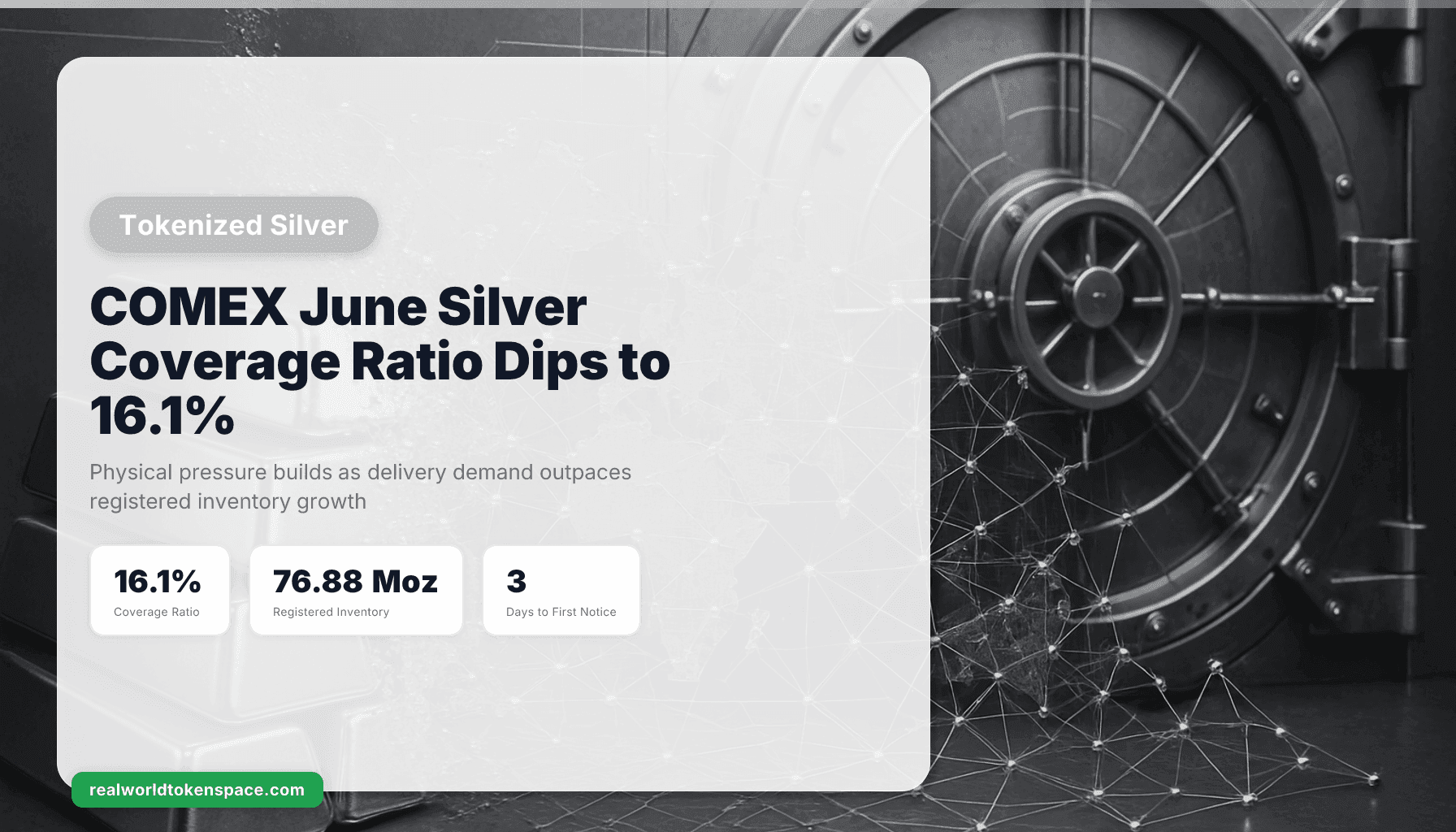
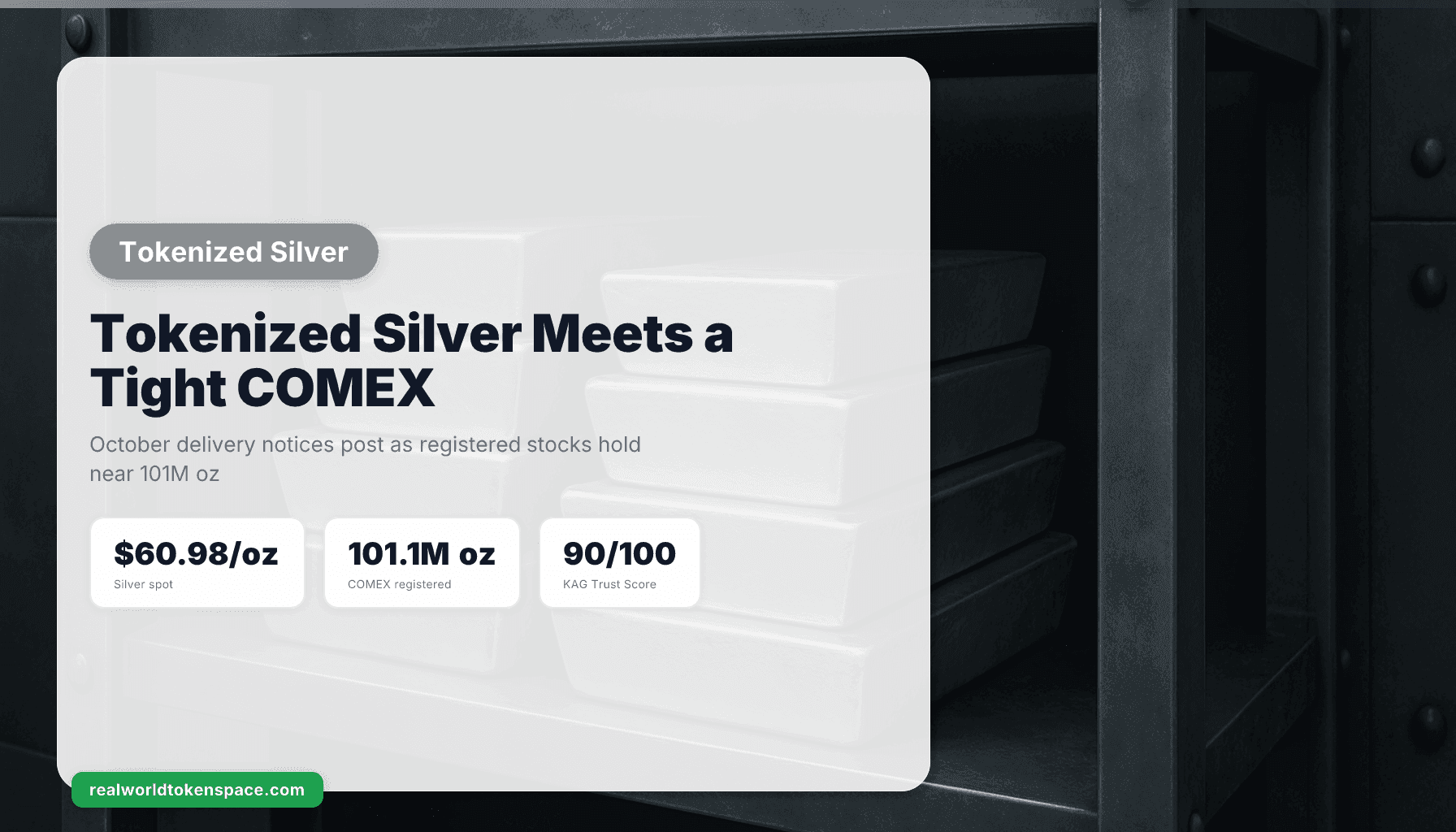
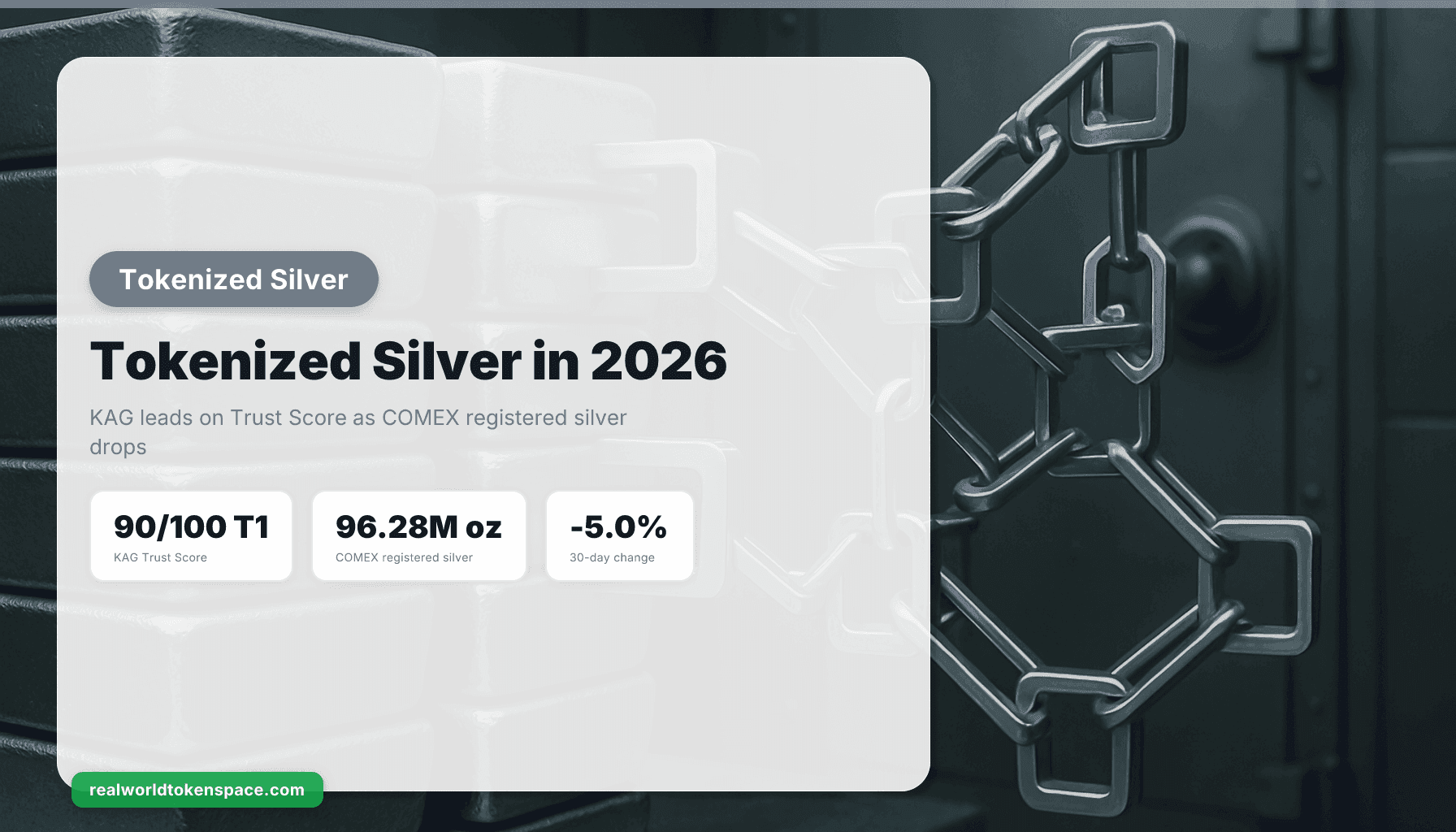
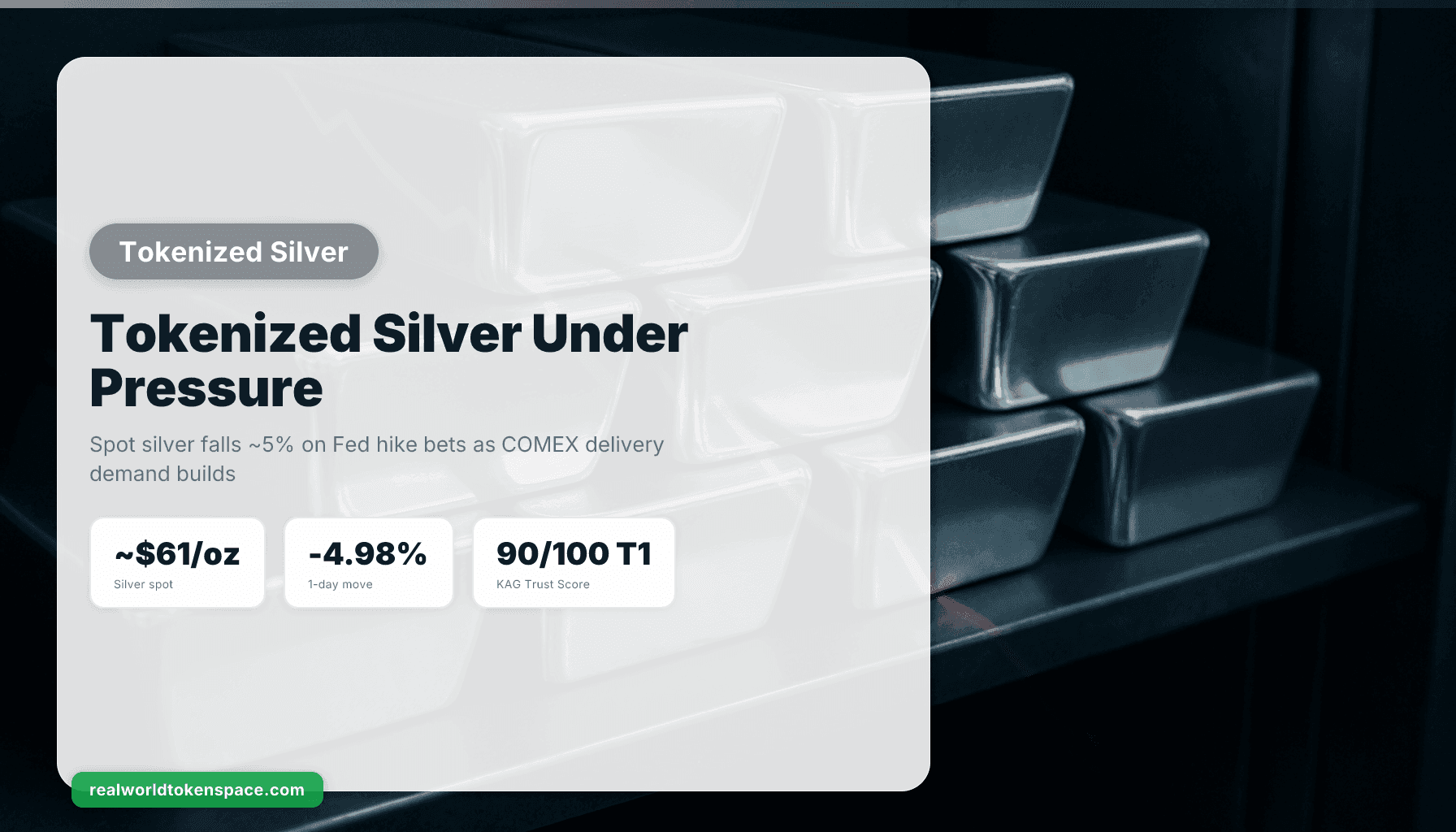
COMEX silver coverage ratio stands at 16.1% as of May 2026, tight by historical standards and below the 15% stress threshold cited by COMEX analysts for the sixth consecutive reporting period. June 2026 first notice day is 3 business days away with 2,822 contracts (14.1M oz) still open, setting up another test of the exchange's registered inventory buffer.
The data comes from COMEX daily warehouse stock reports published by CME Group, which track registered silver, the portion of exchange inventory immediately available to satisfy delivery notices. Registered silver has increased 3.0% over the past 30 days, but coverage ratio remains tight at 16.1%, reflecting elevated open interest relative to deliverable supply.
For allocators evaluating tokenized silver products against physical futures exposure, the coverage dynamic matters. When registered inventory contracts while delivery demand rises, the gap between paper and physical widens, a structural tension that tokenized products backed by allocated metal sidestep entirely.
The Physical Reality: COMEX Registered Inventory vs. Open Interest
Against 76.88 Moz of registered silver sits approximately 575.5 Moz of open interest on COMEX silver contracts, yielding a coverage ratio of 13.4% on a broader measure. The discrepancy between the 16.1% figure for June contracts and the 13.4% system-wide ratio reflects how open interest concentrates around active delivery months.
A leverage ratio of 7.5:1 (paper divided by registered metal) is within COMEX's normal 5–8:1 operating range, but the system functions only because the vast majority of futures contracts roll forward or settle in cash rather than taking physical delivery. In January 2026, the delivery rate spiked toward 5–10% of contracts, well above the historical 1–3% baseline.
The 13.4% coverage ratio marks the sixth consecutive issue below the 15% threshold where COMEX analysts define stress territory. The ratio has compressed gradually since mid-2025, reflecting steady withdrawals from registered inventory alongside stable or rising open interest.
For context, in January 2026, 33.45 million ounces of silver were withdrawn from COMEX registered inventory in a single week, representing roughly 26% of the deliverable pool disappearing in seven days. That withdrawal pace has moderated, but physical pressure remains elevated according to the COMEX stress index published by goldsilver.ai.
The RWTS Trust Score Angle on Tokenized Silver
RWTS rates tokenized silver products on vault attestation, redemption mechanics, custody, and regulatory standing. KAG, the Kinesis silver token, holds a Tier 2 Trust Score of 72. The product is backed by allocated LBMA silver held in Brink's and Loomis vaults, with monthly attestation from an independent verifier.
KAG redemption requires a minimum threshold (typically 200 oz), but the token is fully allocated, every KAG represents a specific serial-numbered bar. That structure eliminates the coverage-ratio concern entirely. If registered COMEX inventory dropped to zero tomorrow, KAG holders would still have claim to their specific allocated bars.
The trade-off is liquidity. COMEX futures settle in two business days and offer deep order books. KAG redemption takes longer and requires meeting minimum thresholds. For allocators who prioritize physical claim over trading speed, that's a feature, not a bug.
PAXG, the Paxos gold token, holds a Tier 1 Trust Score of 89 and operates on similar allocated-bar mechanics. While PAXG tracks gold, not silver, the structural parallel is instructive: tokenized products backed by allocated metal offer a different risk-return profile than futures exposure.
For the full breakdown of how RWTS evaluates tokenized precious metals, see the methodology page. The Trust Score does not predict price movements, it evaluates the structural integrity of the product's backing, custody, and redemption path.
RWTS isn't Bullish or Bearish on Silver, We Rate
RWTS doesn't call silver price direction. We rate tokenized products on the quality of their backing. COMEX operates with leverage in the 5–8:1 range and functions because the vast majority of futures contracts roll forward or settle in cash. When that assumption breaks (when delivery demand spikes) coverage ratios compress.
Tokenized silver products backed by allocated metal eliminate the coverage-ratio variable. You trade liquidity and minimum-threshold friction for direct claim on serialized bars. Whether that trade-off makes sense depends on your time horizon, liquidity needs, and conviction around physical-delivery risk in the futures system.
If June first notice day sees elevated delivery demand and the coverage ratio compresses further, the COMEX system will adjust, through higher margin requirements, cash settlement incentives, or vault inflows. The exchange has survived tighter ratios before. The question for allocators is whether they want exposure that depends on that adjustment mechanism or exposure that sidesteps it entirely.
For related research on tokenized precious metals, see our tokenized gold comparison and PAXG trust score breakdown. The data matters. The structure matters. You decide.
Stay Ahead of the Yield Curve
Subscribe to The Yield Report for weekly yield intelligence.
Subscribe Now