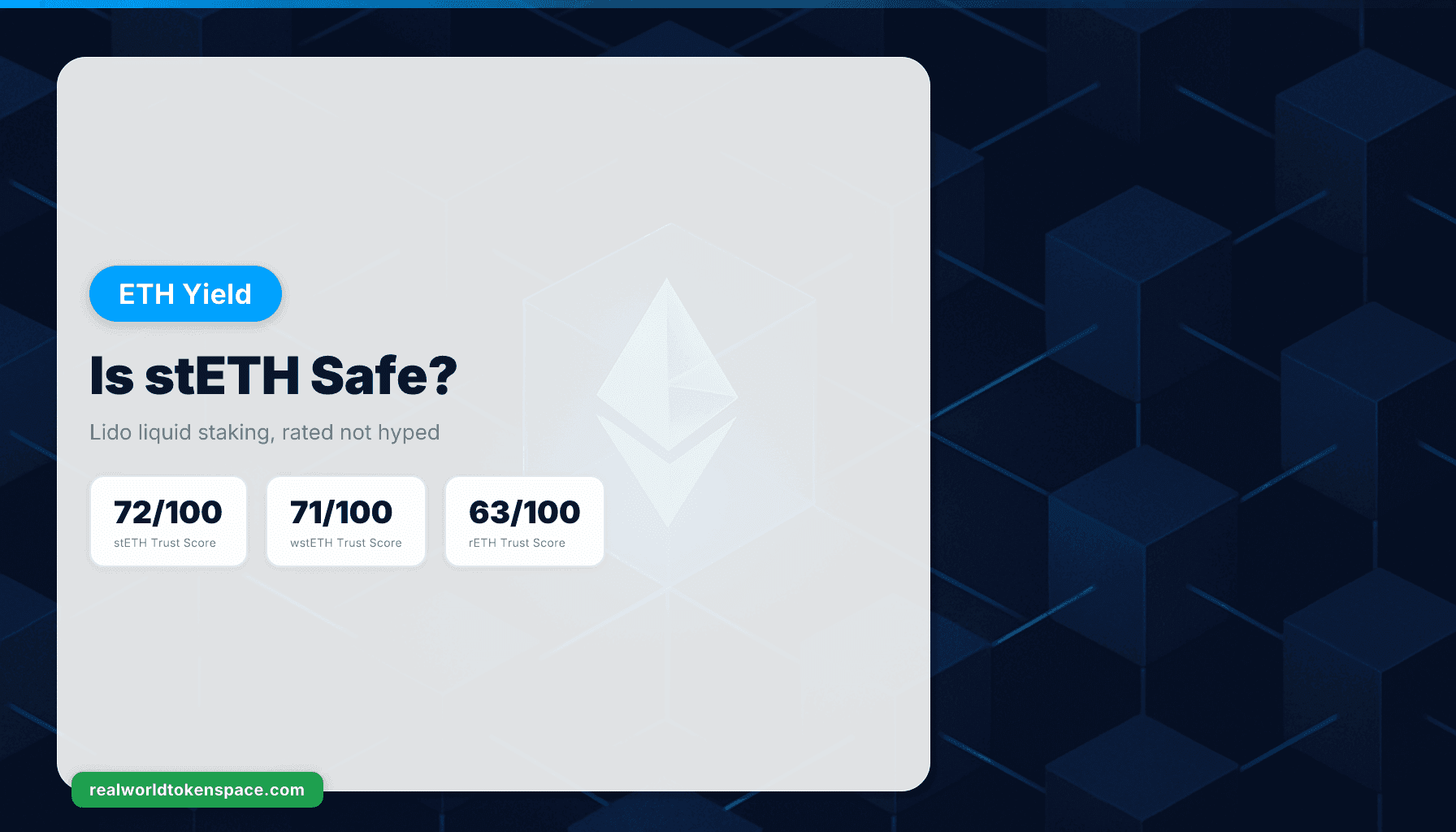
Is stETH safe?
Verdict: stETH carries an RWTS Trust Score of T3 (74/100), the highest-rated liquid staking token we cover, but still a Tier 3 asset, not a Tier 1 cash-equivalent. It is backed 1:1 by staked ETH plus accrued rewards, it is the deepest liquid-staking market on-chain, and it has a multi-year operating history. The risks that keep it out of the top tier are real: validator slashing, smart-contract exposure, and short-term secondary-market discounts during stress. RWTS isn't bullish or bearish on ETH. We rate. You decide.
What stETH actually is
stETH is the receipt token Lido issues when you deposit ETH into its staking pool. Your ETH is delegated across a curated set of node operators that run validators on Ethereum's proof-of-stake consensus. In return you hold stETH, a claim on that staked ETH plus the staking rewards it earns. The token rebases daily: your balance grows as rewards accrue, so one stETH stays roughly pegged to one ETH in value terms.
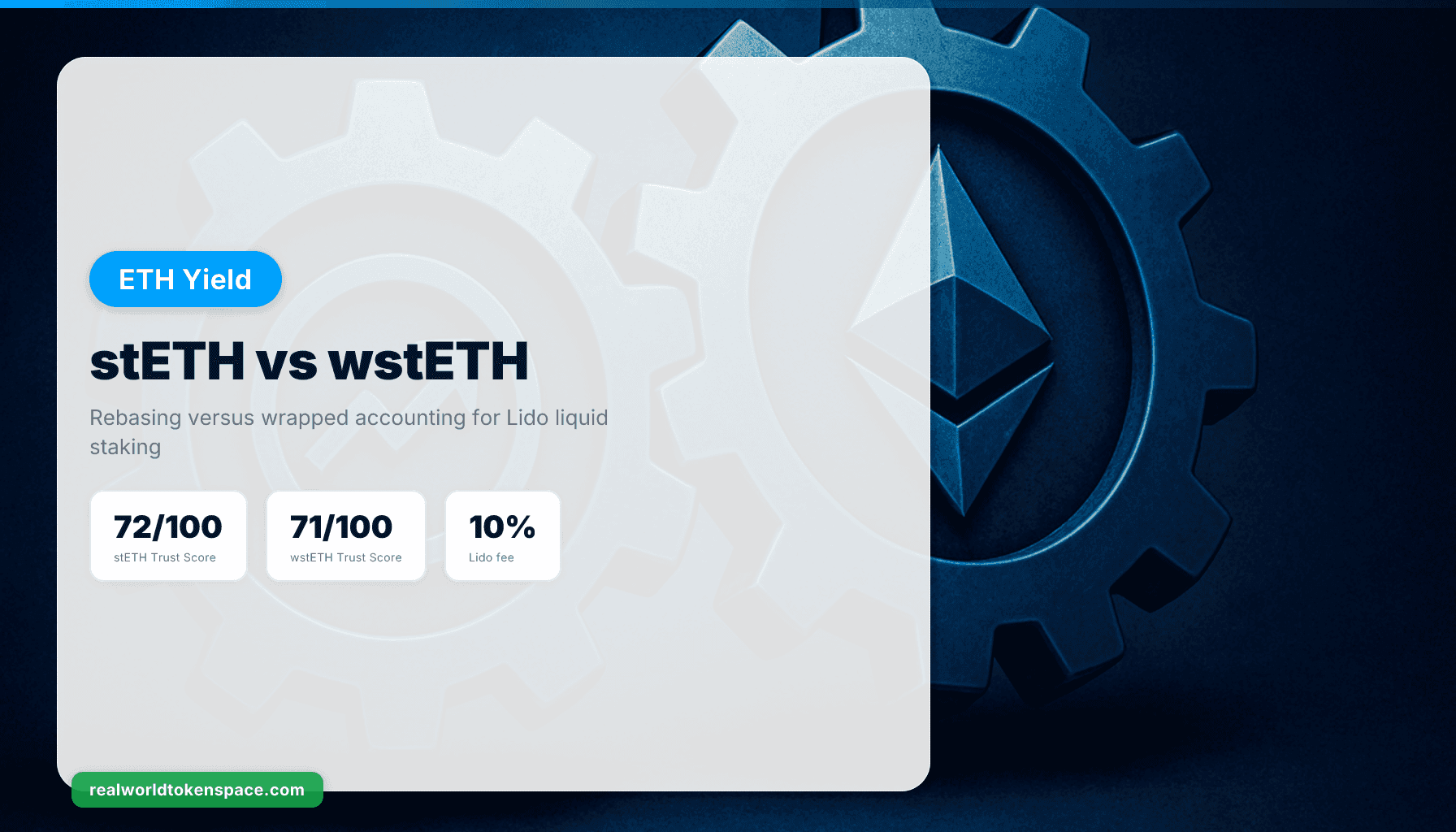
That rebasing design is elegant for holders but awkward for DeFi. Many lending markets and vaults cannot handle a balance that changes every day. That is the reason wstETH exists, the "wrapped" version. wstETH keeps a fixed balance while its redemption value against stETH rises over time, which makes it the preferred collateral inside protocols. On the RWTS Trust Score, wstETH rates T3 (74/100), one point below stETH itself, reflecting the thin additional wrapper-contract layer.
The risks that cap the score
A 72 is a strong score for the category, but it is firmly Tier 3 for specific, nameable reasons.
Validator and slashing risk. Staked ETH can be penalized if node operators misbehave or go offline. Lido spreads stake across many operators to limit single-operator blast radius, but the risk is not zero, and it is borne by the pool.
Smart-contract risk. stETH is only as safe as the Lido contracts and the underlying Ethereum staking layer. A bug in the staking router, the oracle that reports validator balances, or the withdrawal queue would impair the token. This is the structural ceiling that separates any liquid-staking token from a fully-backed cash instrument.
Depeg-on-secondary risk. stETH is not a stablecoin and was never designed to hold a dollar peg, it tracks staked ETH plus rewards. During the 2022 liquidity crunch, stETH traded at a meaningful discount to ETH on secondary markets because exits were not yet enabled. Protocol withdrawals are now live, so holders can redeem 1:1 for ETH directly from Lido, which structurally anchors the value. But in an acute liquidity event, the secondary-market price can still gap below ETH before the redemption arbitrage closes it. If you may need to exit fast in a panic, that gap is the risk you are accepting.
The mechanism naming matters here: stETH's value holds because withdrawals let arbitrageurs redeem any discount for full ETH. Remove that pathway (as in 2022) and the discount can persist. With it live, deviations are short-lived.
stETH vs wstETH vs rETH
| Token |
Protocol |
Trust Score |
Tier |
Best for |
| stETH |
Lido |
74/100 |
T3 |
Holding, deepest liquidity |
| wstETH |
Lido |
74/100 |
T3 |
DeFi collateral, non-rebasing |
| rETH |
Rocket Pool |
66/100 |
T3 |
More decentralized validator set |
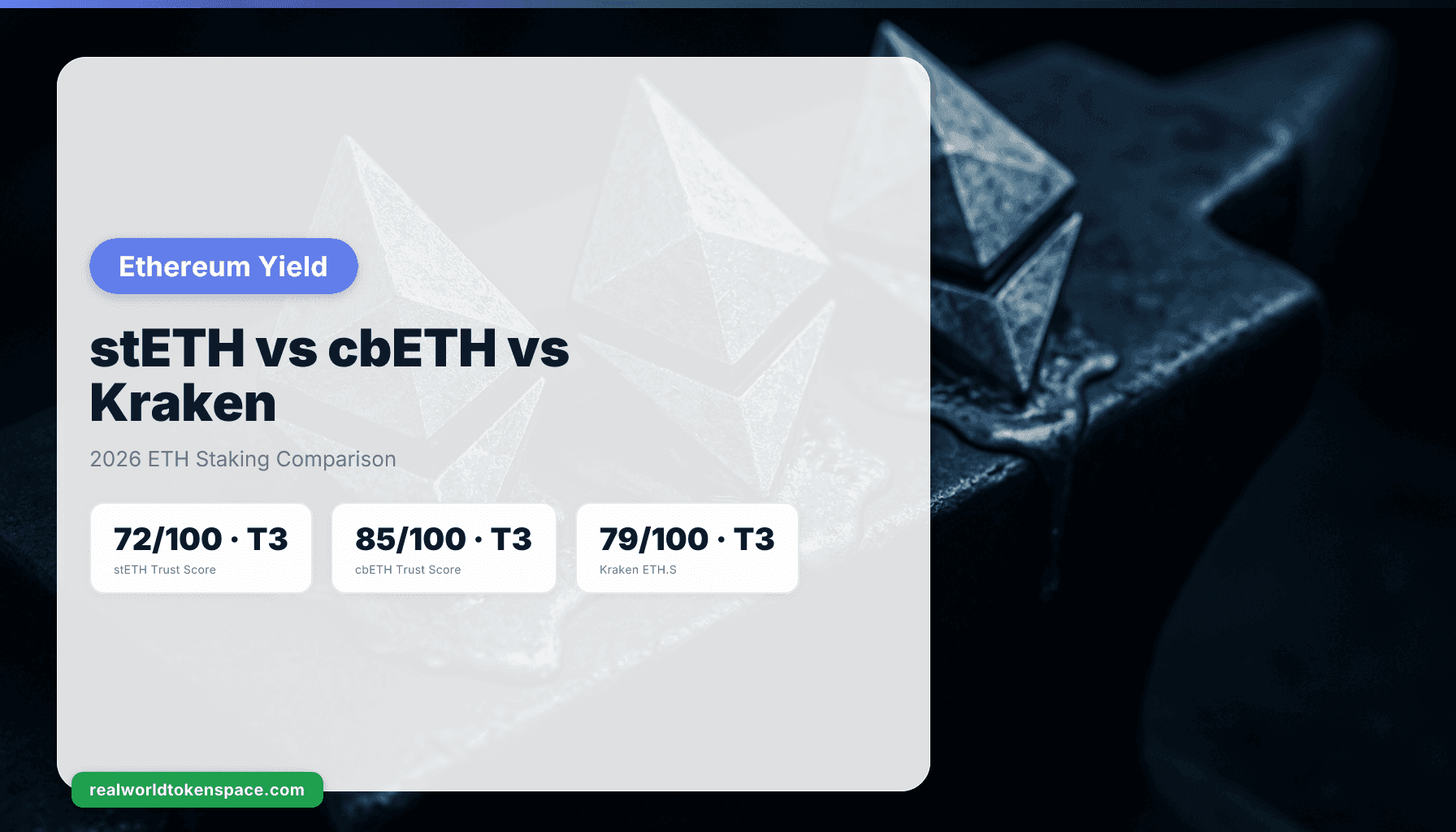
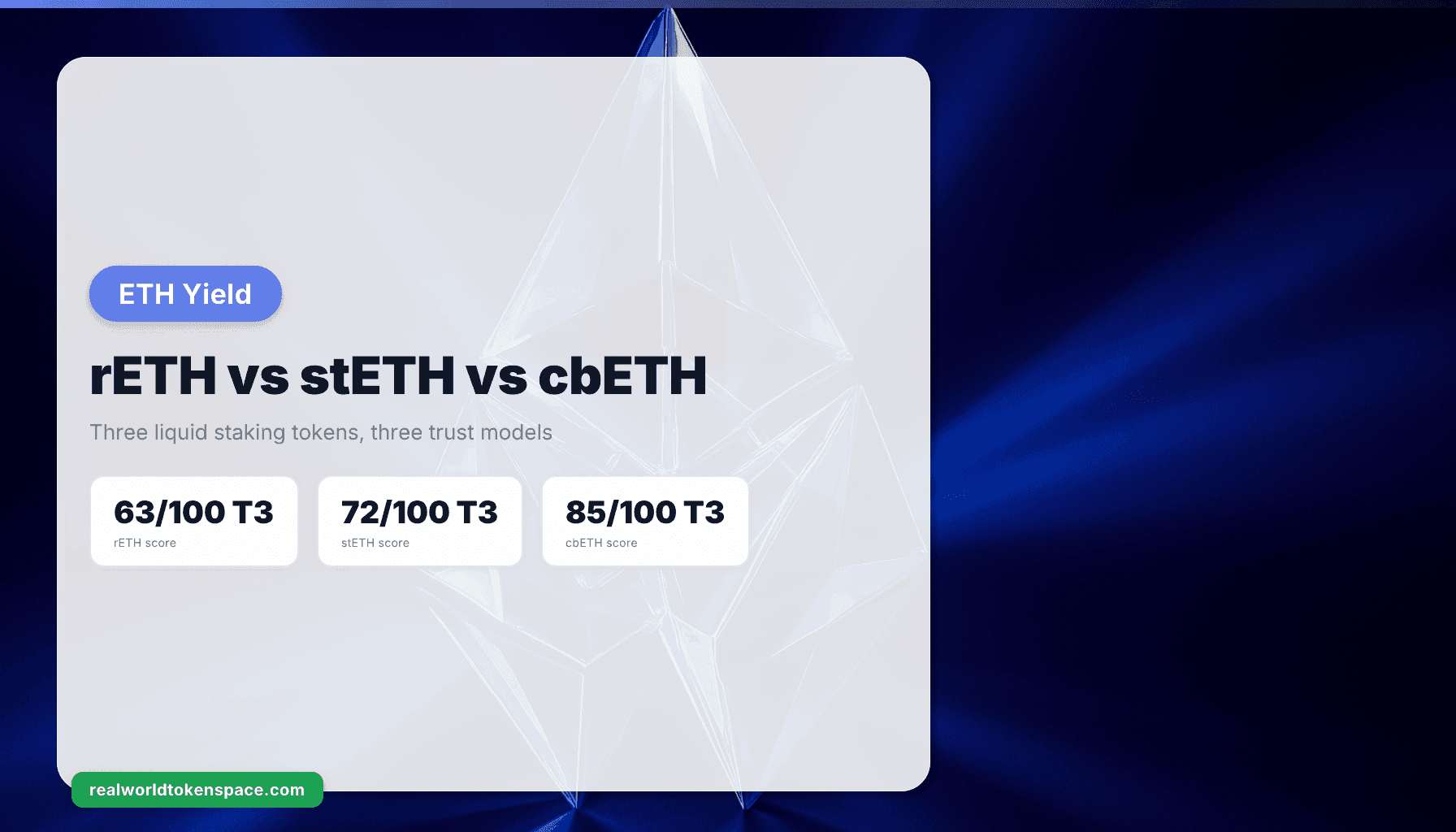
stETH leads on liquidity and operating history. rETH from Rocket Pool rates T3 (66/100); it offers a more permissionless, decentralized node-operator model, which some holders weight heavily, but it trades thinner and scores lower on our rubric. The choice is a genuine trade-off: liquidity and track record versus decentralization. For a fuller side-by-side, see our companion piece rETH vs stETH vs cbETH: Liquid Staking Comparison.
The verdict
If you want the most liquid, longest-running liquid staking token, stETH at 74/100 is the highest-rated option we cover, with the honest caveat that "highest-rated in the category" still means Tier 3, not a cash-equivalent. If you hold inside DeFi protocols, use wstETH for the non-rebasing mechanics. If you prioritize validator decentralization over liquidity, rETH is the more decentralized choice at a lower score.
The conditional that should govern your sizing: if you can hold through a liquidity event and rely on protocol withdrawals, the depeg risk is manageable. If you might be a forced seller in a panic, treat the secondary-market discount as a live cost, not a tail.
For the full picture, see our ETH yield hub and the scoring rubric on our methodology page.
We rate. You decide.
Related on RWTS
Stay Ahead of the Yield Curve
Subscribe to The Yield Report for weekly yield intelligence.
Subscribe Now