Liquid staking tokens all promise the same thing: ETH staking yield without locking your ETH in a validator. The differences are in who runs the validators, who holds the keys, and what breaks if something goes wrong. rETH, stETH, and cbETH answer those questions three different ways.
This is a comparison of trust models, not a yield chase. The base reward is set by the Ethereum protocol and is roughly the same for all three. What varies is the path that reward takes to reach you, and the counterparty risk attached to each path. Our Trust Score methodology weighs custody, decentralization, smart-contract surface, and redemption mechanics, the factors that diverge here.
stETH: the incumbent
Lido's stETH is the largest liquid staking token by a wide margin. It is a rebasing token: your balance grows daily as rewards accrue, so one stETH targets one ETH in value while the count climbs. That mechanic makes stETH easy to reason about for savers but awkward in some DeFi contracts, which is why the wrapped variant exists.
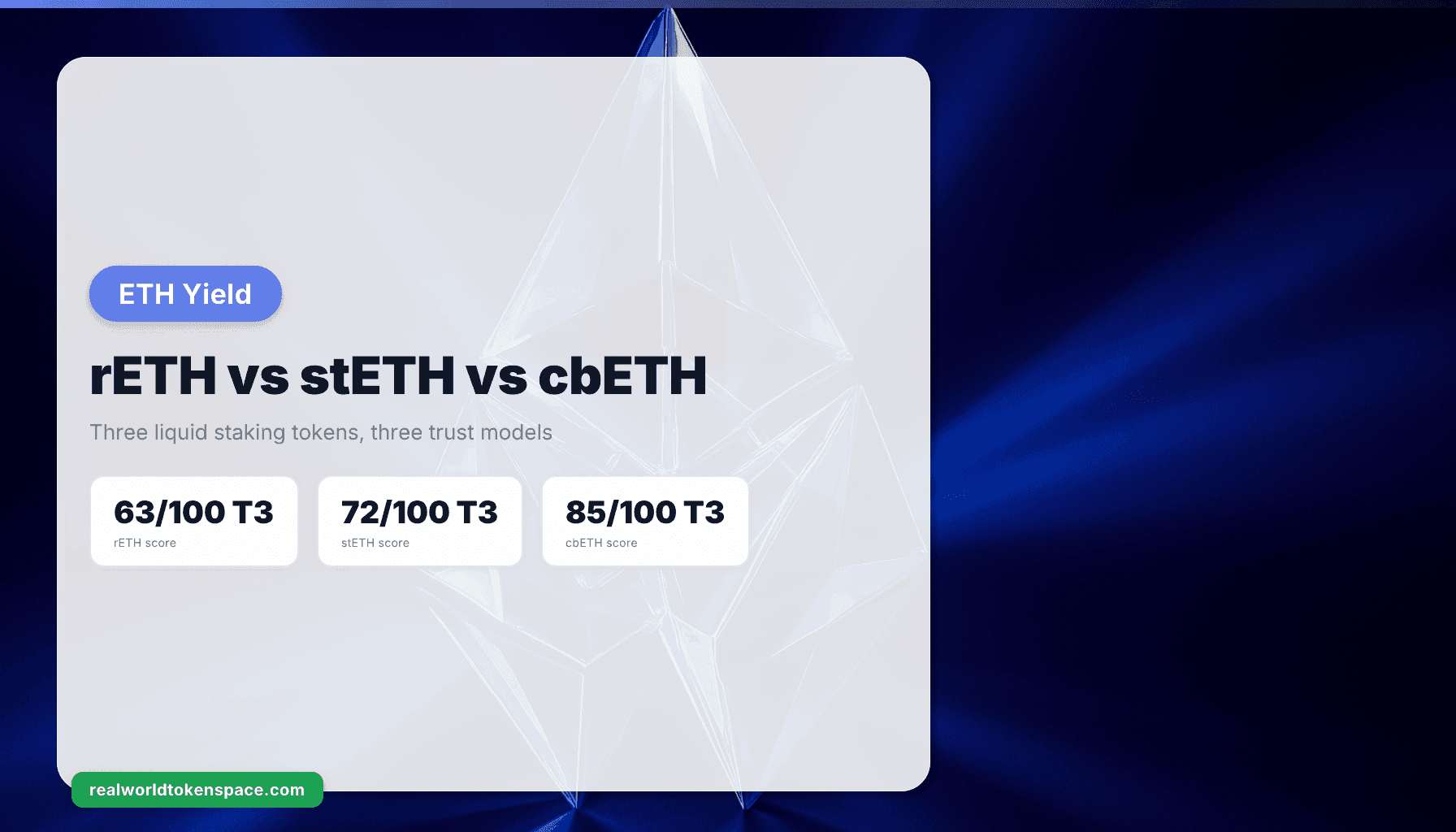
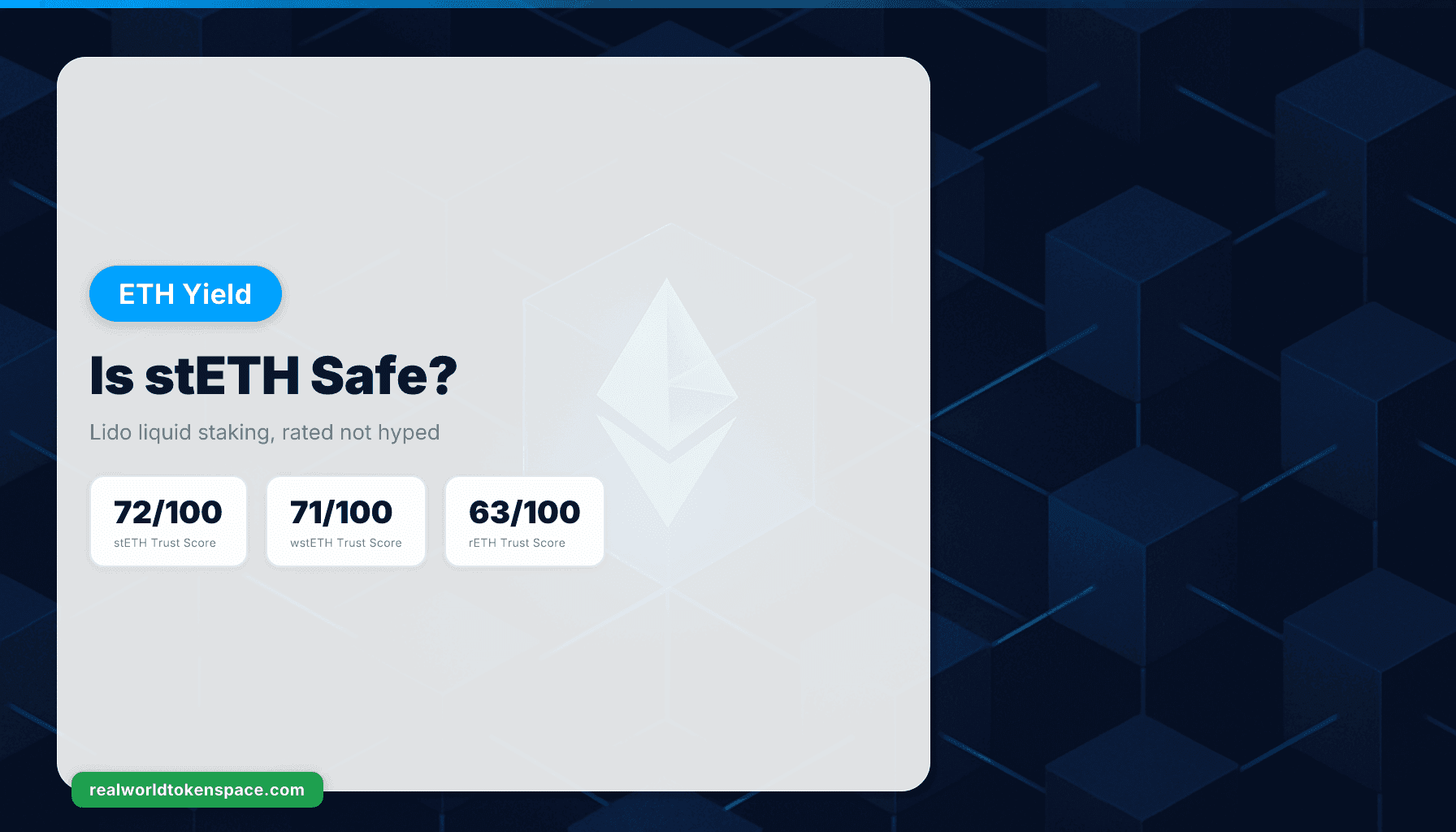
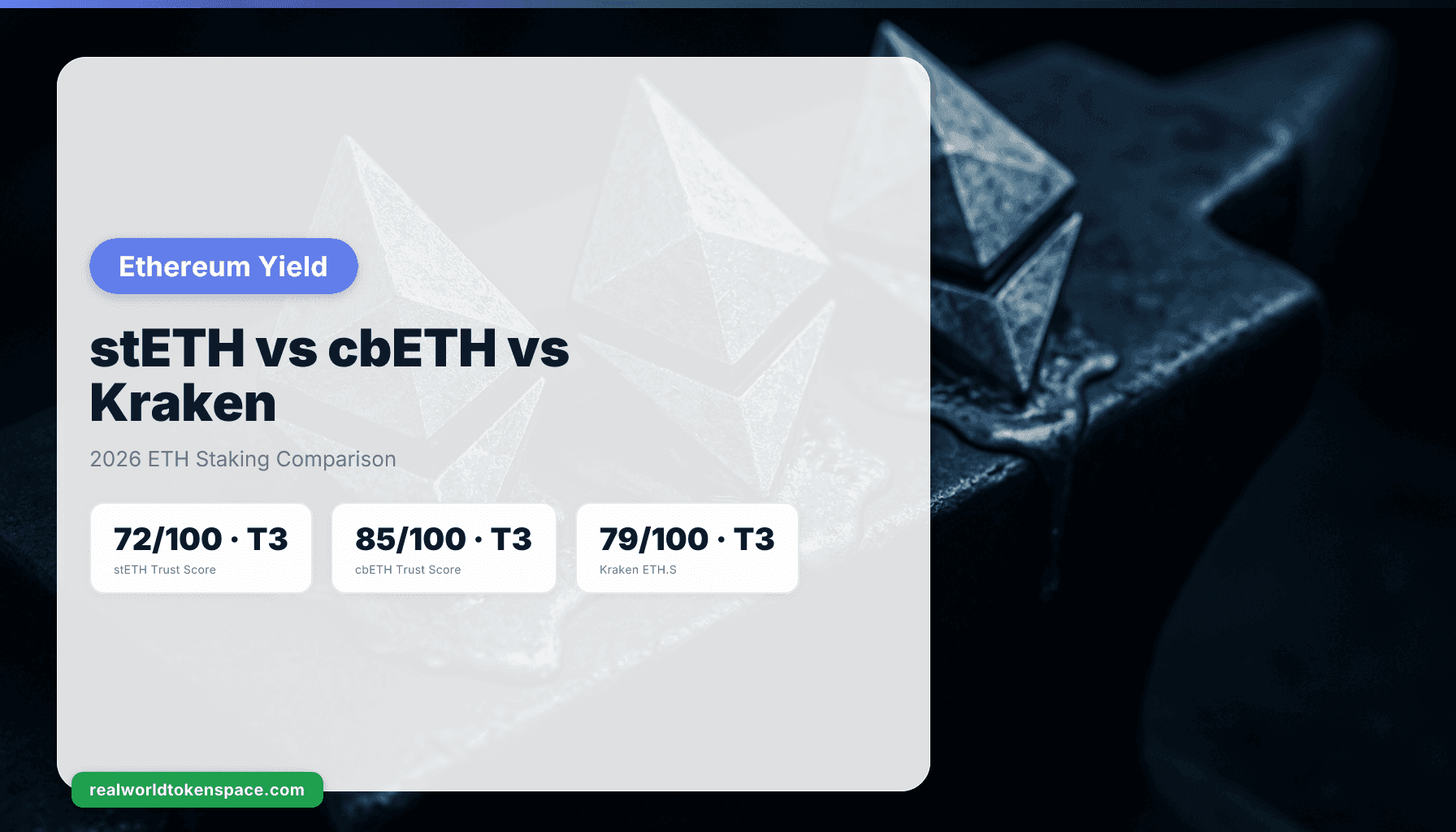
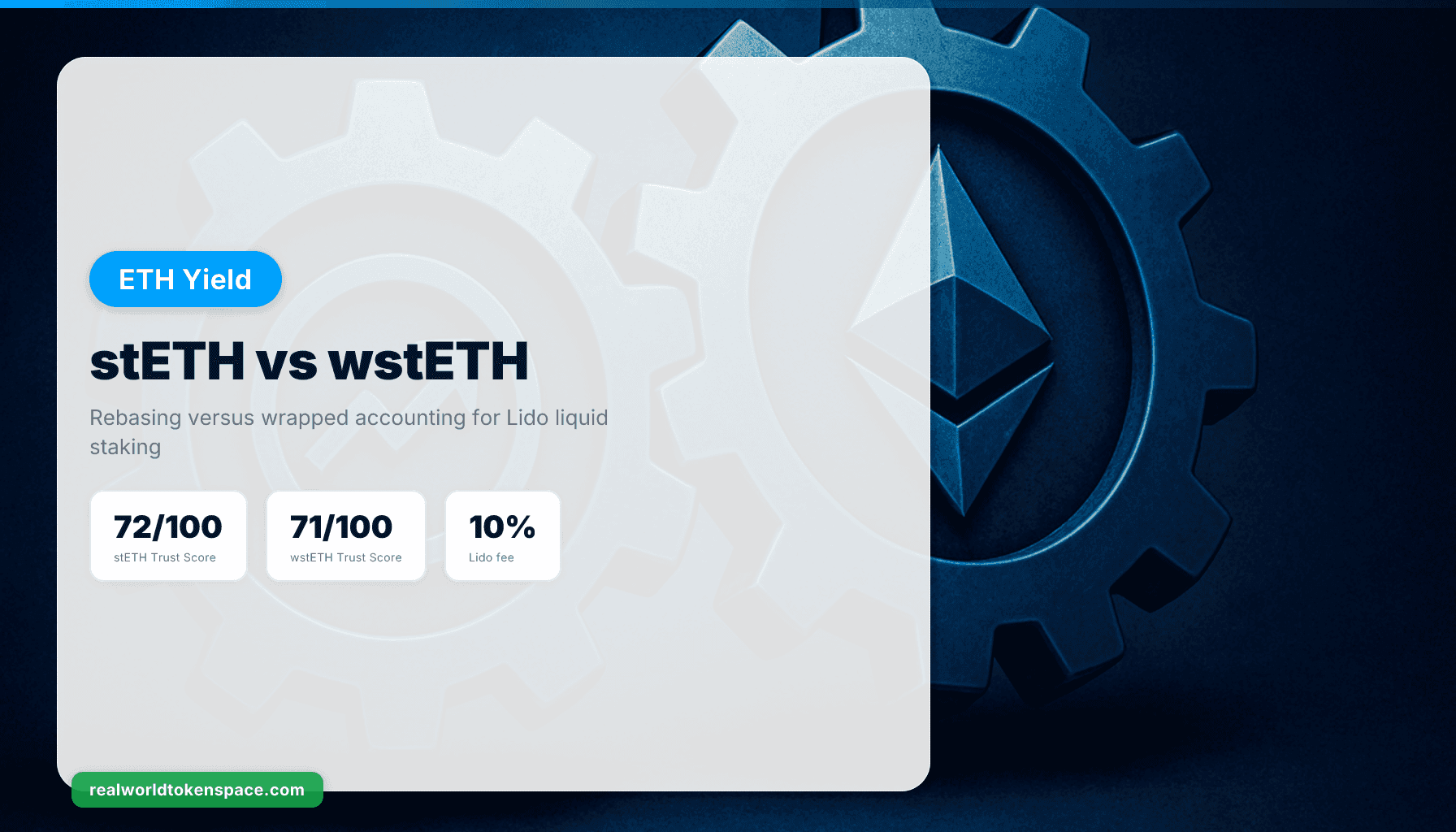
stETH carries an RWTS Trust Score of T3 (72/100). The strengths are deep liquidity, broad DeFi integration, and a long operating history. The reservations are governance concentration and the size of its operator set relative to the network. For the rebasing-versus-wrapped mechanics specifically, see our companion guide, stETH vs wstETH: Rebasing and Wrapped ETH Staking.
rETH: the decentralization case
Rocket Pool's rETH takes the opposite design stance. Rather than a curated operator set, Rocket Pool lets anyone run a validator by posting ETH plus RPL collateral, which spreads node operation across a permissionless network. rETH is a value-accruing token: the balance stays fixed and the token's redemption value rises as rewards compound, which composes more cleanly into lending markets.
rETH carries a Trust Score of T3 (63/100). The decentralization argument is its core appeal, a broader, permissionless operator base reduces single-point dependency. The score reflects a smaller liquidity footprint and a more complex collateral mechanism than stETH, which adds moving parts our methodology weighs. Investors who prioritize censorship resistance over raw liquidity tend to weight rETH higher than the number alone implies.
cbETH: the custodial trade
Coinbase's cbETH is the most centralized of the three and, on our rubric, the highest-scored: T3 (85/100). cbETH is a value-accruing token backed by ETH staked through Coinbase's own infrastructure. There is one custodian, one regulated US public company, and one balance sheet behind it.
That concentration is exactly why it scores well on our custody and transparency axes and exactly why decentralization purists avoid it. The trade is explicit: you accept single-custodian counterparty risk in exchange for regulated-entity transparency, audited reserves, and a familiar redemption path. For an ETH staker who already trusts Coinbase with custody, cbETH removes the protocol-governance and operator-set questions that weigh on stETH and rETH, and replaces them with one corporate counterparty.
How to choose
The three sit in the same Tier 3 band but for different reasons, and the right pick depends on what you are optimizing for.
- Liquidity and DeFi reach: stETH leads on integration depth and secondary-market liquidity.
- Decentralization and censorship resistance: rETH's permissionless operator network is the strongest of the three.
- Custodial transparency and regulated counterparty: cbETH scores highest on our rubric, with the trade-off of single-custodian concentration.
Net yield differences are small and driven by fees, not by which protocol "stakes better." If realized APY is your only axis, the spread is a few tenths of a percent and shifts with fee policy. The durable difference is structural: decentralization versus liquidity versus custodial clarity. For the full category, including restaking variants and validator-risk scoring, see our ETH yield hub.
RWTS isn't bullish or bearish on any liquid staking token. We're the credit-rating agency for tokenized real assets. We rate. You decide.
Related on RWTS
Stay Ahead of the Yield Curve
Subscribe to The Yield Report for weekly yield intelligence.
Subscribe Now