If you stake ETH through Lido, you encounter two tokens that represent the exact same underlying position: stETH and wstETH. They are not competitors. They are two accounting formats for one staked balance, and choosing between them is a question of how you intend to use the token, not which one is "better." This guide breaks down the mechanism, the DeFi fit, the redemption mechanics, and where each lands on the RWTS Trust Score.
The same staked ETH, two accounting formats
Start with what both tokens are. stETH is a transferable rebasing utility token representing a share of the total ETH staked through the protocol, which consists of user deposits and staking rewards. The defining feature is the rebase. Rewards are distributed daily at 12:00 UTC through a rebase mechanism that increases your stETH balance proportionally. In other words, your stETH balance grows every day, and the token price stays anchored near 1 ETH.
wstETH inverts that design. It wraps the same position so the balance stays constant while value accrues in the exchange rate against stETH. Both are 1:1 value-preserving, wrapping and unwrapping does not change your underlying claim, only the format. The reason the wrapped version exists is mechanical: many smart contracts, especially lending markets and AMM pools, behave badly when a collateral token's balance silently changes underneath them. A fixed balance with an appreciating exchange rate is far easier to account for.
The practical takeaway: hold stETH if you want rewards to appear automatically in your wallet with no extra step. Choose wstETH if you intend to use the token as collateral or deposit it into protocols that assume a non-rebasing ERC-20.
How the yield actually works
Both tokens earn the same thing (the underlying Ethereum staking reward) and that reward is variable, not fixed. Lido is passing through Ethereum staking economics rather than manufacturing a fixed return. Validator performance matters. Consensus layer rewards matter. Execution layer income matters too, including priority fees and MEV.
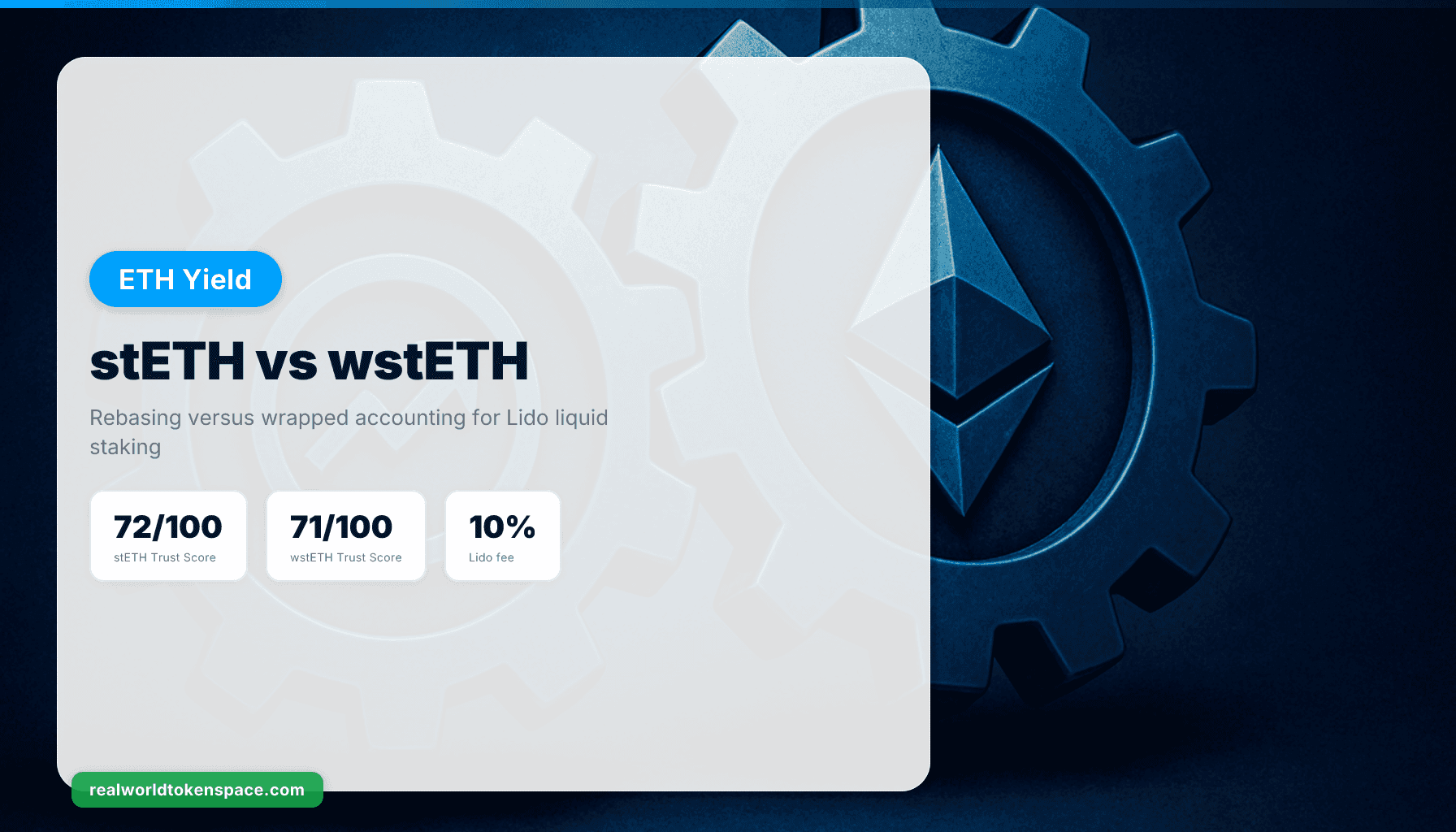
The headline number moves with network conditions. As of March 27, 2026, Lido's institutional page showed an APR of 2.5%. That number should be treated as a current snapshot, not a standing promise. It moves with Ethereum staking conditions and can look different weeks or months later. The fee structure is worth knowing: Lido charges a 10% service fee on rewards. Half goes to the node operators, and half goes to the Lido DAO treasury. You keep 90% of the gross yield. That fee applies identically to stETH and wstETH because they sit on the same staked position.
Redemption and the peg
Both tokens redeem to ETH through the same path. You can use the Withdrawals Request and Claim tabs to unstake stETH and receive ETH at a 1:1 ratio. The withdrawal is not instant. The withdrawal queue mechanism allows users to unstake directly through Lido, though this process takes 2-5 days depending on validator exit queue length.
The peg deserves a clear-eyed note. In secondary markets stETH can trade slightly off 1 ETH, but the underlying claim is unchanged. If stETH trades below 1 ETH in secondary markets, it represents a temporary liquidity premium rather than a fundamental value loss, since each stETH remains redeemable for 1 ETH through Lido's withdrawal mechanism. The cautionary history is real, though: during the 2022 depeg event, even sophisticated market participants faced challenges exiting positions at favorable prices. If the stETH/ETH ratio holds inside its typical narrow band, leveraged collateral positions stay comfortable. If a liquidity shock widens the discount, anyone using wstETH as leveraged collateral faces liquidation risk before arbitrage restores the peg.
The RWTS Trust Score read
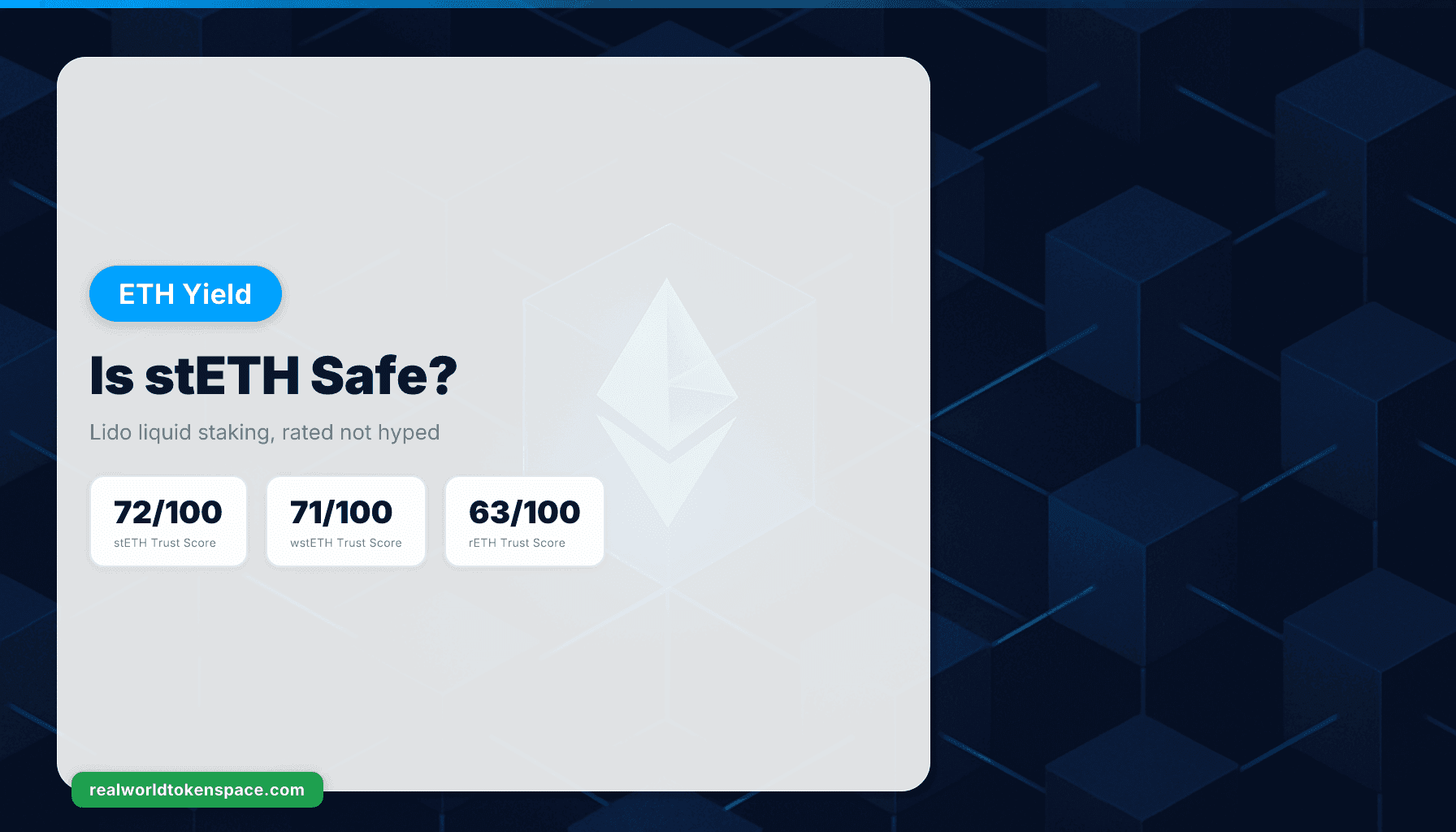
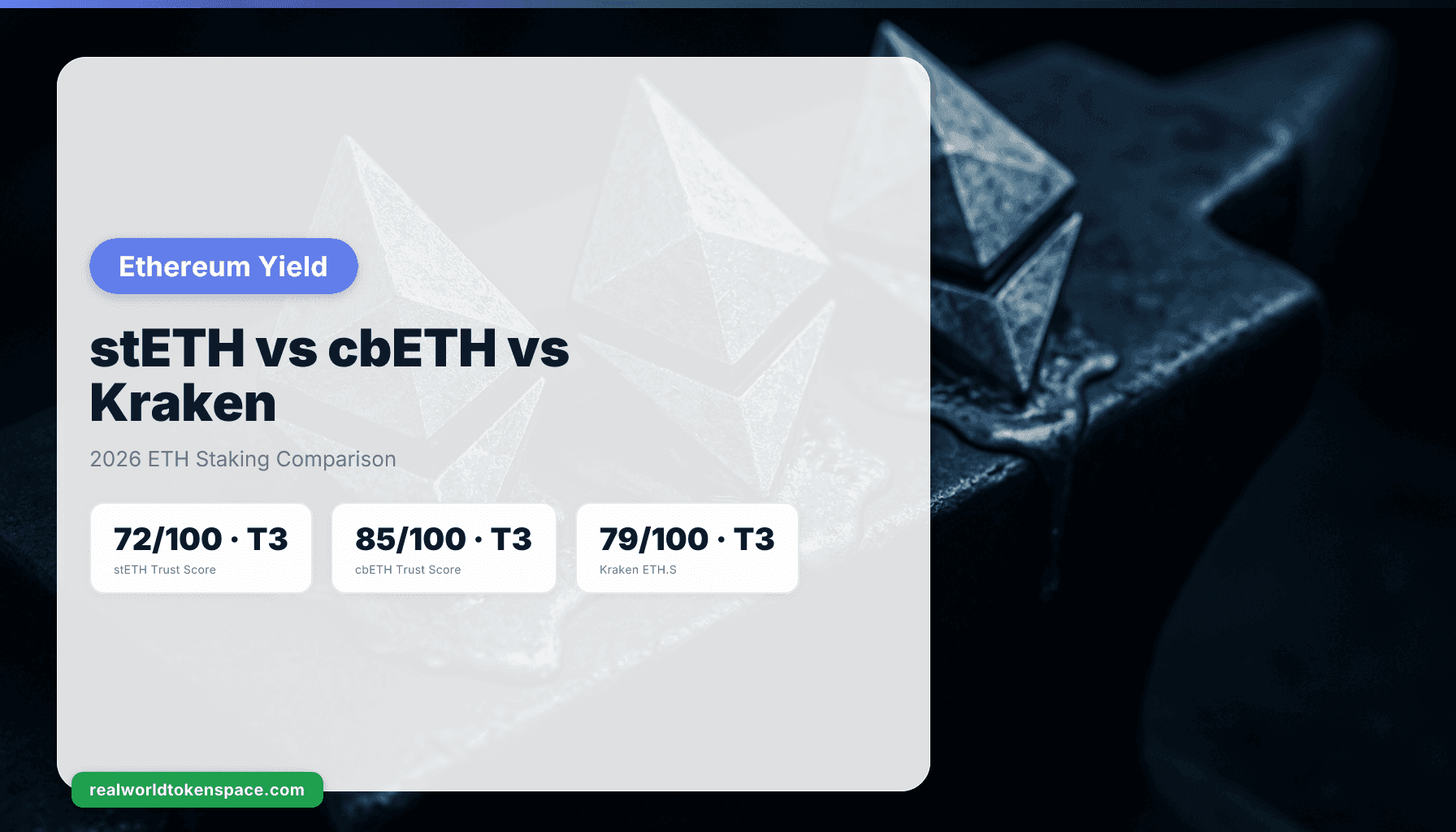
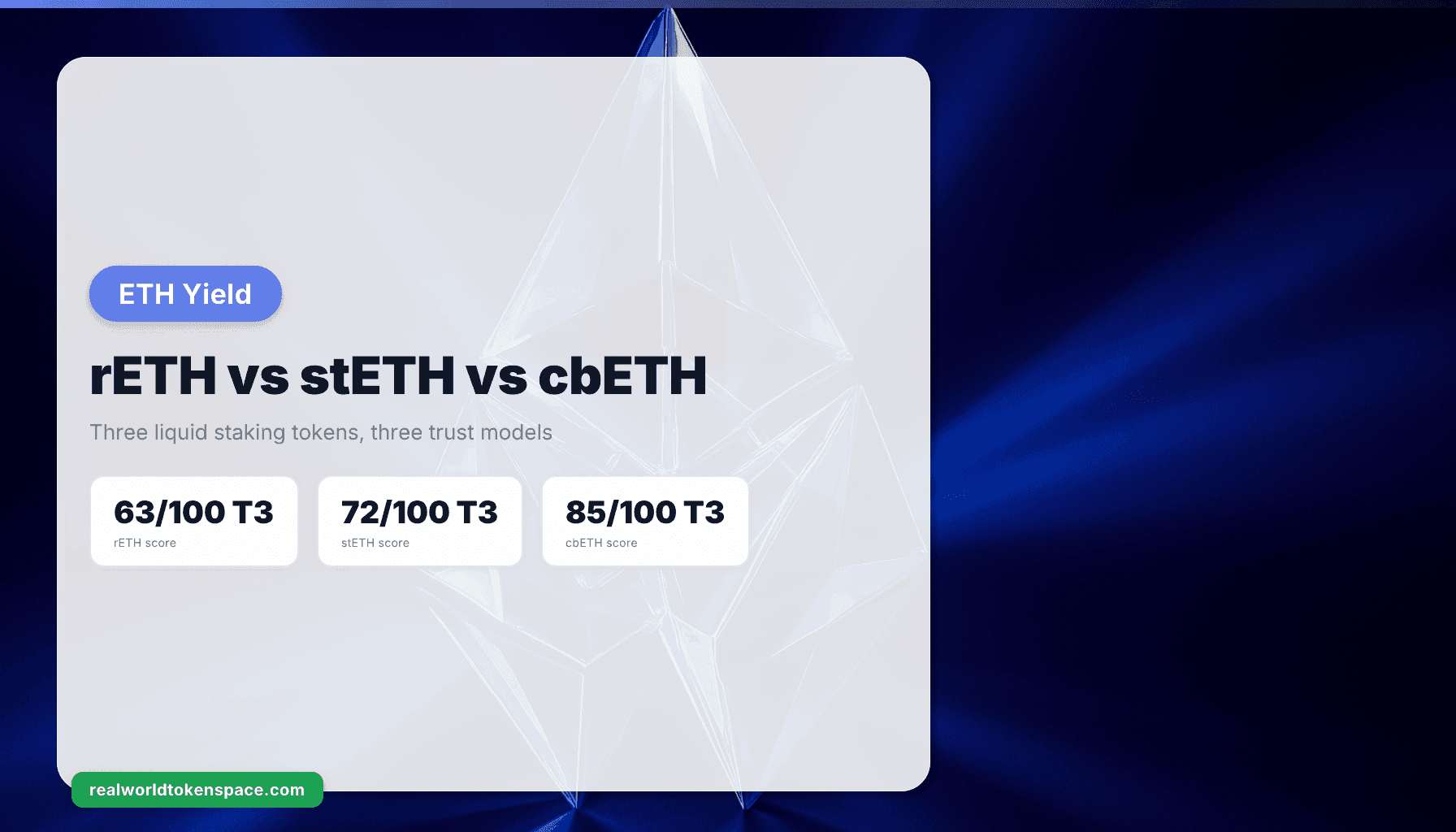
RWTS rates stETH at T3 (72/100) and wstETH at T3 (71/100). The one-point gap is not a verdict on the underlying staked ETH, which is identical, it reflects the small additional contract surface introduced by the wrapper. For context on the wider liquid staking field, rETH from Rocket Pool carries a T3 (63/100), reflecting a different validator model and decentralization profile.
The structural risk that anchors all of these scores is concentration. The biggest critique comes from Ethereum core developers. Because Lido controls such a large percentage of the total staked ETH, often exceeding 30%, there is a fear that it could exert disproportionate influence over the network. That is a network-governance consideration, not a same-day risk to a holder's principal, but it factors into how we weigh decentralization in our Trust Score methodology.
For a deeper look at how Lido stacks up against the decentralized alternative, see our companion piece Is stETH Safe? Lido vs Rocket Pool rETH Trust Score Comparison. The full category landscape and live scores live on the eth-yield hub.
Bottom line
stETH and wstETH are the same staked ETH wearing different accounting clothes. Hold stETH for simplicity and automatic, visible rewards. Wrap to wstETH when a protocol needs a non-rebasing collateral token. Both inherit the same yield, the same 10% fee, the same withdrawal queue, and the same concentration debate around Lido's network share. The choice is operational, not directional.
RWTS isn't bullish or bearish on ETH staking or any token. We're the credit-rating agency for tokenized real assets. We rate. You decide.
Related on RWTS
Stay Ahead of the Yield Curve
Subscribe to The Yield Report for weekly yield intelligence.
Subscribe Now