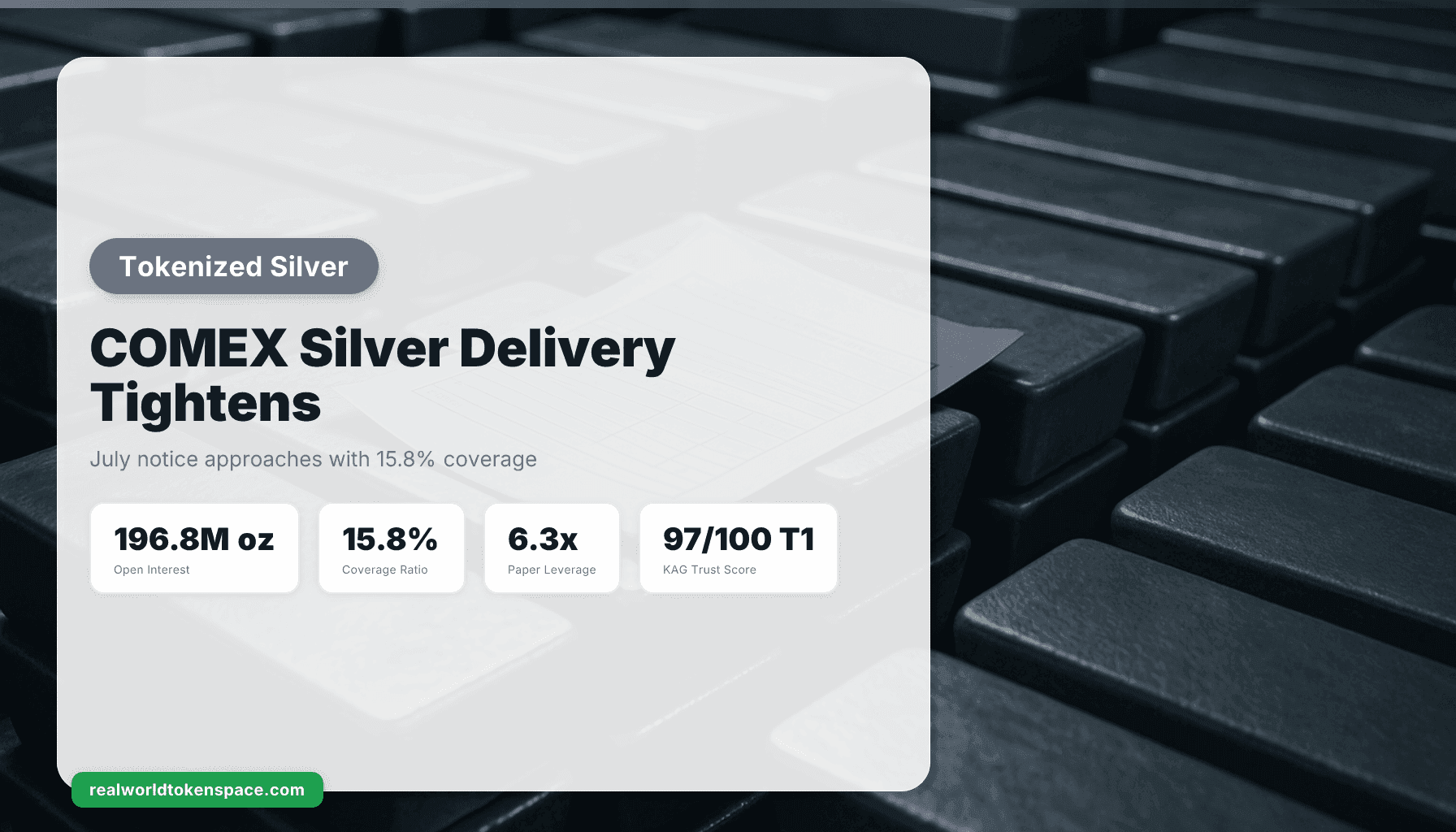
The clearest signal in silver right now is not the price chart. It is the delivery data. July 2026 first notice day is six business days away with 39,356 contracts (196.8M oz) still open. That is a large block of paper standing close to the deliverable window, against a registered pile that exchange monitors are flagging as thin.
The headline coverage figures sharpen the picture. Registered silver has increased 5.7% over the past 30 days. Coverage ratio stands at 15.8%, tight. Paper leverage is elevated at 6.3x, significantly more paper claims than deliverable metal. COMEX warehouse stock reports, published daily, are the authority anchor here, and they describe a market where the immediately deliverable pool is small relative to open obligations.
The physical reality
Most futures positions never stand for delivery. Most futures traders do not intend to take delivery. As first notice day approaches, they typically choose one of three actions: close the position, roll the contract to a later delivery month, or stand for delivery and accept physical settlement. So the 196.8M-ounce figure is potential delivery demand, not confirmed. The question is how much of it converts.
What makes this cycle notable is that delivery pressure has been building even as the price fell. Earlier in 2026 the stress was acute: between early and mid-January, in just seven days, 33.45 million ounces of silver were physically withdrawn for delivery. That meant roughly 26% of COMEX's registered inventory disappeared in a single week. The structural backdrop has not eased. Industrial demand from electronics, solar, and data-center buildout continues to compete with investment demand for the same finite deliverable metal.
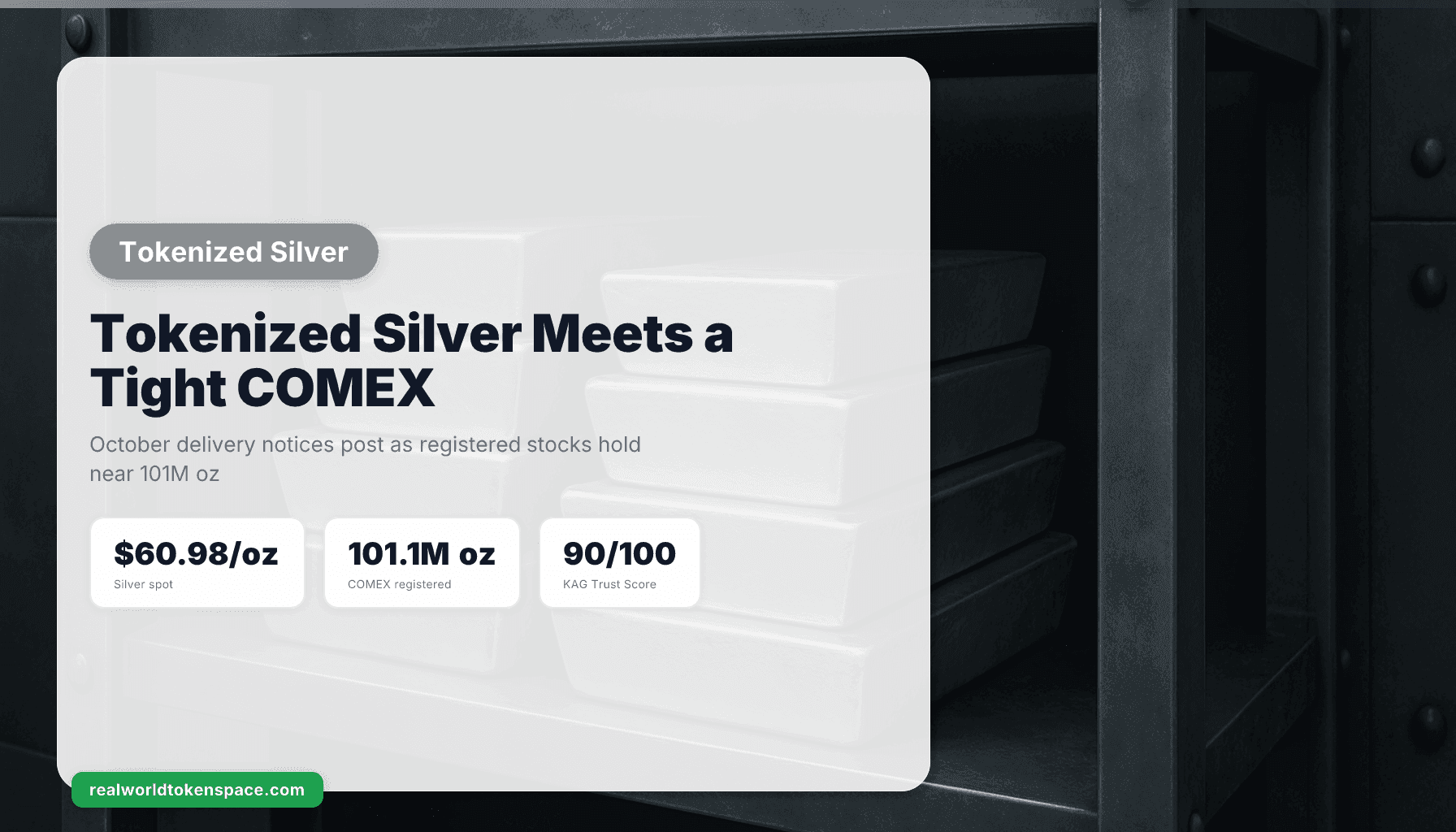
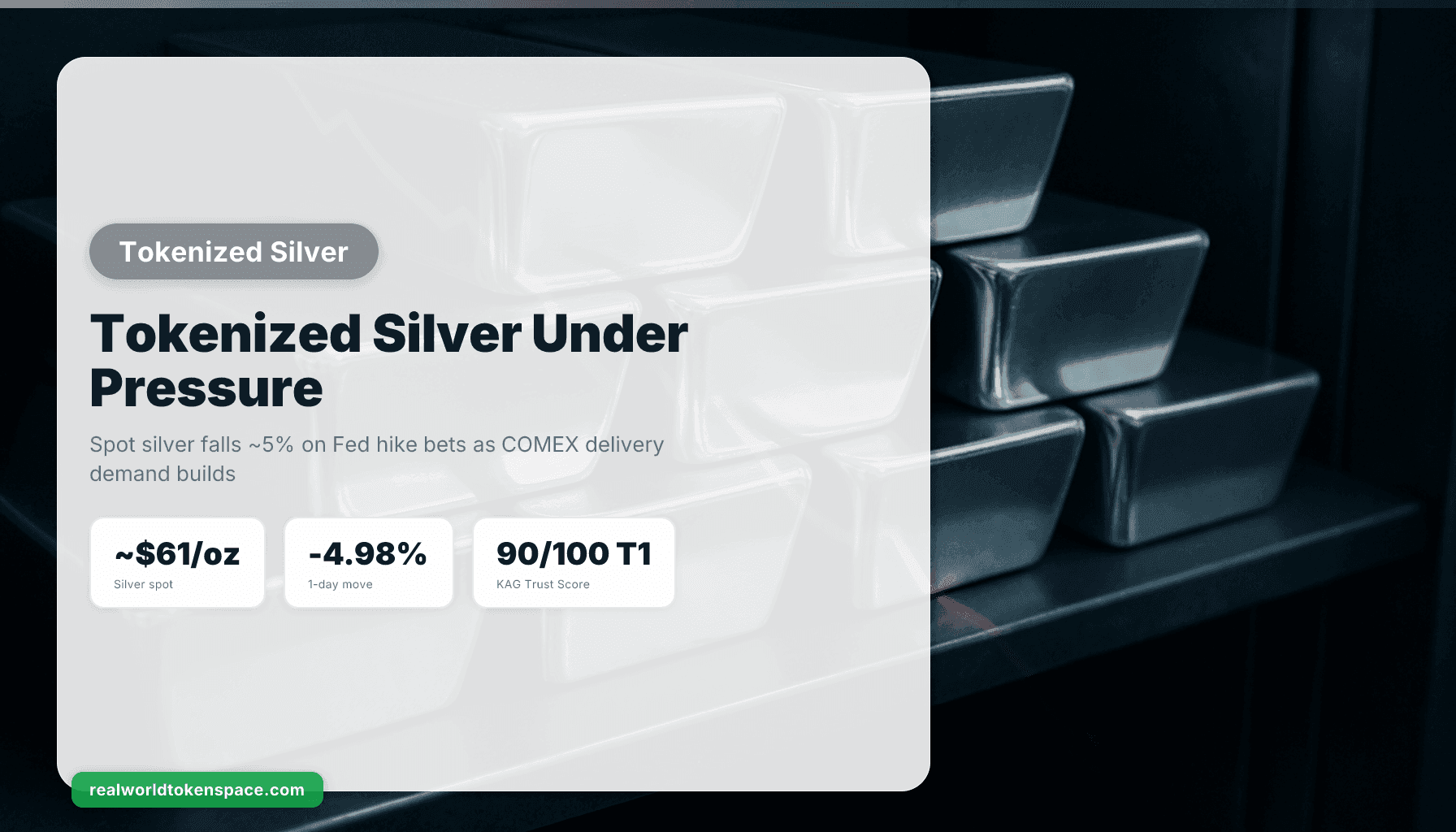
Price, meanwhile, has moved the other way on macro forces. Silver rose to 65.20 USD/t.oz on June 22, 2026, up 0.47% from the previous day. Over the past month, silver's price has fallen 16.49%, but it is still 80.57% higher than a year ago. The mechanism: silver was weighed down by expectations of tighter monetary policy after the Federal Reserve left interest rates unchanged last week while adopting a more hawkish tone. Nine of the Fed's 19 policymakers now anticipate at least one rate increase this year, with investors pricing in a potential hike as soon as September. A US-Iran peace roadmap drained the war premium at the same time. So the read is a split market: paper price soft on rates, physical pile tight on delivery.
The RWTS Trust Score angle on tokenized silver
For buyers who care about owning real, allocated ounces rather than a paper claim into the registered pool, tokenized silver is the bridge between the two worlds. On the RWTS rating, the highest-rated option is clear.
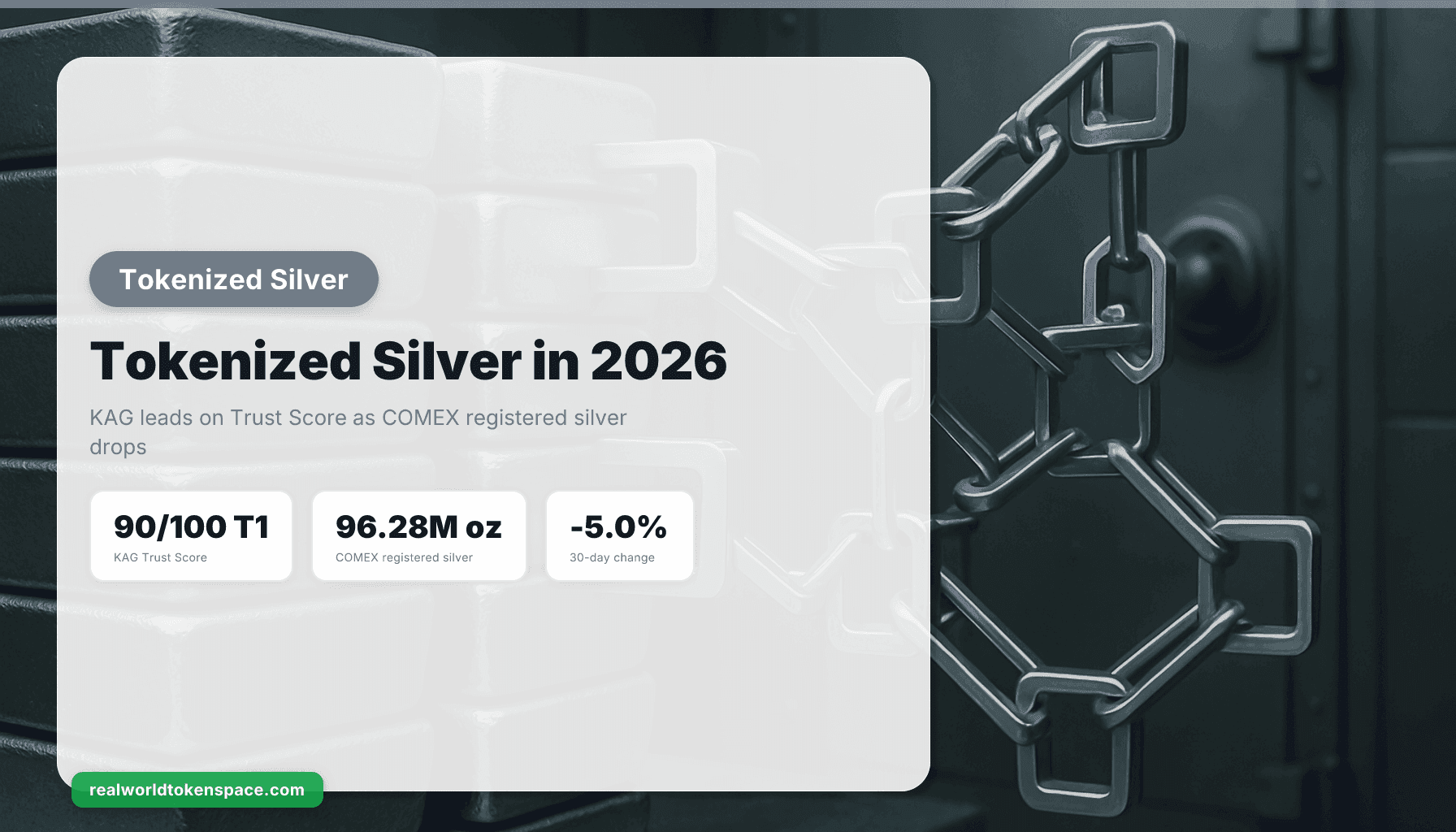
KAG (Kinesis Silver) carries a Trust Score of T1 (90/100), the highest-rated tokenized silver product we cover. It is backed by allocated, audited physical silver with on-chain redemption, which is structurally different from a long position standing for delivery on COMEX. The metal sits outside the futures system, in vaulted allocated form. Buyers should still date the figure and verify live circulation on the Kinesis explorer at explorer.kinesis.money before sizing a position.
KAG's sibling KAU (Kinesis Gold) shares the same T1 (90/100) score and the same allocated-vault model on the gold side, for allocators building a combined metals book. Note what these scores are and are not: KAU and KAG are highest-rated, not biggest. Larger tokenized metals exist by market value, but they score lower on our methodology. The full scoring framework is documented in the RWTS methodology.
A tight COMEX coverage ratio does not, by itself, tell you where price goes next. The 15.8% figure describes the deliverable pool, not the spot fix. What it does illustrate is why the distinction between a paper claim and an allocated, redeemable holding matters, and why that distinction is the entire premise of tokenized metals. For the mechanics of how allocation, audit, and redemption fit together, see our explainer on how tokenized silver works.
The fork from here
If July open interest rolls or closes in line with the typical pattern, the coverage stress eases without a delivery event, and the front-month tension resets into August. If a larger-than-usual share stands for delivery against a 15.8% coverage ratio, the deliverable pool gets tested and premiums on physical metal can widen. The humility variables: the PCE print this week, the Fed's September posture, and whether the US-Iran roadmap holds. Each pulls the macro price independently of the physical pile.
RWTS isn't bullish or bearish on silver or any token. We're the credit-rating agency for tokenized real assets. We rate. You decide.
Related on RWTS
Stay Ahead of the Yield Curve
Subscribe to The Yield Report for weekly yield intelligence.
Subscribe Now