Stablecoin Interest Rates in 2026: Where the Yield Comes From
There is no single stablecoin interest rate. The number you see advertised depends entirely on which product you hold and where its yield originates. That distinction is the whole game, because a rate is only as durable as the income stream behind it.
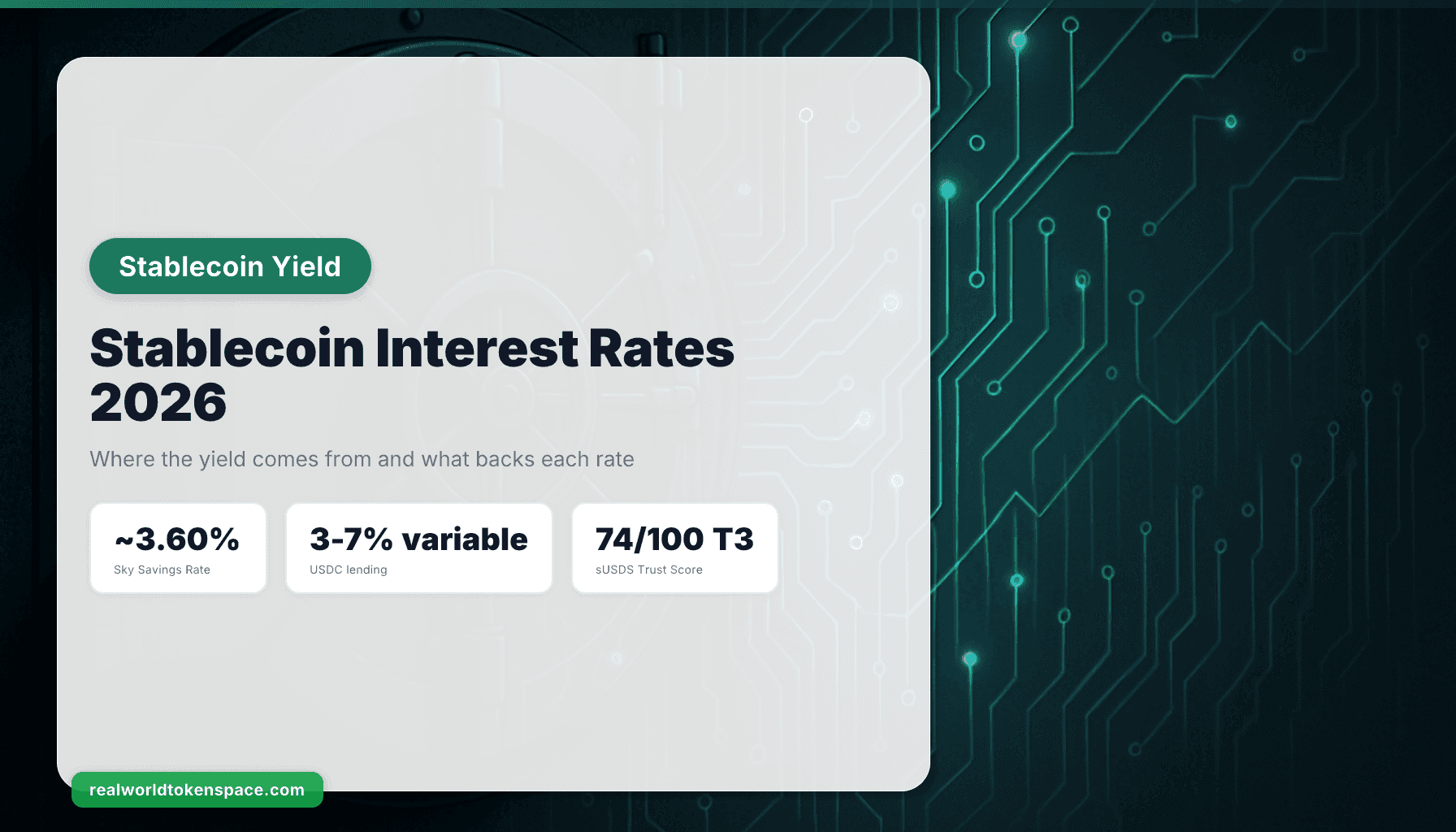
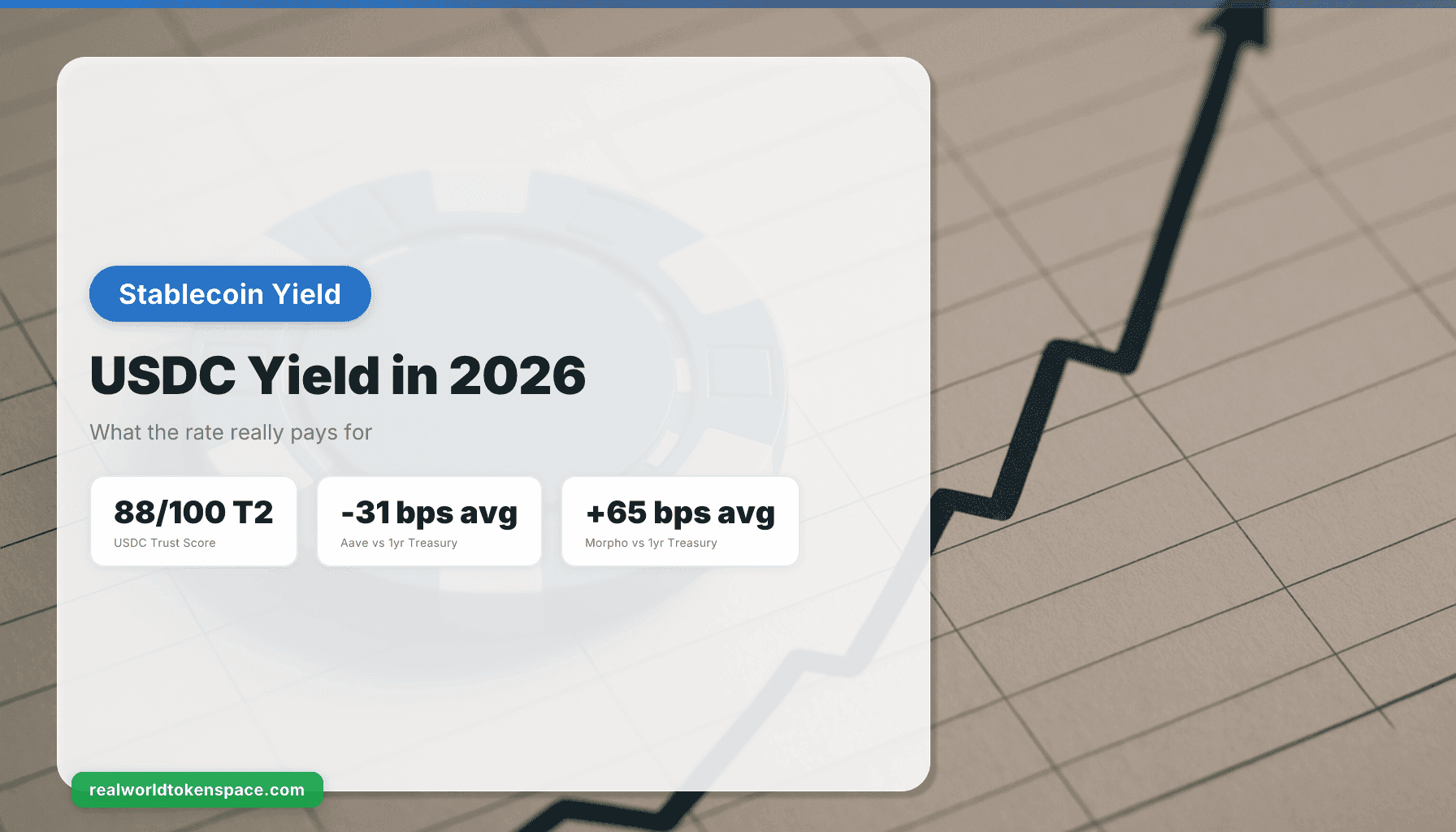
The verdict up front: as of September 2026, conservative administered rates cluster in the mid-3% range, while variable lending markets pay more and carry more risk. As of September 2026 the Sky Savings Rate is set at 3.60% by Sky governance, down from peaks above 8% in 2024 and tracking the broader rate environment. Compare that to lending: USDC yield platforms such as Aave, Morpho and Sky-via-Spark pay variable lending rates on USDC supply, typically 3-7% depending on utilization.
Where do stablecoin interest rates actually come from?
Three engines drive nearly every stablecoin rate on the market.
Treasury bill income. Most conservative yields are, underneath, tokenized T-bill returns passed through to holders. The Sky Savings Rate is the clearest example. It is a governance-set parameter that Sky funds from three internal yield streams: real-world asset collateral generating Treasury bill returns, the Spark borrow rate paid by users borrowing USDS against collateral, and stability fees from USDS minted via the original CDP system.
Borrowing demand. In lending markets, your rate is set by how badly someone wants to borrow the stablecoin. When utilization is high, suppliers earn more; when it falls, so does the rate. This is why USDC lending trades in a wide 3-7% band rather than a fixed number.
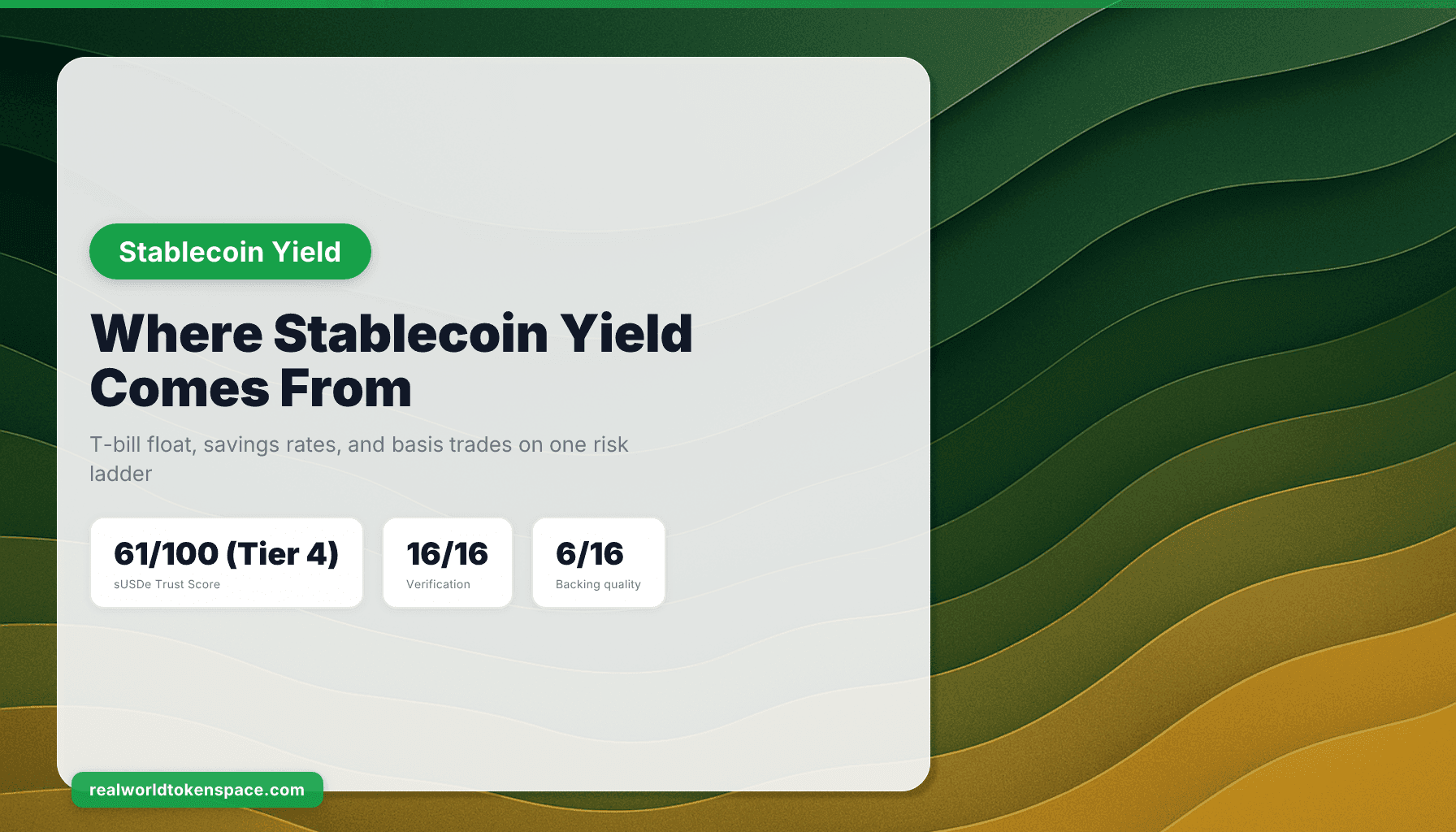
Synthetic strategies. Some tokens generate yield from derivatives rather than lending or T-bills. sUSDe earns from perpetual funding rates and ETH staking via Ethena's delta-neutral hedge. These can pay more but add funding-rate and hedging risk that administered rates do not carry.
The key trade-off: administered vs. market rates
An administered rate is set by governance and paid conservatively. A market rate clears second by second. Both have a place, but they behave differently under stress.
sUSDS pays a fixed administered rate. sUSDe pays a variable market rate, often higher than USDC lending but with tail risk. The steadier product gives up upside for predictability. That is a feature, not a flaw, if capital preservation is the objective.
Administered rates also lag the Fed by design. The Sky Savings Rate historically lags Fed-funds moves by 30 to 60 days. After the September 2024 Fed cut, it dropped from 6.5% to 6.0% in October and to 5.0% by December. If you hold an administered-rate product, expect it to track policy with a delay, not to move the day a print lands.
Rates fall when the income behind them falls
The uncomfortable truth about stablecoin interest rates: they are not promises. They are pass-throughs. When the underlying income shrinks, the rate follows.
When T-bill rates fall, RWA income shrinks, the savings rate drops, and depositors receive less, not because of a protocol failure, but because the external income stream contracted. This is the single most important thing to understand before chasing a headline APY. A high rate funded by a fragile source is worth less than a modest rate funded by short-dated Treasuries.
How RWTS rates the products behind the rates
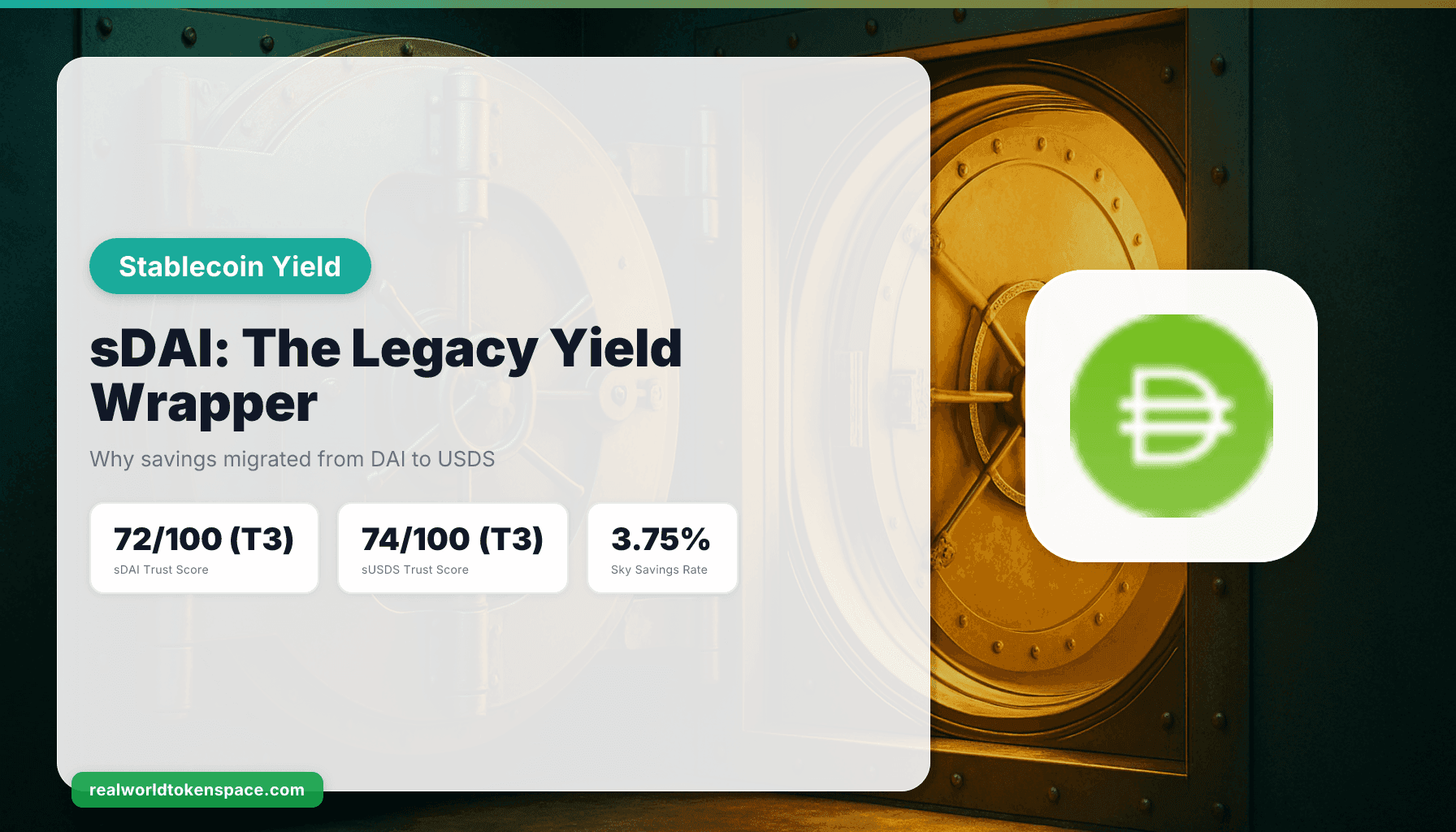
RWTS does not chase the highest number. We rate the product carrying the rate. Among the yield-bearing stablecoins, Sky's sUSDS scores T3 (74/100), and its legacy sibling sDAI sits at T3 (72/100). The base collateral token most lending yields are built on, USDC, scores T2 (88/100), a reminder that the safest-rated asset in the stack is often the one paying no native yield at all.
For most holders, the practical move on Sky is clear. For new positions, sUSDS pays more and is the canonical track Sky is steering toward. For existing sDAI positions, migration is one transaction and gas-only. We covered that migration in depth in our sDAI Yield and the sUSDS Migration analysis.
The full scoring framework (backing quality, redemption, custody, governance, and yield durability) is documented in the RWTS methodology. For a broader map of the category, start at our stablecoin yield hub.
The bottom line on stablecoin interest rates
Read the source before the number. An administered rate near 3.6% backed by short-dated Treasuries is a different animal from a 7% lending rate driven by transient borrowing demand, which is different again from a synthetic yield built on funding rates. If T-bill yields hold, conservative rates stay near current levels. If the Fed's path shifts, expect the whole complex to move with it, on a 30-to-60-day lag for administered products.
RWTS is not bullish or bearish on any stablecoin or yield strategy. We are the credit-rating agency for tokenized real assets. We rate. You decide.
Related on RWTS
Stay Ahead of the Yield Curve
Subscribe to The Yield Report for weekly yield intelligence.
Subscribe Now