USDC Yield in 2026: Rates, Risks & Where to Earn
Verdict
In late 2026, a genuinely low-risk USDC yield sits around 3.5% to 4%, not the double-digit numbers you'll see advertised. USDC itself carries an RWTS Trust Score of T2 (88/100), reflecting regulated reserves and strong disclosure. But the token being safe and the yield route being safe are two different questions. RWTS isn't bullish or bearish on any platform. We rate. You decide.
How much yield can you earn on USDC?
USDC yield means lending your stablecoin to earn interest, whether through a regulated exchange, an on-chain money market, or a savings protocol. When people say "USDC staking" they usually mean lending USDC to earn interest. The three most common routes are the same ones most readers already know. Coinbase Rewards, Aave, and Compound are the most popular ways to earn yield on USDC.
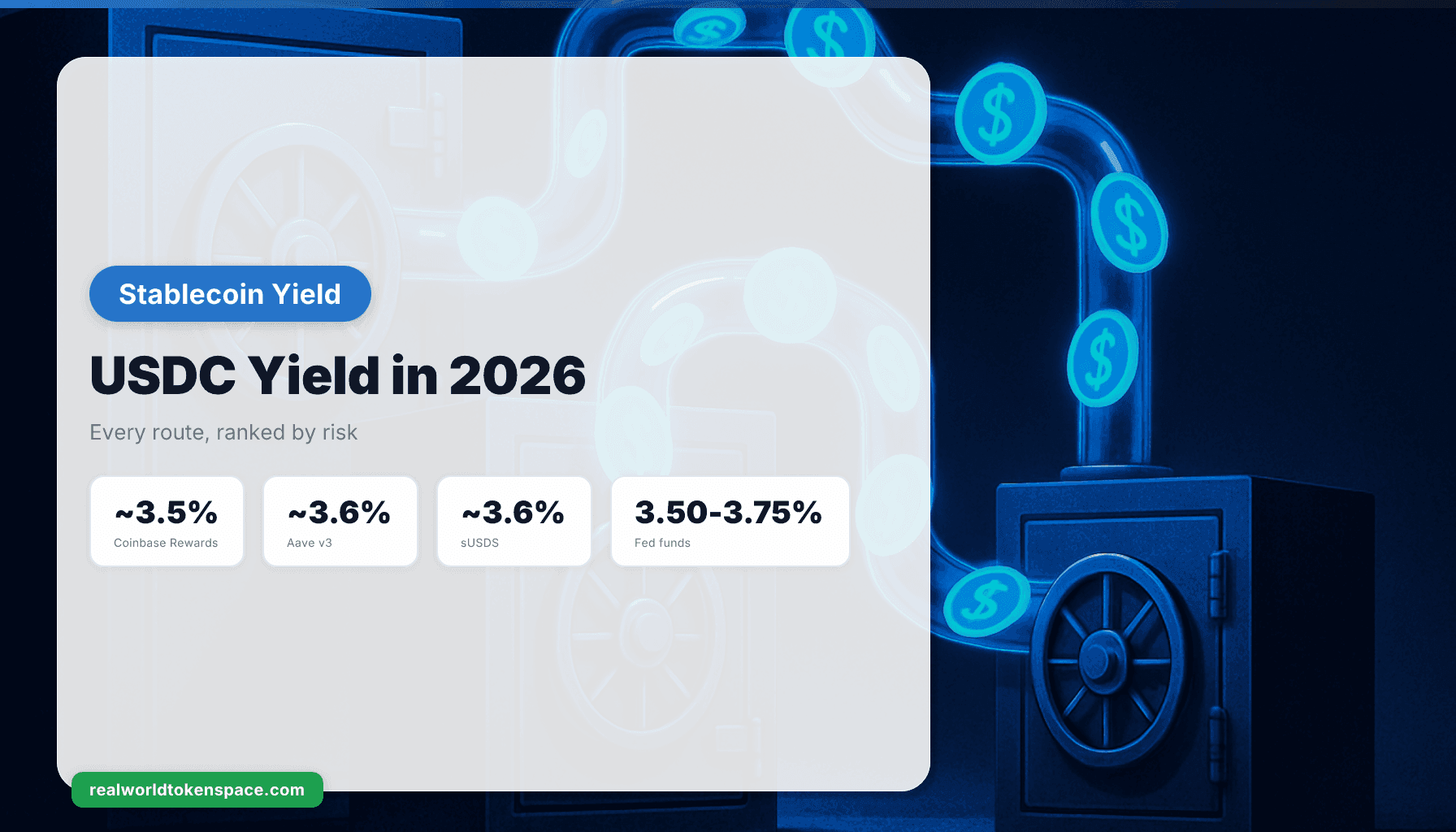
The honest range for low-risk routes clusters tightly around the Fed funds rate. The best USDC yields sit at Fluid (~5.2% base on Ethereum), Morpho Blue curated vaults on Base, and Maple syrupUSDC (~5.0%). Custodial Coinbase Rewards pays 3.50% for Coinbase One members. Aave v3 sits at ~3.6% (Ethereum). Those numbers aren't a coincidence. A safe USDC yield should approximate the short-term risk-free rate, and the Fed funds target currently sits at 3.50% to 3.75%.
The three risk tiers
Not all USDC yield is the same product. The right way to compare rates is to compare the risk you take to earn them. The four categories that matter are custodial credit risk, DeFi smart-contract risk, basis-trade and funding-rate risk, and tokenized treasury risk. The four risk categories that matter are custodial credit risk (Coinbase, Maple), DeFi smart contract risk (Aave, Compound, Morpho, Fluid, Kamino), basis-trade and funding-rate risk (sUSDe, Ethena-adjacent vaults), and tokenized treasury risk (BUIDL, OUSG, USDY routed via USDC).
Tier 1, custodial rewards. The simplest route is holding USDC on a regulated exchange. Retail passive, US: Coinbase Rewards at 3.50% for Coinbase One members is the shortest path, no wallet, no gas, no bridge. The yield is modest, but you also avoid gas, bridging and smart-contract exposure. The trade-off is platform credit risk: your rewards depend on the exchange, not on code. RWTS rates Coinbase USDC Rewards at T2 (82/100).
One behavioral note: that rate is not guaranteed, and access has tightened. In 2025, Coinbase moved its top rate behind a paid tier. The exchange said that after December 15, only Coinbase One customers will earn the 3.5% rate, while non-paying customers will forgo rewards. Read the eligibility terms before you assume the headline number applies to you.
Tier 2, on-chain lending. Aave and Compound are the baseline for self-custodial yield. Aave v3 and Compound v3 are the two largest onchain money markets for USDC. Supply USDC, receive aUSDC or cUSDC, earn the variable supply rate driven by borrower demand. The rate is variable: it rises when borrowers want leverage and falls when demand cools. That mechanism is the "why" behind every move in the Aave supply rate. We rate aUSDC at T3 (75/100), solid, but carrying smart-contract risk that a custodial product does not.
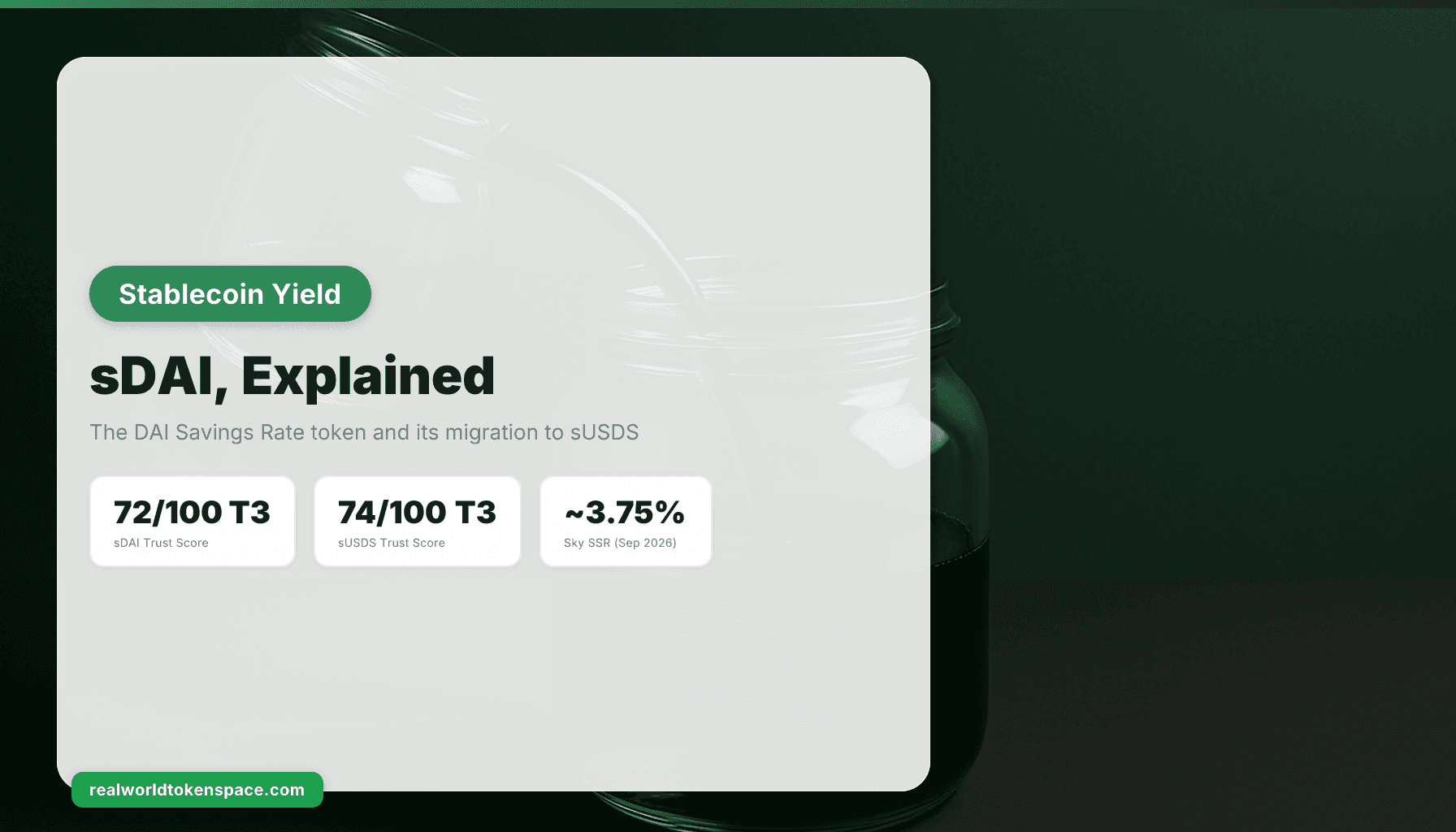
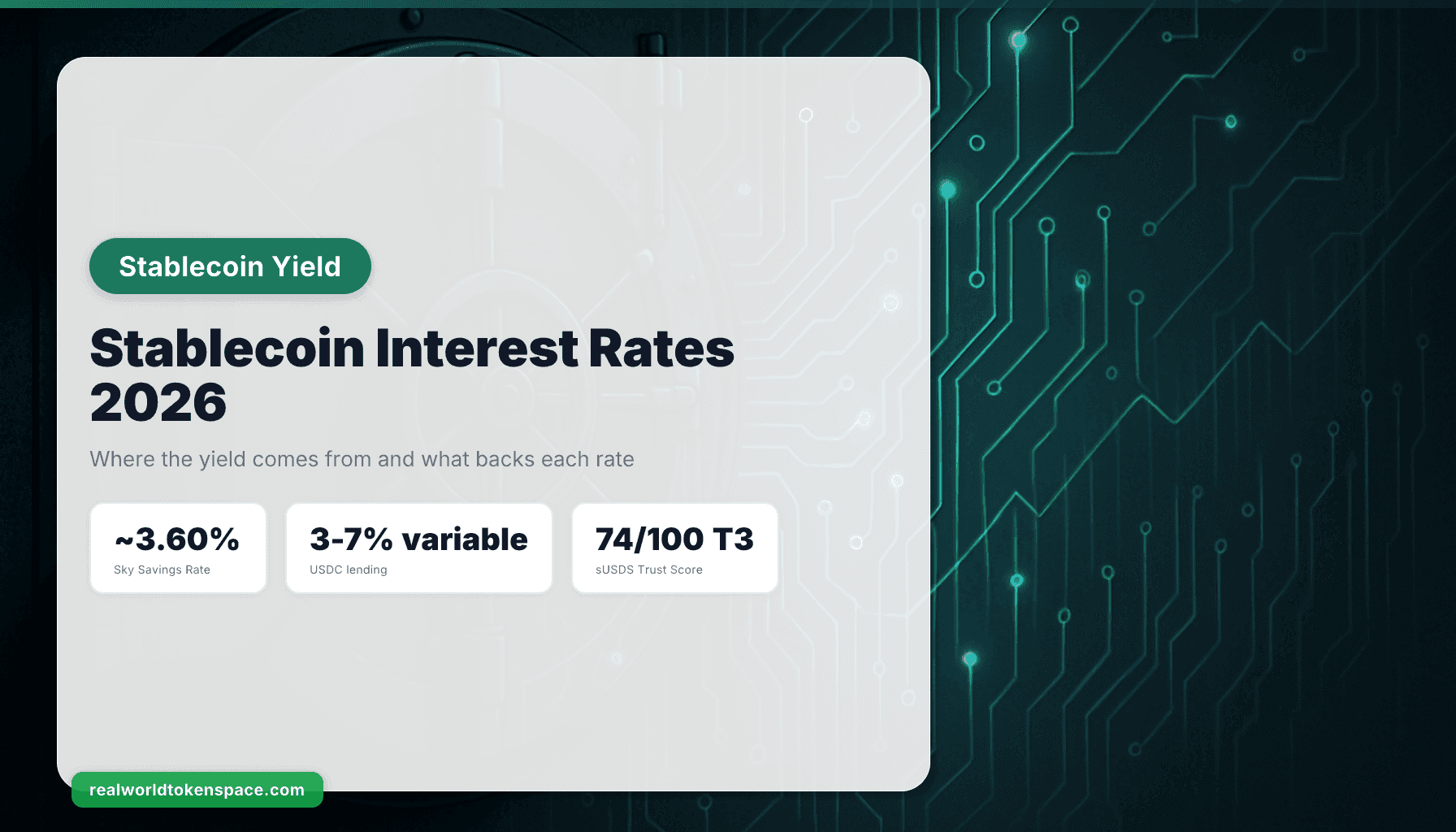
Tier 3, savings protocols and vaults. Sky's savings rate offers a governance-set alternative routed through USDS. Sky Savings Rate (sUSDS) · 3.60% · $4.4B · Low (DAO-governed RWA). RWTS rates sUSDS at T3 (74/100). Above this tier sit curated vaults and basis-trade products quoting 5% and up, real yields, but with strategy and funding-rate risk layered on top.
Why a higher number is not a better deal
The critical discipline for any USDC allocator: a yield well above the Fed funds rate is compensation for a risk, not a free lunch. If the risk-free short rate is sub-4% and a platform advertises 8% to 15%, that spread is the price of smart-contract, counterparty, or leverage exposure. You can earn 3.5% APY on Coinbase with zero effort, 3-8% through DeFi lending on Aave or Morpho, or 8-15%+ via liquidity provision, each tier carries increasing risk. Name the risk before you accept the rate.
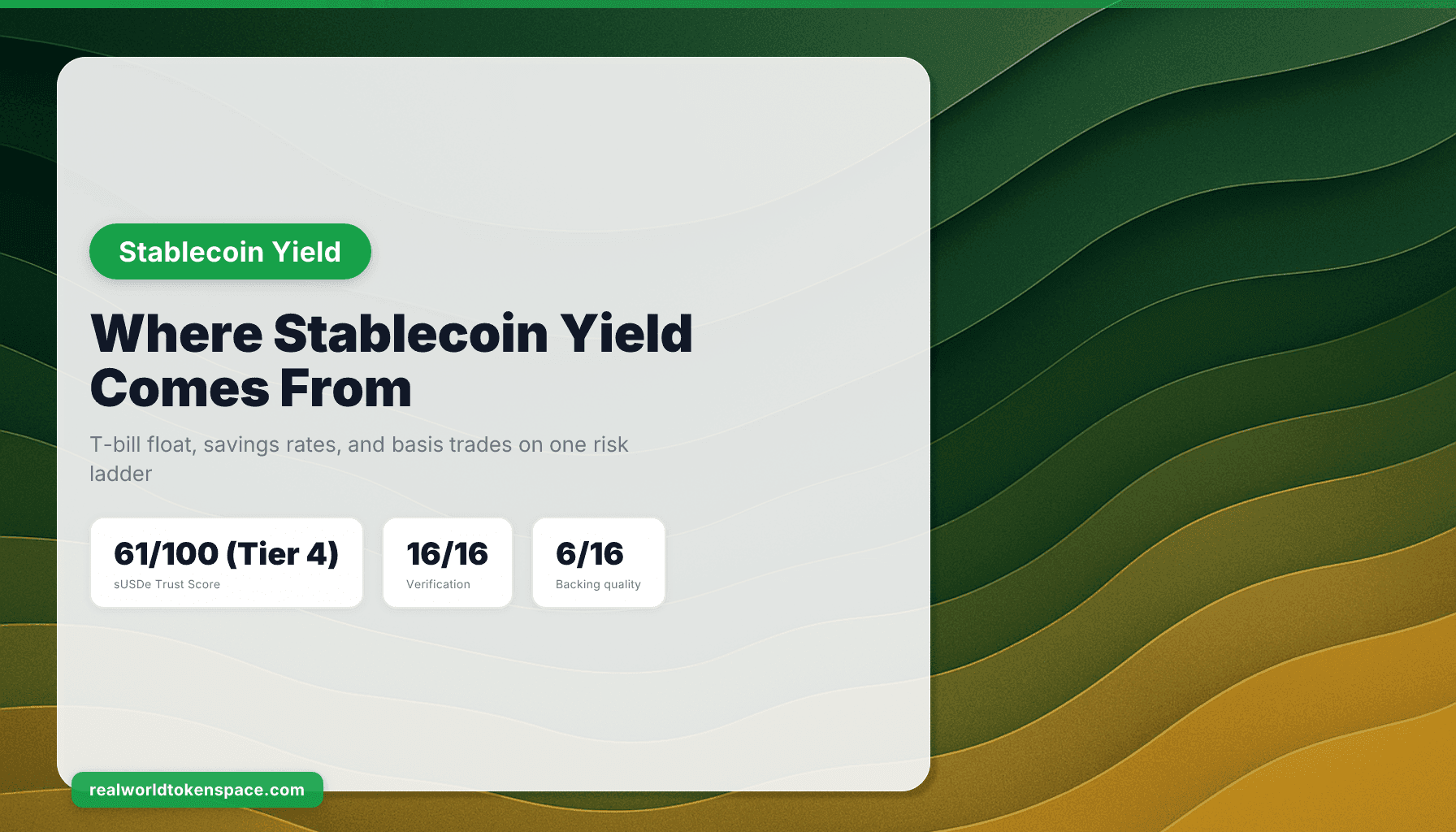
For the deeper mechanics of where stablecoin yield actually originates, see our companion piece Stablecoin Yield Explained: Where It Comes From and the Risks. Our scoring rubric for every route is published at our methodology page, and the full ranked list lives on our stablecoin yield hub.
The bottom line
In a 3.50% to 3.75% rate environment, a safe USDC yield looks like 3.5% to 4%. Coinbase Rewards near 3.5% is the easiest path; Aave v3 near 3.6% is the DeFi baseline; sUSDS near 3.6% is the governance-set savings route. If the Fed holds, these rates hold. If it cuts, they drift lower within a month or two, because they all track the short end. Anything materially higher is a different risk product wearing a USDC label. We rate. You decide.
Related on RWTS
Stay Ahead of the Yield Curve
Subscribe to The Yield Report for weekly yield intelligence.
Subscribe Now