Ethereum staking through Lido issues two tokens: stETH and wstETH. Both represent staked ETH earning validator rewards, but they behave differently in wallets and DeFi protocols. The choice between them comes down to whether you're holding passively or deploying capital into composable yield strategies.
As of March 2026, Lido manages roughly $19.42 billion in TVL and about 9.17 million ETH staked through its protocol. Lido's institutional page shows an APR of 2.5%, a rate that fluctuates with Ethereum network conditions. The protocol remains the largest liquid staking option for ETH holders who want yield without running validator infrastructure.
The core question: when should you hold stETH, and when should you hold wstETH?
How stETH Works: Rebasing Balance Model
stETH is a rebasing token, which means the balance in your wallet usually changes daily as rewards or penalties are reflected. When you stake 10 ETH through Lido, you receive 10 stETH. Over time, that balance grows—10.05 stETH, then 10.10 stETH—as consensus rewards from validators are distributed proportionally to all stETH holders.
The rebase mechanism adjusts stETH balances daily at 12:00 UTC, distributing staking rewards proportionally to all holders. The staking rewards, currently averaging between 3.2% and 4.1% annually depending on network conditions, are reflected in the increasing balance of stETH tokens held in users' wallets.
The advantage is psychological and accounting simplicity. You see your balance grow every day. The disadvantage is technical: many DeFi protocols cannot handle rebasing tokens. Automated market makers, lending markets, and vaults expect token balances to remain static. When a balance changes spontaneously, the smart contract math breaks.
This is why wstETH exists.
How wstETH Works: Wrapped Non-Rebasing Model
wstETH is the wrapped version of stETH. Lido says it keeps a fixed token balance and reflects rewards through the exchange rate, which makes it easier to use in many DeFi apps and bridges.
When you wrap 10 stETH into wstETH, you might receive 8.5 wstETH (the exact ratio depends on the accrued rewards at that moment). That 8.5 wstETH balance never changes. But the exchange rate between wstETH and stETH rises over time. After a year, your 8.5 wstETH might redeem for 10.25 stETH.
Instead of expanding your token balance daily, wstETH uses a fixed token supply model where the value of the token increases relative to ETH over time. When staking rewards accrue, your quantity of wstETH remains stable, but each individual token becomes redeemable for a larger fraction of stETH, making it the preferred collateral layer for integrated DeFi applications.
This structure is ERC-20 compliant without the rebase mechanic, so it plugs directly into Aave, Compound, Morpho, Curve, Uniswap, and most other DeFi infrastructure.
Yield Comparison: Identical Underlying Returns
Both tokens earn the same staking rewards. Lido applies a 10% fee on staking rewards, not on your deposited ETH. The APR you see is only an estimate and can change with network conditions and validator performance. So if you stake 5 ETH at 2.38% APR, the rough yearly reward is 0.119 ETH before market price changes.
There is no yield difference between stETH and wstETH. The only distinction is presentation: rebasing balance versus rising exchange rate. Lido distributes the same net rewards to both.
If you hold stETH, you see your balance tick up. If you hold wstETH, you see the redemption rate increase when you check Lido's interface. The economic outcome is identical.
DeFi Integration: When Each Token Works
If you only want to hold the staking position, stETH is usually enough. If you want DeFi use or cross-chain movement, wstETH is often the cleaner choice.
Use stETH when:
- You're holding passively in a wallet that supports rebasing tokens
- You want to watch your balance grow daily
- You're not interacting with lending protocols or liquidity pools
- You're staking for the first time and want the simplest mental model
Use wstETH when:
- You're supplying collateral to Aave, Morpho, or Compound
- You're adding liquidity to a Curve or Uniswap pool
- You're bridging to L2s or other chains where rebasing mechanics may not transfer correctly
- You're building smart contracts that expect fixed token balances
The top 7-day average ETH vault yield is currently 8.28%, from Fusion stETH looping Ethereum on Ethereum. That vault uses wstETH as collateral because it needs to interact with lending protocols programmatically. A rebasing token would break the vault's accounting.
Wrapping and Unwrapping: No Lock-Up, No Fee
Lido allows instant conversion between stETH and wstETH. You can wrap stETH into wstETH or unwrap wstETH back into stETH at any time, paying only gas fees. The conversion happens at the current exchange rate, and there is no delay or penalty.
This flexibility means you can choose the token that fits your current use case and switch whenever your strategy changes. If you start by holding stETH passively and later want to deposit into Aave, you wrap to wstETH. If you withdraw from Aave and prefer to see your balance grow, you unwrap back to stETH.
To unstake, you submit stETH or wstETH via Lido's withdrawal request flow. Under normal conditions, Lido says the wait time is often 1 to 5 days. If you want faster liquidity, you can also swap stETH on the open market, though the price may not match ETH exactly.
Risk Profile: Identical Across Both Tokens
Both stETH and wstETH carry the same risks:
- Smart contract risk. Both are issued by the same Lido protocol. An exploit in Lido's contracts affects both tokens equally.
- Validator slashing risk. Validators risk staking penalties, with up to 100% of staked funds at risk if validators fail. To minimise this risk, Lido stakes across multiple professional and reputable node operators with heterogeneous setups, with additional mitigation in the form of self-coverage.
- Liquidity risk. During stress events, stETH has historically traded below 1 ETH. While stETH theoretically maintains a 1:1 value relationship with ETH, secondary market trading often shows price deviations. During the May 2022 Terra/Luna collapse and subsequent market stress, stETH traded as low as 0.93 ETH. wstETH would de-peg proportionally in the same scenario.
- Regulatory risk. Regulatory uncertainty represents a longer-term consideration. Securities regulators in multiple jurisdictions are evaluating whether liquid staking derivatives constitute securities offerings.
There is no additional risk from choosing wstETH over stETH or vice versa. The wrapper does not introduce new smart contract surface or custodial dependency.
Tax and Accounting Considerations
Tax treatment depends on your country, so treat this section as a guide only. In the United States, the IRS says digital assets are treated as property, and staking rewards are generally included in income when the user gains dominion and control over them. In the UK, HMRC says staking rewards are generally taxable as income when received.
For stETH, the daily rebase creates a potential taxable event in some jurisdictions. Each time your balance increases, you may have realized income. For wstETH, the rising exchange rate does not generate a taxable event until you unwrap or sell.
This distinction matters for high-frequency traders and institutions with complex accounting requirements. If you're unsure, consult a crypto-aware accountant before choosing between the two tokens.
Competing Liquid Staking Tokens: rETH and Others
Lido is not the only liquid staking protocol. Lido (stETH/wstETH) and Rocket Pool (rETH) are the most established liquid staking protocols with multi-year records. Rocket Pool's rETH uses the same non-rebasing model as wstETH: your token balance stays constant, and the exchange rate against ETH rises over time.
Native ETH staking yields 3-4% APY. DeFi vaults using stETH or wstETH can yield higher by combining the base staking yield with lending interest from borrowers.
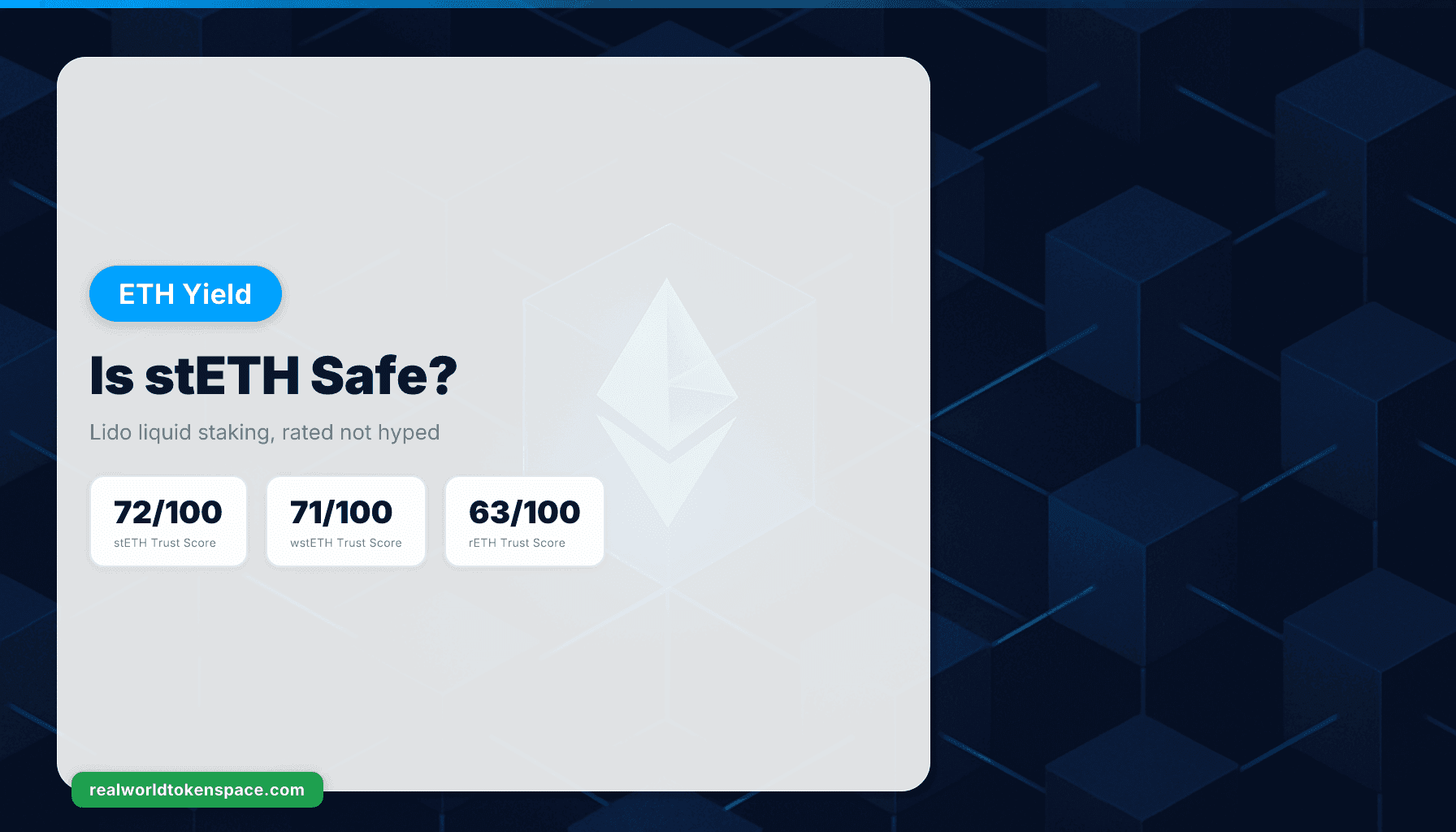
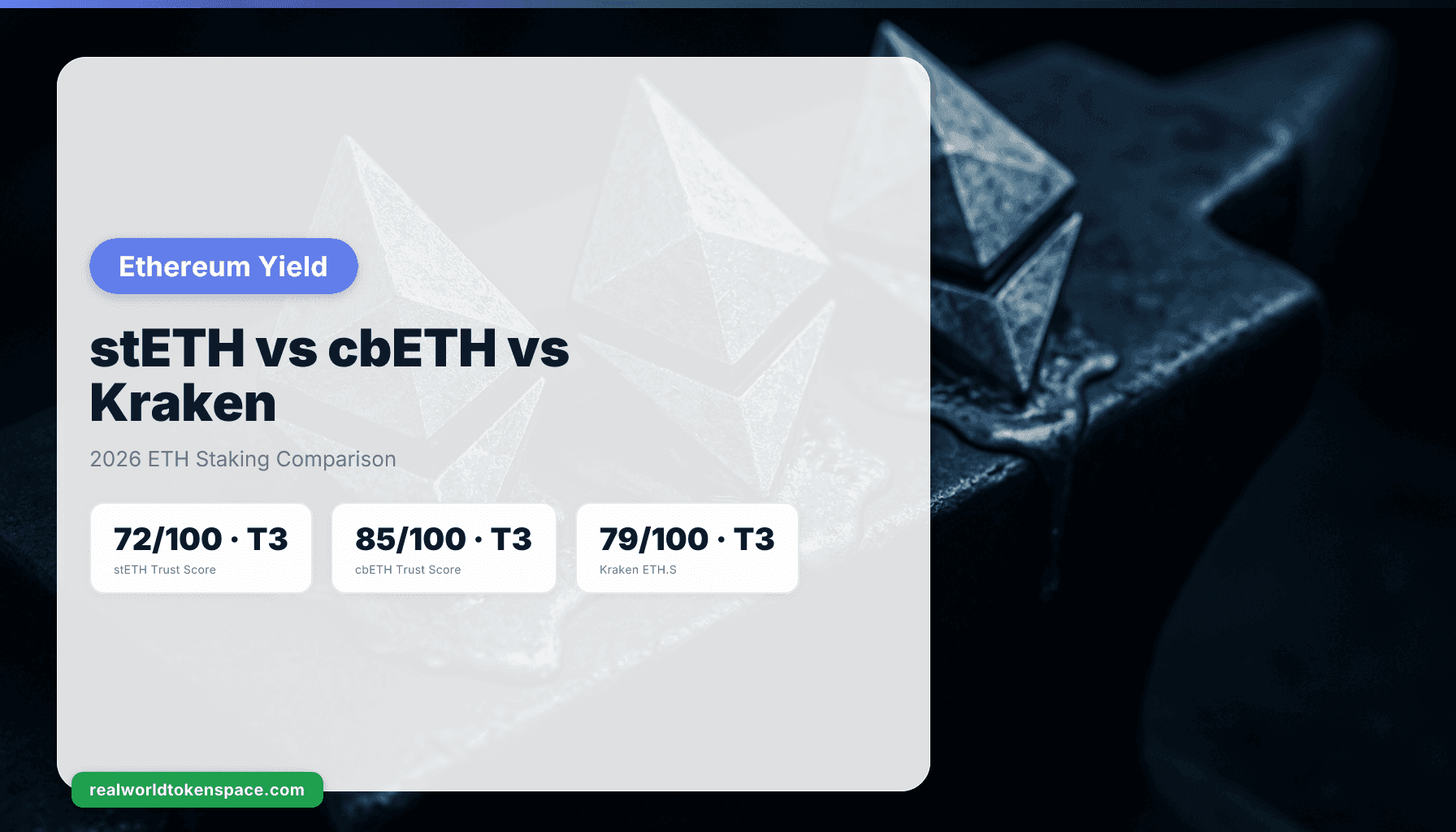
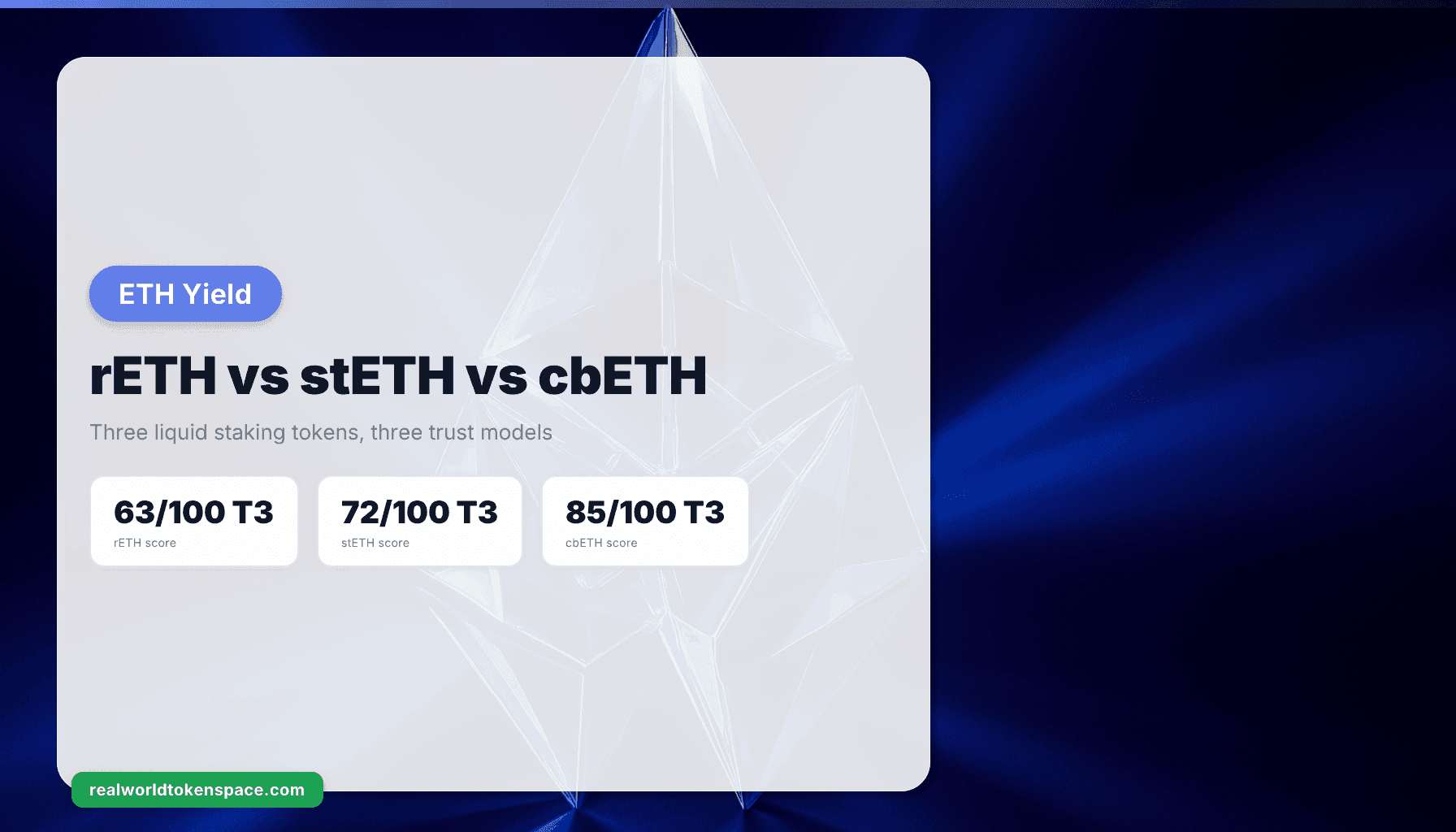
RealWorldTokenSpace rates stETH and wstETH both at 88 Trust Score, Tier 1. rETH scores 86, also Tier 1. The Trust Score methodology accounts for validator decentralization, smart contract audits, and liquidity depth. Lido's slight edge reflects its larger TVL and longer operational track record.
For a detailed breakdown of how the Trust Score weights these factors, see the RWTS Methodology page.
Practical Decision Framework
If you're staking ETH through Lido and unsure which token to hold, ask three questions:
- Am I interacting with DeFi protocols? If yes, use wstETH. If no, either token works.
- Do I want to see my balance grow daily? If yes, use stETH. If you don't care, use wstETH for maximum compatibility.
- Am I bridging to L2 or another chain? If yes, use wstETH. Rebasing tokens often break when bridged.
Most sophisticated users default to wstETH because it eliminates edge cases. You can always unwrap to stETH later if you change your mind.
For more on Ethereum staking yields and how they compare to other on-chain rates, visit the ETH Yield hub. For broader DeFi lending and vault strategies, see our related coverage on Morpho vault yields and Aave ETH staking integration.
RWTS doesn't recommend one token over the other. We rate the underlying protocol. You decide which wrapper fits your strategy.