Earning yield on USDC sounds simple. In practice, the products that advertise it are structurally different, and the gap matters more than the headline APY. This guide compares the three exchange routes most allocators actually use (Coinbase, Kraken and Binance) through the lens of the RWTS Trust Score methodology, which weighs custody and redemption terms, not just the number on the marketing page.
Start with the most common misconception. You cannot stake USDC, but customers in certain regions may be eligible to earn rewards on USDC. Proof-of-stake rewards come from securing a network. USDC has no validator set. USDC "staking" typically refers to lending or depositing USDC into platforms that utilize these funds for various revenue-generating activities. Where the dollars go (and who is on the hook if they do not come back) is the entire question.
How the yield is actually generated
The token is the same everywhere. USDC is a fully reserved stablecoin issued by Circle, backed 1:1 by a combination of cash and short-duration U.S. Treasury bills. The yield is not part of the token; it is bolted on by each venue. Two mechanisms dominate.
Coinbase pays a flat rewards rate for holding USDC, funded largely by the interest Circle earns on reserves. It is closer to a deposit-style payout than a loan. Kraken and Binance, by contrast, run lending-style savings: centralized exchanges generate USDC yields primarily through lending pools where institutional borrowers and margin traders pay interest to access liquidity. That distinction drives the risk profile. A rewards rate tracks reserve yield; a lending rate tracks borrowing demand, which contracts in quiet markets and spikes in leveraged ones.
The rate landscape, June 2026
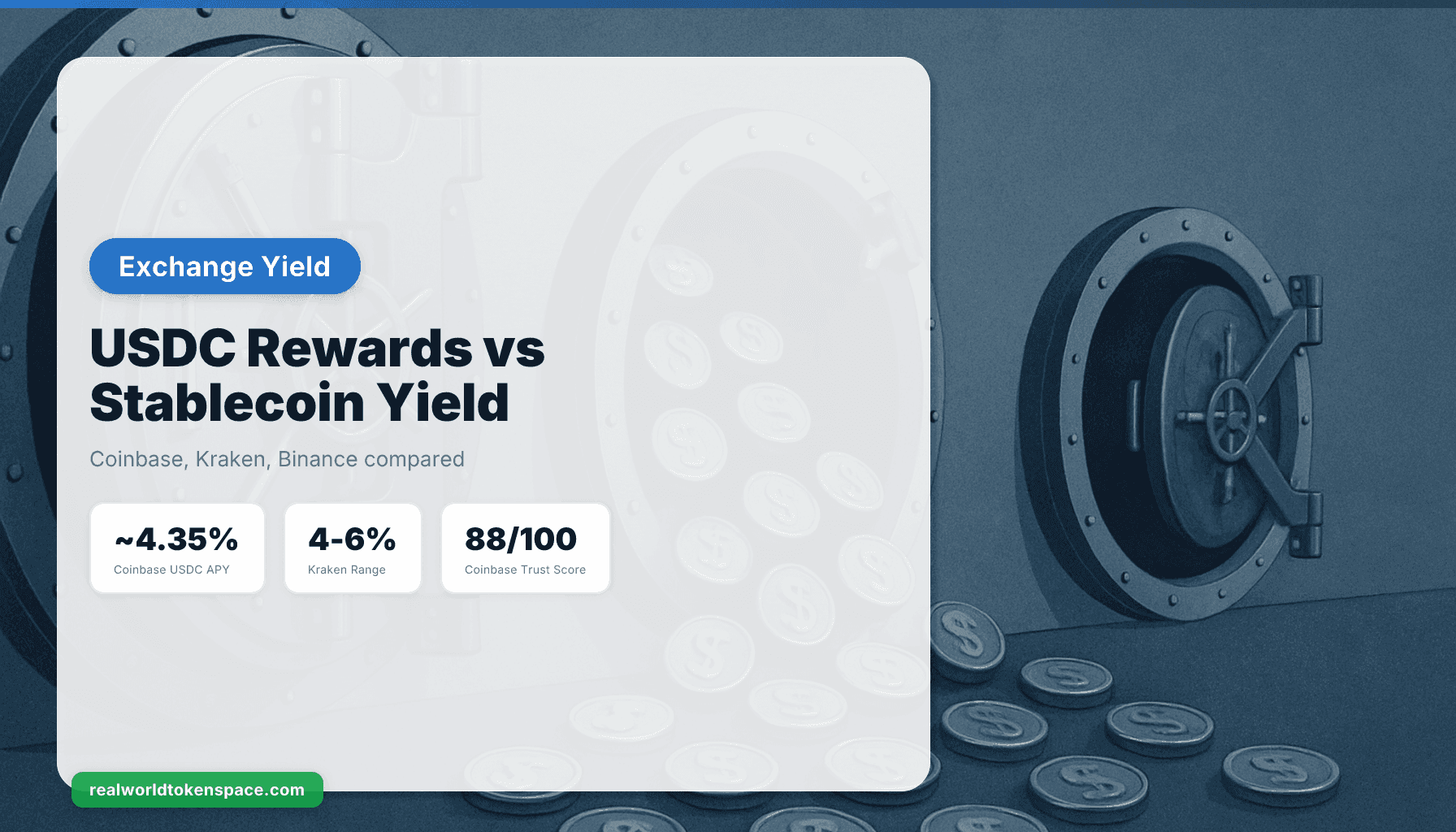
On the headline numbers, the spread is narrower than the marketing implies. Coinbase's published USDC rewards rate has recently sat around 4.35% APY. Its self-custody product quotes a touch more, holding USDC in Coinbase Wallet currently offers a rewards rate of 4.7% APY, paid out monthly directly into your wallet on Base.
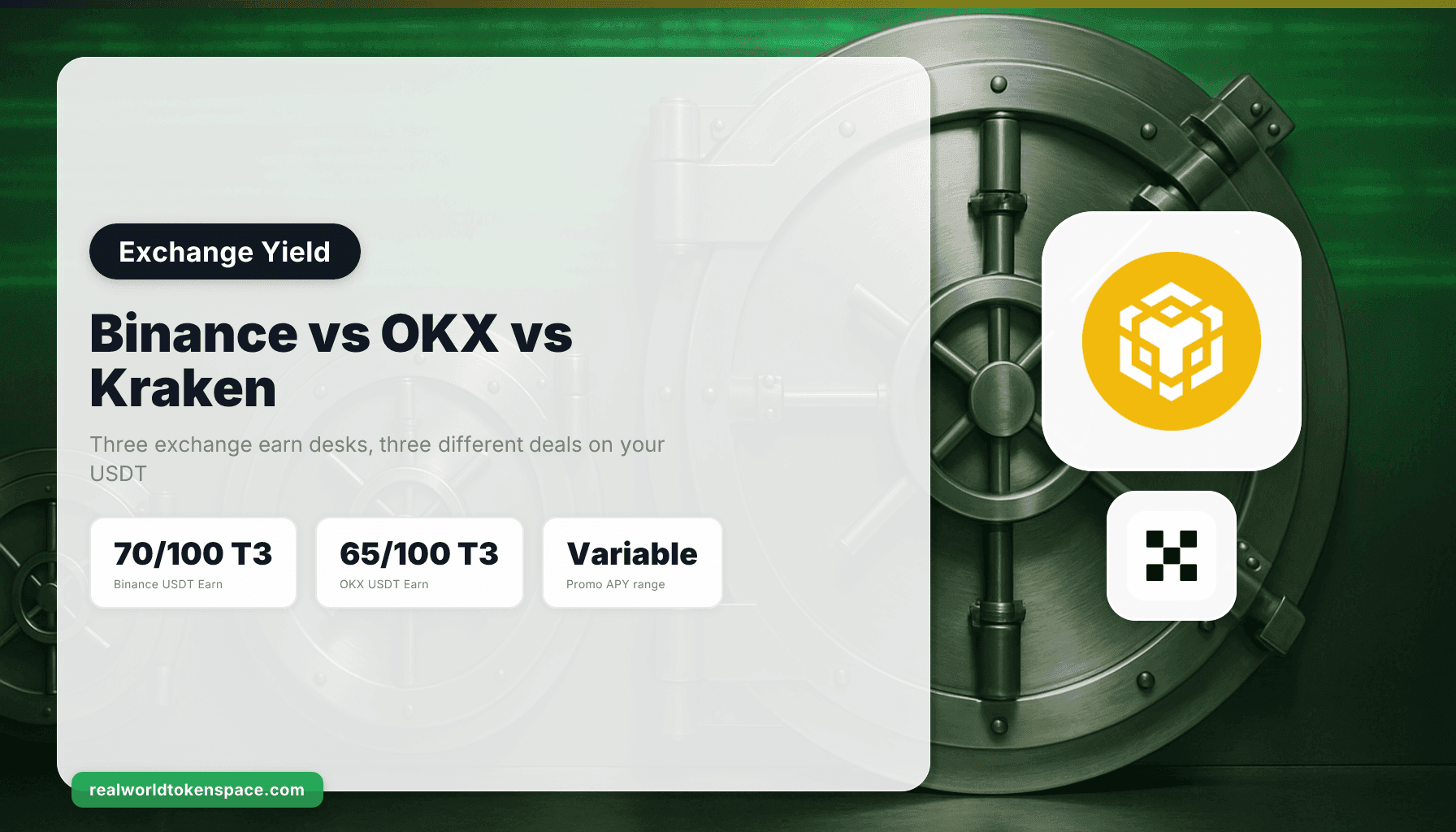
The exchange peers cluster nearby. Kraken provides USDC staking at approximately 4% to 6% APY, with rates varying based on geographic location and account verification levels. Binance's USDC flexible savings currently provides approximately 3.5% to 5% APY, with locked staking options reaching 7% for 90-day terms. The lock-up premium is the tell: an extra two points for surrendering liquidity for 90 days is the market pricing your option to withdraw.
The discipline point: in 2026, sustainable USDC yields from organic lending demand typically range from 4% to 8% APY. Anything materially above that band is usually subsidized by token incentives or extended lockups, not organic borrowing demand. A higher number is not automatically a better product.
The risk the APY hides
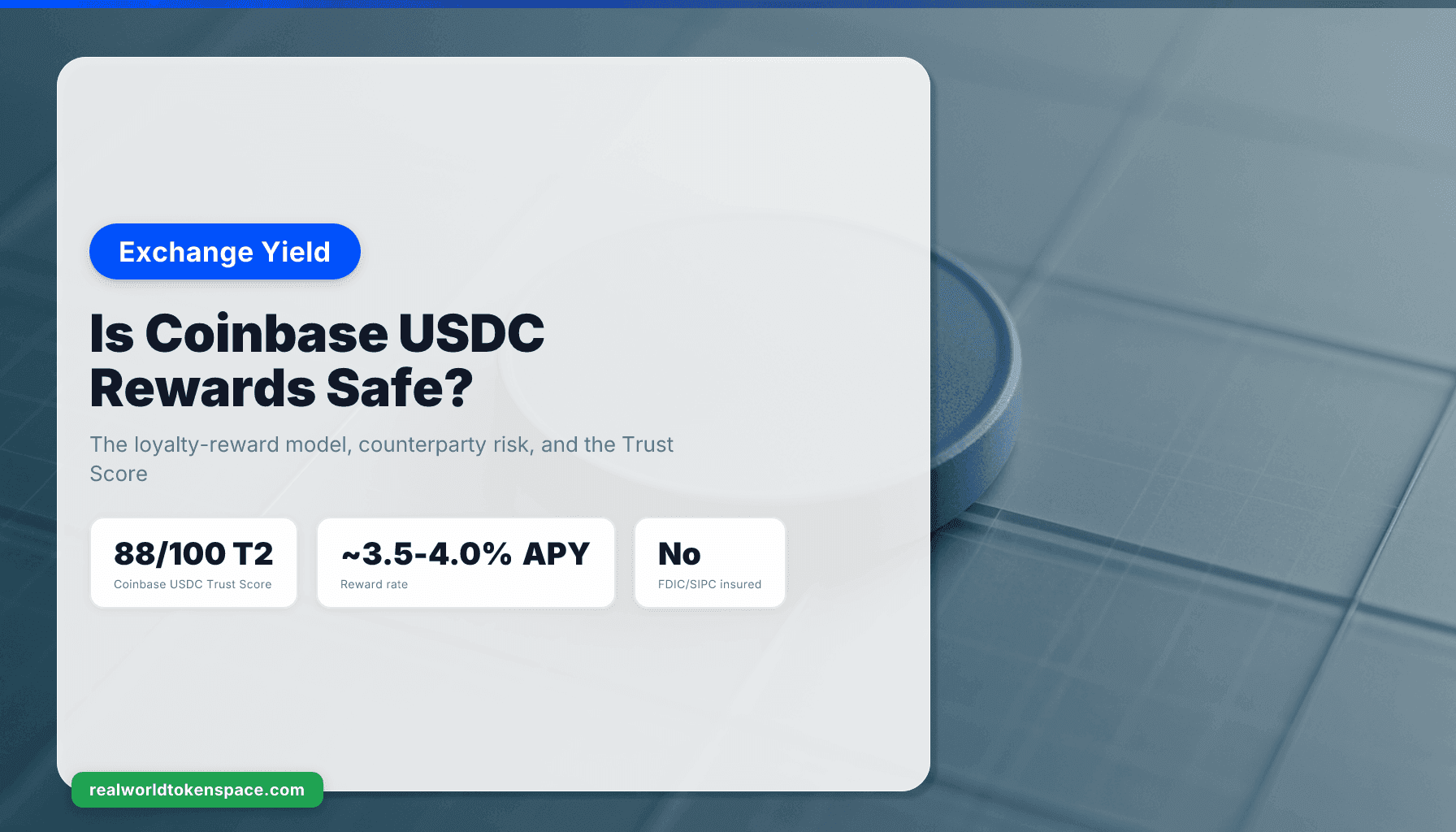
Every basis point of exchange yield carries platform counterparty risk that the bare token does not. Coinbase is explicit about it: Coinbase does not have the right to use any USDC you hold in your account, and USDC balances are not insured by the Federal Deposit Insurance Corporation (FDIC) or the Securities Investor Protection Corporation (SIPC). Kraken and Binance lending products go a step further, your USDC is actively deployed to borrowers, so you carry that book's credit risk too.
The mechanism that should worry an allocator is not the peg. Platform counterparty risk represents the primary concern, as centralized exchanges maintain custody of deposited assets; exchange insolvency, security breaches, or operational failures could result in partial or total loss of funds despite stablecoin price stability. The dollar can hold perfectly while the venue holding it fails. That is precisely the variable the Trust Score is built to surface.
How RWTS scores these products
On the RWTS board, Coinbase USDC Rewards carries a Trust Score of T2 (88/100), the strongest exchange-yield mark, reflecting Circle's reserve transparency, US regulatory posture and the deposit-style payout structure. Binance Simple Earn for USDT sits lower at T3 (70/100), where the lending mechanics and disclosure profile weigh on the rating. The underlying USDC token rates well on its own merits; the wrapper around it is where scores diverge.
The practical takeaway: at roughly comparable rates, the deciding variable is not the APY but the counterparty. Spreading balances across venues mitigates concentration, and the baseline for low-risk stablecoin savings sits around 4.25%, with platforms like Kraken offering flexible products in this range. For the broader on-platform landscape, see our exchange yield hub, and for the custody question specifically, our companion piece Is Coinbase USDC Rewards Safe? Trust Score Breakdown.
RWTS isn't chasing the highest number. We're the credit-rating agency for tokenized real assets. We rate. You decide.
Related on RWTS
Stay Ahead of the Yield Curve
Subscribe to The Yield Report for weekly yield intelligence.
Subscribe Now