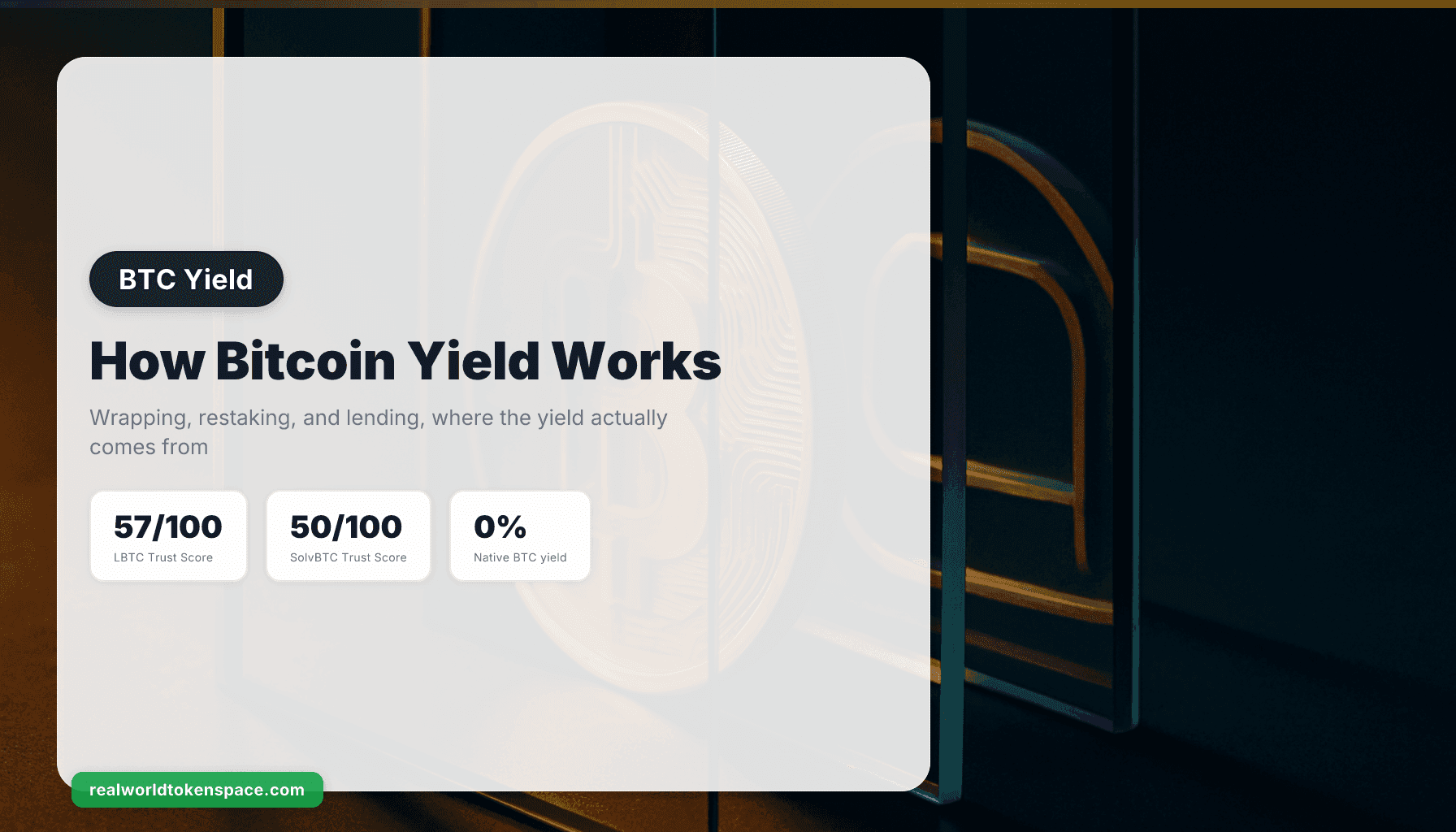
Bitcoin pays no native yield. There is no staking reward, no protocol interest, no coupon. Every product that promises a return on BTC manufactures that return somewhere else, and the location of that "somewhere else" is the entire risk story. RWTS rates these products so allocators can see what they are actually buying. We rate. You decide.
This is the definitive guide to where Bitcoin yield comes from, the three mechanisms that produce it, and what you trade away to get it.
Why Bitcoin has no native yield
Bitcoin uses proof-of-work. Miners earn block rewards by spending electricity, not by holding coins. A holder who simply keeps BTC in a wallet earns nothing, the network does not pay you to validate, because validation is the miner's job. That is a feature, not a flaw: it is why Bitcoin's monetary policy is predictable.
So any BTC "yield" requires moving the coin into a system that does pay. There are three such systems, in ascending order of complexity and risk.
Mechanism one: wrapping
Wrapping is the foundation layer. You deposit BTC with a custodian or bridge, and a token representing that BTC is minted on another chain, most commonly Ethereum or a Layer 2. The wrapped token can then be used in DeFi.
Wrapping by itself produces no yield. It produces access. The token only earns when you deploy it into lending or liquidity. The risk you accept is custody and bridge integrity: if the entity holding the underlying BTC fails or the bridge is exploited, the wrapper can de-peg from the coin it represents. This is why RWTS scores wrapped Bitcoin products primarily on custody transparency and proof-of-reserves discipline. We compared the major wrappers in Wrapped Bitcoin Compared: wBTC, cbBTC, LBTC Custody and Trust Score.
Mechanism two: restaking
Restaking is where genuine, protocol-native yield enters. Restaking protocols let Bitcoin holders pledge their BTC as economic security for a proof-of-stake network. The network pays rewards because that pledged capital makes it more expensive to attack. The yield is, precisely, a payment for taking on a security obligation.
The tradeoff is concrete. Your BTC is locked or bridged for the duration. Depending on the design, misbehavior by the operator or a custody failure can put principal at risk. The yield is not free money, it is compensation for a liability you have assumed on behalf of another chain.
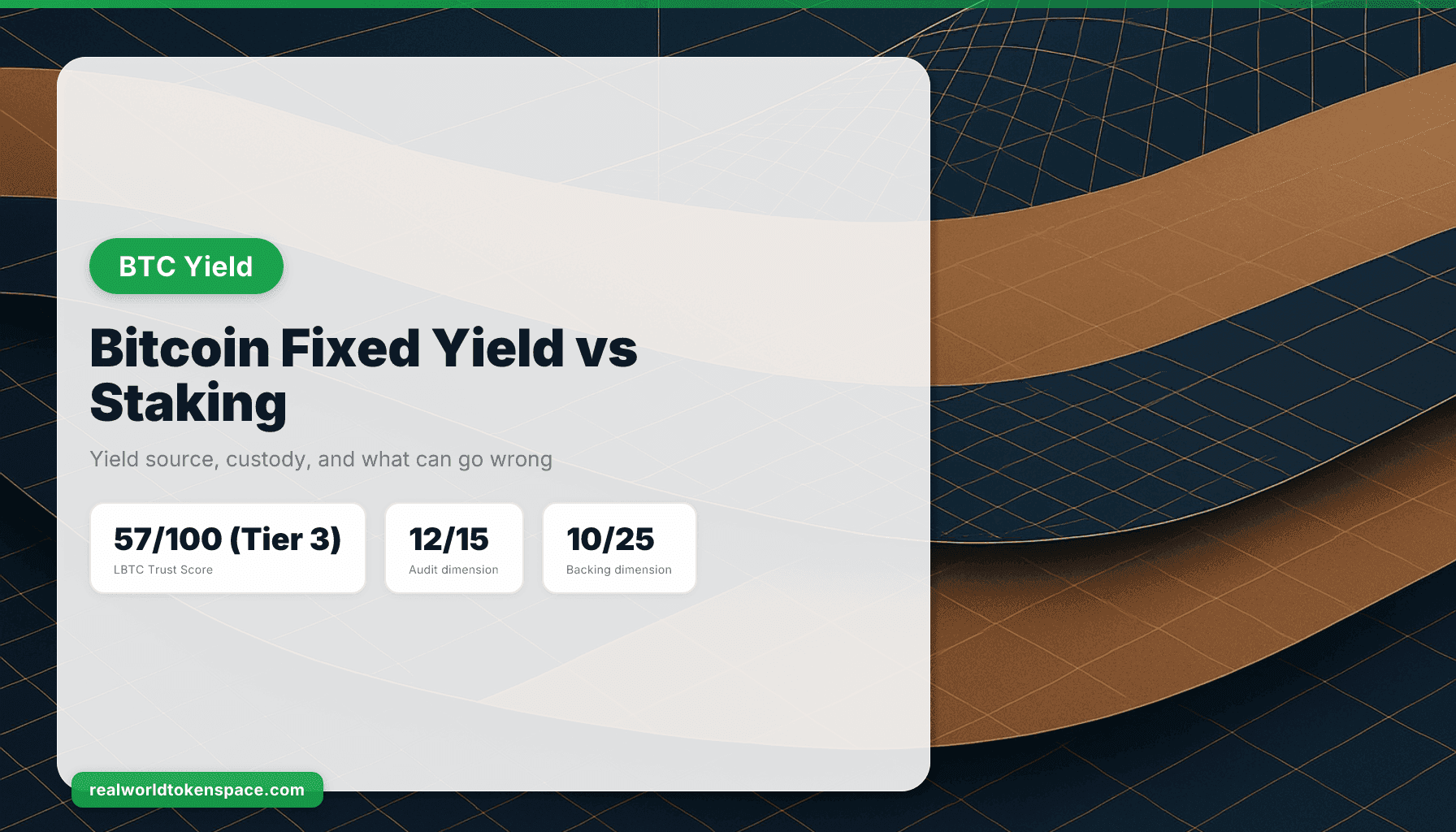
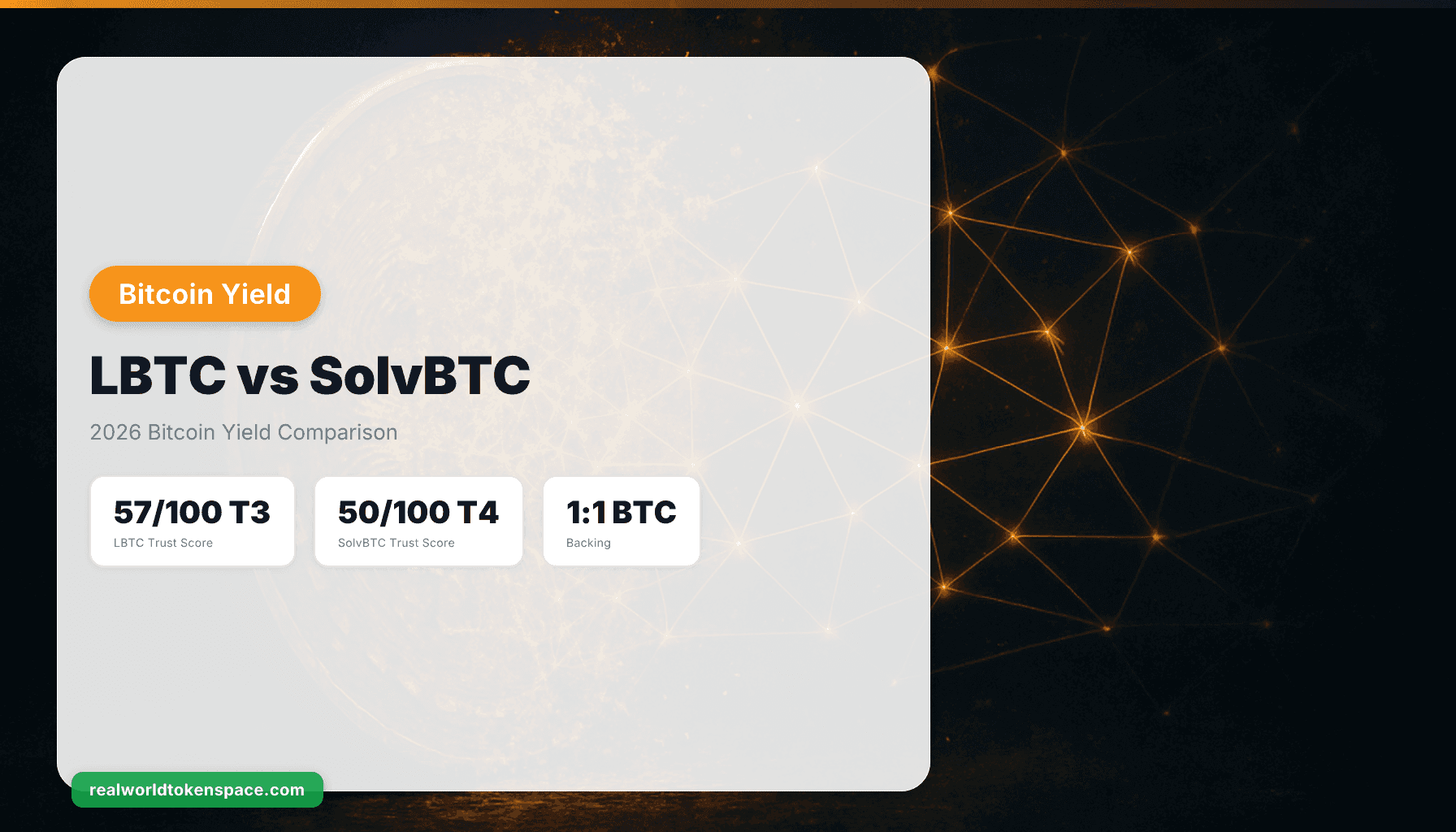
LBTC is the clearest example in this category, carrying an RWTS Trust Score of T3 (59/100). It is a liquid Bitcoin staking token built on Babylon's restaking infrastructure, designed so holders keep a transferable token while their underlying BTC secures networks. The score sits where it does because restaking and bridge risk stack on top of the base custody risk that any wrapper already carries. We examined this in detail in Is LBTC Safe? Lombard, Babylon, and Bitcoin Staking Trust Score.
SolvBTC sits a tier lower at T4 (49/100). It aggregates Bitcoin across multiple yield strategies and chains, which broadens the surface area of counterparties and smart contracts a holder is exposed to. More routes to yield means more places a failure can originate, and the Trust Score reflects that breadth.
Mechanism three: lending
The third path is the oldest: lend your BTC (usually in wrapped form) to a borrower and collect interest. On-chain lending markets and centralized desks both do this. The yield comes from borrower demand, traders who want leverage, market makers who need inventory.
The risk is the borrower. In overcollateralized DeFi lending, liquidations protect the lender most of the time, but smart-contract bugs and oracle failures remain. In centralized lending, you are exposed to the desk's solvency and rehypothecation practices. The 2022 lending failures were lending-mechanism failures, not Bitcoin failures, a distinction the yield-seeker should keep front of mind.
How RWTS scores Bitcoin yield
Across all three mechanisms, the pattern is identical: the yield is real, and so is the layer of risk that produces it. Our Trust Score methodology weights custody verification, bridge and restaking design, redemption mechanics, and counterparty transparency. A higher score does not mean higher yield. It means the path from your BTC to that yield is better documented and better defended.
For a structured view of the whole category and how each product ranks, see our Bitcoin yield hub.
The read
If you want yield on Bitcoin, decide first which liability you are willing to own. Wrapping asks you to trust a custodian. Restaking asks you to trust a custodian and a slashing-enabled protocol. Lending asks you to trust a borrower. The yield rises as you move down that list, and so does the number of ways the position can break.
There is no native-yield shortcut. There is only a choice about which counterparty you are comfortable underwriting. We rate. You decide.
Related on RWTS
Stay Ahead of the Yield Curve
Subscribe to The Yield Report for weekly yield intelligence.
Subscribe Now