Bitcoin spent more than a decade as a non-yielding bearer asset, prized for scarcity rather than productivity. That changed when Babylon launched native Bitcoin proof-of-stake security, and accelerated when Lombard Finance turned those stakes into a liquid, composable token. Bitcoin has spent more than a decade as the digital gold of the crypto world, a non-yielding bearer asset prized for scarcity, and that equation began to shift dramatically when Babylon launched native Bitcoin Proof of Stake security in 2024, and it accelerated when Lombard Finance turned those Babylon stakes into a liquid, composable, cross-chain receipt token called LBTC.
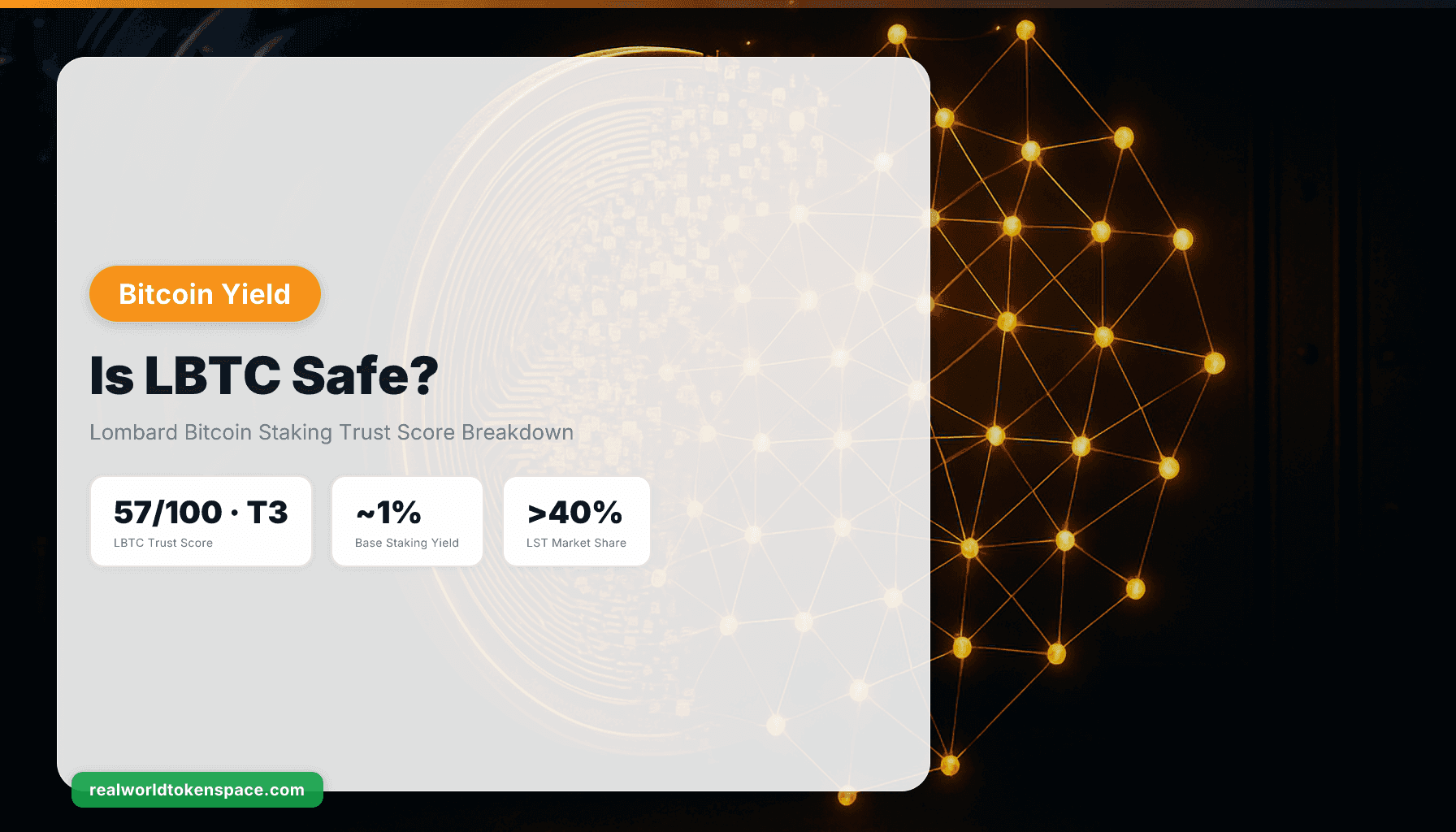
The question for any Bitcoin holder weighing yield is simple: is the receipt token actually safe? RWTS rates LBTC at T3 (59/100), mid-tier, not top-tier. We're not bullish or bearish on Bitcoin yield. We rate. You decide. Below is the breakdown behind that score, and the risks most holders skip.
What LBTC is and how it earns
LBTC is a liquid staking token. Unlike traditional wrapped Bitcoin, which simply moves BTC across chains, Lombard actually stakes the underlying Bitcoin using the Babylon protocol, and this approach earns a genuine staking yield, which is reflected in LBTC's value. When you deposit, the BTC is secured in a vault and staked, and you receive LBTC backed 1:1 by your Bitcoin plus accrued rewards.
The minting and redemption process is not custodied by a single firm. Lombard's operation revolves around the Security Consortium, a decentralized body that mints and redeems LBTC, and this Consortium includes top institutional nodes like Galaxy, Wintermute, and OKX, preventing any single entity from controlling staked Bitcoin. That distributed control is a genuine strength relative to a single-custodian model, and it lifts the score.
On yield, set expectations carefully. Lombard's LBTC is backed by BTC staked through Babylon, offers approximately 1% base yield plus additional DeFi opportunities, with nearly $2B in circulation and over 40% of the Bitcoin LST market. A ~1% base rate is modest. The real return case depends on stacking DeFi yield on top, which adds more risk surface, not less.
The physical-equivalent reality: scale and dominance
LBTC is the category leader. Lombard's LBTC has become the dominant Bitcoin liquid staking token, with nearly $2 billion in circulation and over 40% market share of the Bitcoin LST sector, backed 1:1 by BTC staked through Babylon, meaning you earn native staking yields while maintaining liquidity. Its reach is broad: LBTC is available on multiple chains including Ethereum, Base, BNB Chain, and Sui, making it highly versatile for DeFi participation.
Babylon itself sits among the largest restaking networks. As of 2026, Babylon has grown into the second-largest restaking network with over $3 billion in TVL, signaling serious institutional and retail interest in Bitcoin staking. Dominance and scale matter for liquidity and exit, but they are not a substitute for a clean risk profile. You can review the full asset record for LBTC on the directory.
The Trust Score angle: why T3, not T1
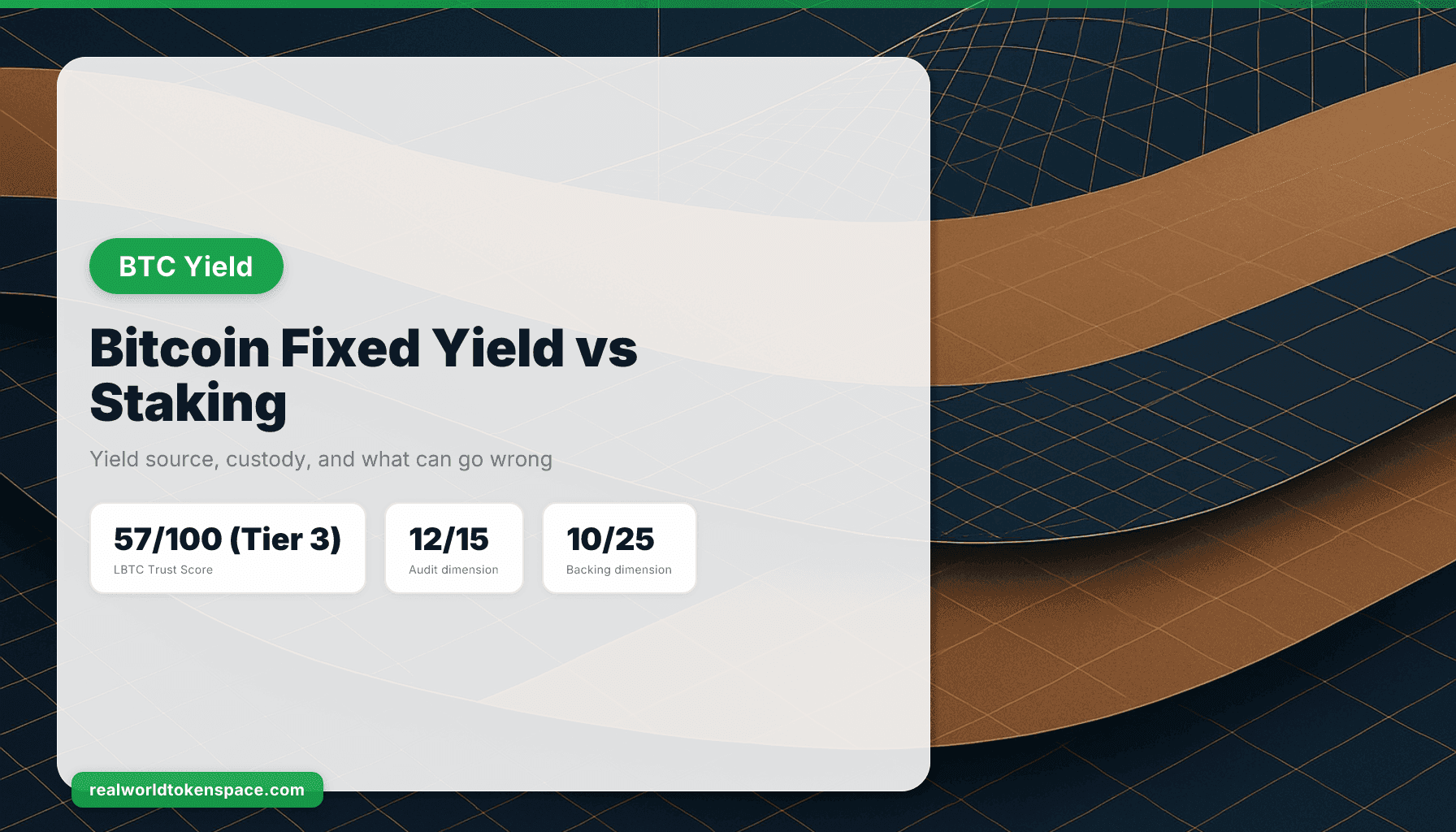
LBTC's T3 (59/100) reflects three stacked risks that wrapped Bitcoin does not carry.
First, slashing. If a Babylon finality provider misbehaves and triggers slashing, a portion of the underlying BTC stake can be lost; Lombard's risk team selects providers carefully but cannot eliminate this risk entirely. This is the headline risk and the single biggest reason productive BTC scores below a passive wrapper.
Second, the layered-yield problem. Lombard interacts with newer restaking layers, and Lombard increasingly interacts with both of these layers, adding LBTC as a security input on top of the Babylon foundation. Every additional layer is another contract and another counterparty.
Third, honesty about the track record. The fact that Lombard has grown to billions in TVL by 2026 does not eliminate these risks; it only means the protocol has so far navigated them successfully. Surviving is not the same as being tested by a stress event.
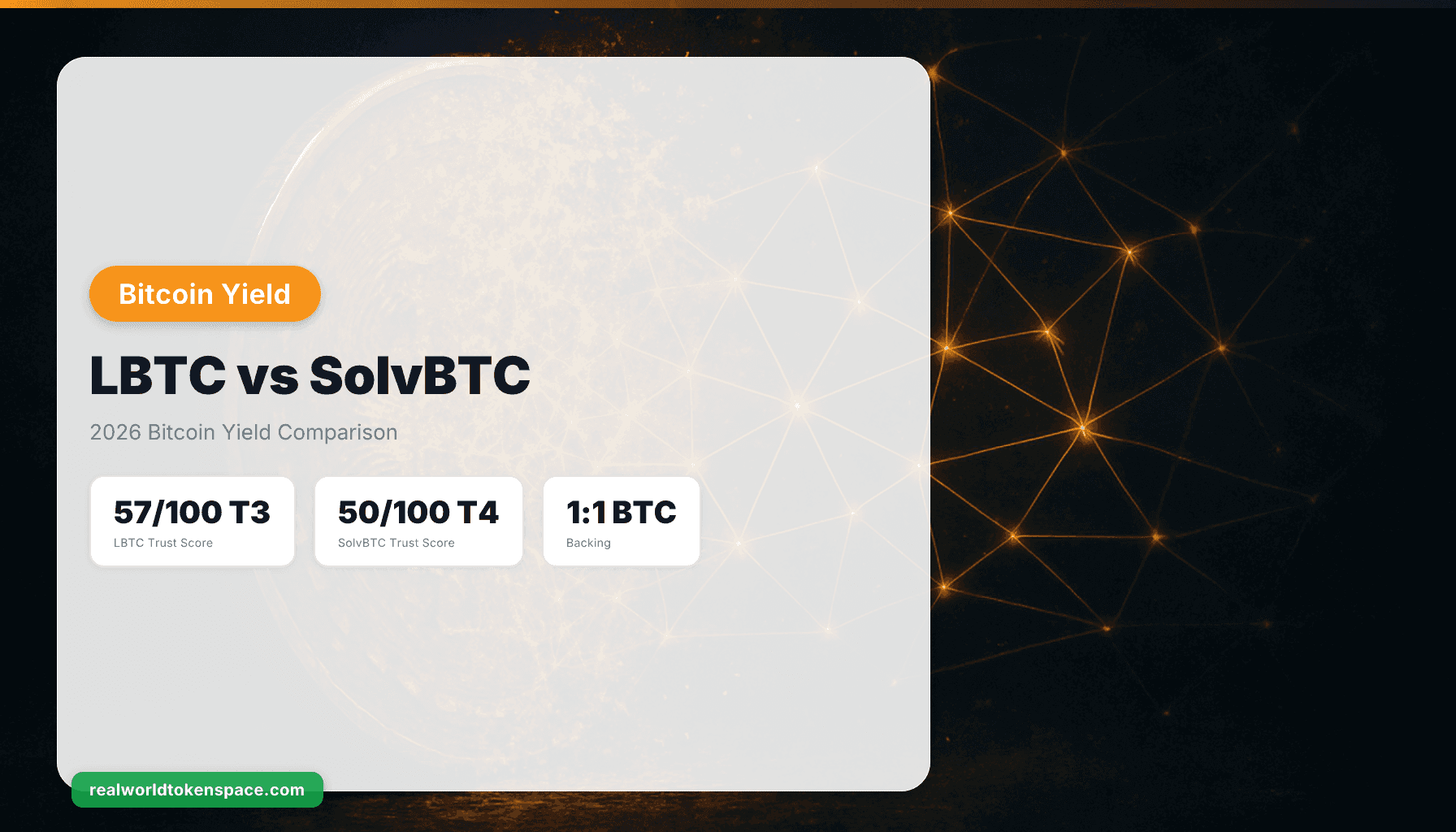
For context, SolvBTC (another Bitcoin yield token) sits lower at T4 (49/100). The tiering reflects how much protocol and custody risk each design stacks on top of base Bitcoin. The full scoring framework lives in our Trust Score methodology.
How to read the risk before you commit
If you want productive Bitcoin and accept slashing exposure for a ~1% base yield plus DeFi composability, LBTC is the most liquid path. If you want Bitcoin on another chain with zero native yield and one fewer risk layer, a wrapped token is the cleaner choice. The fork comes down to one variable: your appetite for protocol risk in exchange for a single point of yield.
For a deeper view across the wrapped-versus-staked spectrum (including custody design and Trust Scores side by side) see our companion guide, Wrapped Bitcoin Comparison: WBTC vs cbBTC vs LBTC Custody and Trust Score. And for the broader landscape of Bitcoin yield products, our Bitcoin yield hub tracks the full set.
The bottom line: LBTC is real productive Bitcoin, dominant in its category, and backed 1:1, but it earns its T3 by carrying slashing and layered-protocol risk that conservative holders should price in. We rate. You decide.
Related on RWTS
Stay Ahead of the Yield Curve
Subscribe to The Yield Report for weekly yield intelligence.
Subscribe Now