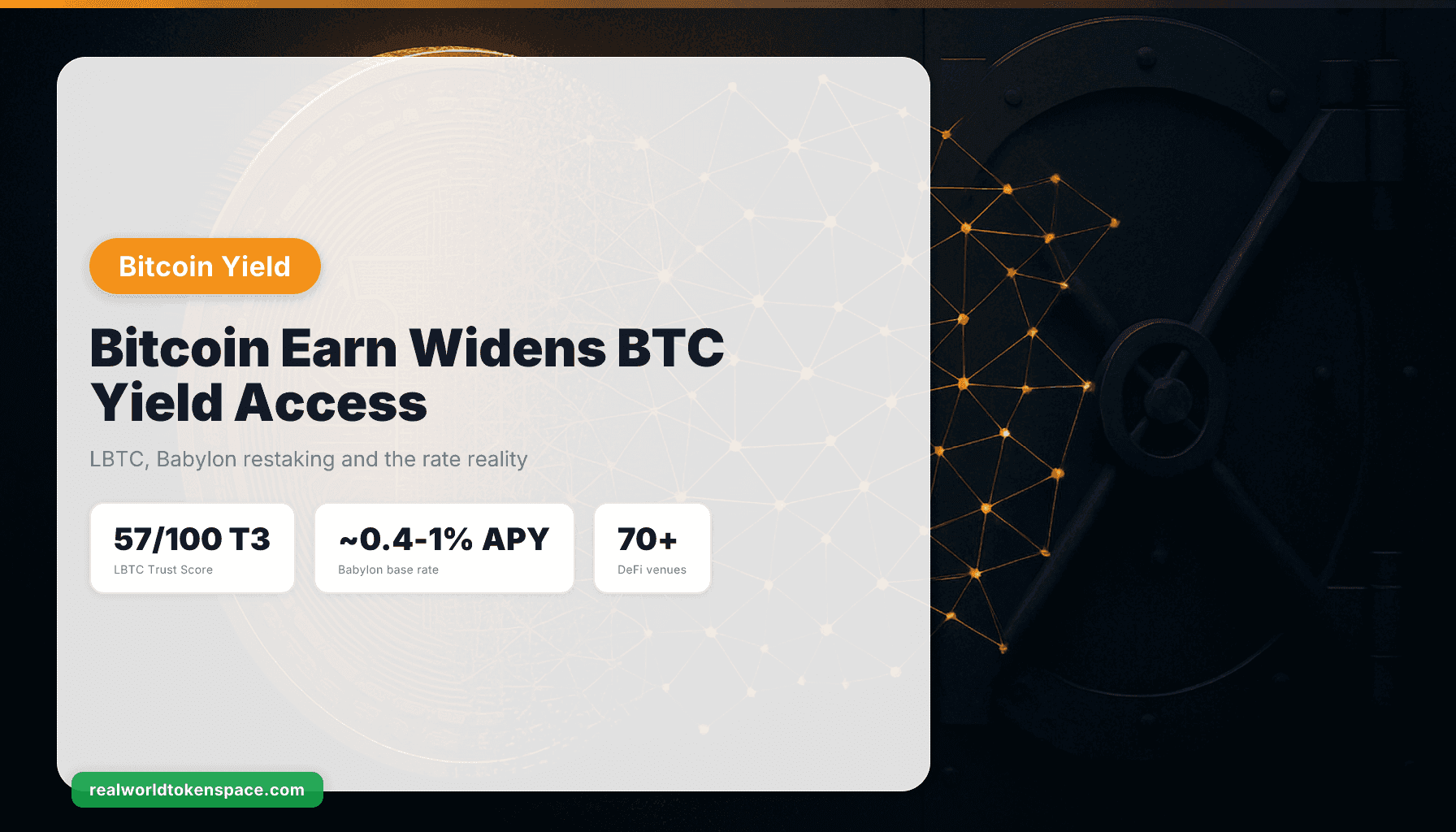
Bitcoin yield is moving from a niche DeFi experiment toward mainstream distribution. Lombard Finance launched "Bitcoin Earn," an automated yield product designed to let Bitcoin holders earn Bitcoin-on-Bitcoin returns passively, using a meta-vault structure that distributes deposits across sub-vaults managed by independent DeFi experts, with Sentora as the initial manager. Separately, hardware-wallet maker Ledger has wired Lombard's yield-bearing token into its app through Figment, putting BTC yield in front of a far larger retail base.
RWTS does not take a directional view on Bitcoin. We rate the products that promise to make it productive, and we tell you what the rating means. The headline here is access, not a new mechanism, and access changes who carries the risk.
The physical reality: dormant Bitcoin, slim base rates
The pitch for productive Bitcoin starts with how little BTC is actually working on chain. Ledger has noted that just 1.5% of total BTC is currently active on chain, despite the asset's roughly $2.1 trillion fully diluted valuation. That dormancy is the addressable market every Bitcoin-yield protocol is chasing.
But the base reward is thin. Rewards generated via the Babylon protocol have stood near 0.4% APY, with no maximum deposit size and a minimum of 0.0002 BTC, while withdrawals back to native bitcoin take seven days from the request date. Other Lombard disclosures have put native LBTC yield closer to 1%, denominated in BTC. Either way, the native rate is a fraction of what stablecoin or Treasury products pay, which is precisely why vault products exist to layer more on top.
That is what Bitcoin Earn does. The product targets 3-5% annualized BTC-denominated returns through a mix of single-sided lending positions on established protocols like Aave, Spark and Morpho, market-neutral strategies, and select incentive programs. The extra yield is real, but so is the extra risk: each sub-vault adds counterparty, smart-contract and strategy exposure on top of base Bitcoin.
How LBTC actually works
The receipt token underneath all of this is LBTC. Lombard Finance is a Bitcoin restaking protocol built on Babylon that issues LBTC, a yield-bearing, natively cross-chain token backed 1:1 by Bitcoin staked through Babylon. The custody model is the part allocators should study most closely. LBTC is backed 1:1 by Bitcoin held under custody by a security consortium of institutional custodians, maintains real-time proof of reserves, and automatically accrues yield for holders.
The yield source is mechanical, not promotional. The BTC underlying LBTC is staked to Babylon's Bitcoin Staking Protocol, securing multiple proof-of-stake networks that pay for that security in their native governance tokens; those rewards are converted to BTC and reflected in LBTC's value. The trade-off is that restaking introduces slashing risk. Staked BTC helps secure other networks, and if their validators act maliciously, slashing can occur; Lombard works to reduce this by selecting trusted validator sets.
LBTC's reach is the strongest part of the story. By early 2026, Lombard sits at the center of one of the fastest-growing verticals in DeFi, with billions of dollars in Bitcoin secured by its protocol and more than 70 venues accepting LBTC as collateral, liquidity or yield input. The Ledger integration extends that further. Ledger Wallet is launching a "BTC yield" feature that lets users access Lombard's yield-bearing LBTC through the Figment app, marking the first time a third-party Bitcoin rewards offering is accessible directly through Ledger Wallet.
The RWTS Trust Score angle
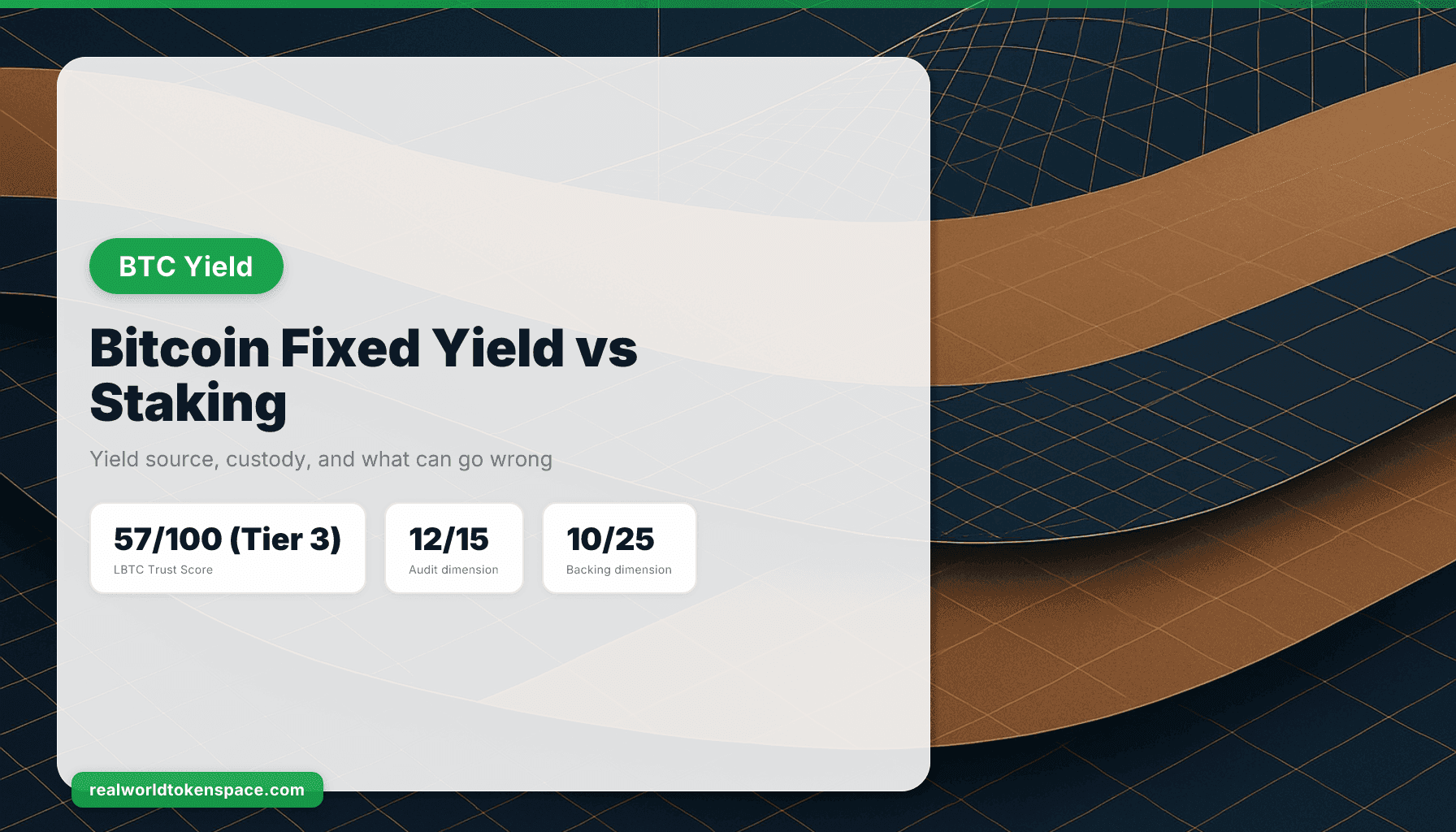
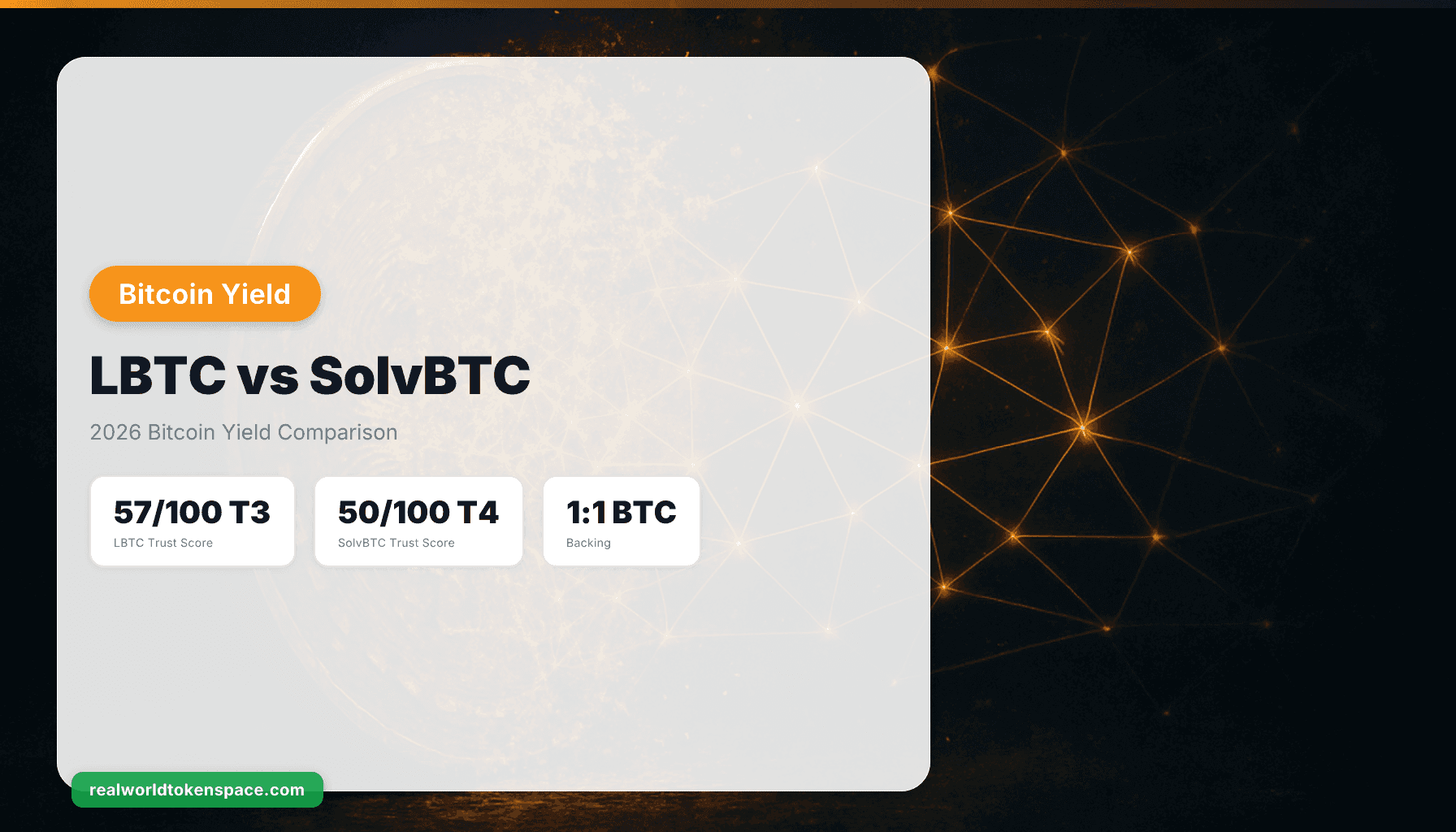
Distribution is widening faster than the risk is shrinking, which is exactly when a rating matters. On our scale, LBTC holds a Trust Score of T3 (59/100). That tier reflects a token that is transparently collateralized and broadly integrated, but that stacks Babylon restaking, validator selection and seven-day withdrawal friction on top of plain Bitcoin custody.
For context within the same yield-Bitcoin category, SolvBTC scores lower at T4 (49/100), reflecting a more complex backing and aggregation structure. Neither score is a verdict on Bitcoin itself, they grade the wrapper around it. Our full framework for how custody, redemption, and restaking risk roll into a single number is documented in our methodology.
The macro backdrop sharpens the question. Hotter-than-expected inflation readings, including April 2026 CPI at 3.8% year over year, combined with resilient consumer spending and a solid labor market, have prompted markets to price a higher likelihood of Federal Reserve rate hikes later in 2026 or early 2027. If short-term dollar rates stay high or climb, a sub-1% native BTC yield looks less compelling against Treasury-backed alternatives, pushing yield-seekers toward the higher-target vault products, where the risk is greatest. If the Fed instead resumes cuts, the relative appeal of BTC-denominated yield improves. The fork here is Fed posture, not Bitcoin's price.
What allocators should weigh
Three variables decide whether productive Bitcoin fits a portfolio. First, the native rate: near 1% is modest, and anything above it is earned by taking on additional layers. Second, withdrawal timing: a seven-day unwind matters in volatile markets. Third, custody concentration: proof of reserves is necessary but not sufficient, the consortium model still concentrates trust.
For readers weighing the custody side specifically, our deep dive Is LBTC Safe? Lombard Bitcoin Yield Trust Score Breakdown walks through the same questions in detail, and our Bitcoin yield hub tracks the broader category as new products ship.
RWTS isn't bullish or bearish on Bitcoin, LBTC, or any yield product. We're the credit-rating agency for tokenized real assets. We rate. You decide.
Related on RWTS
Stay Ahead of the Yield Curve
Subscribe to The Yield Report for weekly yield intelligence.
Subscribe Now