The first Federal Reserve meeting under Chair Kevin Warsh is the most important macro event for tokenized treasury yield this year. RWTS is not bullish or bearish on rates. We rate the products that ride them. Here is what the June 16-17 FOMC actually changes for on-chain T-bill funds.
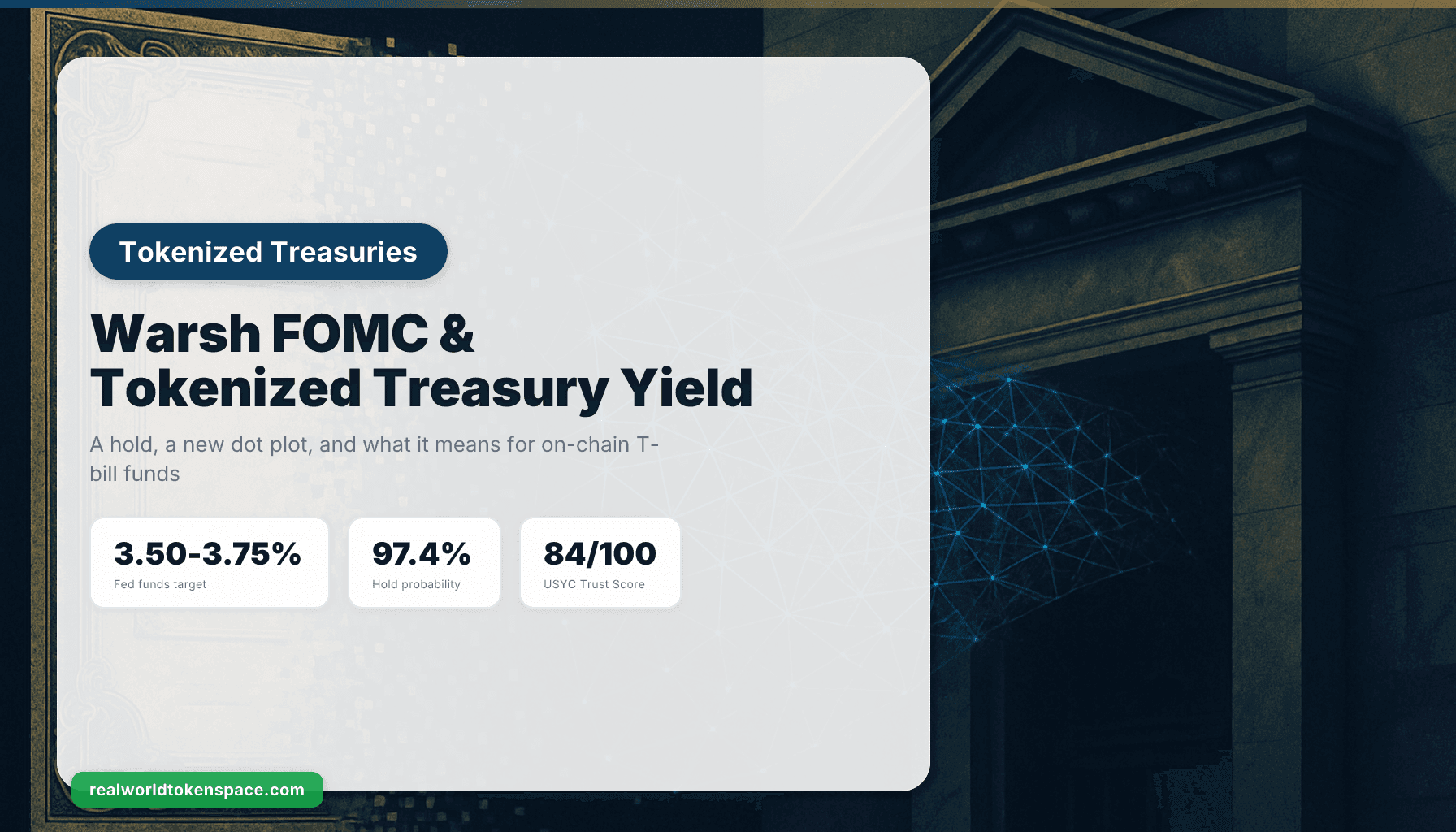
The headline is settled. The FOMC has held the federal funds rate at 3.50% to 3.75% through several consecutive meetings since December 2025, and economists expect the committee to hold that range at the June meeting. Nearly 97.4% of traders in the CME FedWatch market expect rates to stay unchanged, and a Reuters poll of 102 economists found 72 of them expecting no rate change through the rest of 2026. The decision is not the story. The dot plot is.
The mechanism: why the dot plot sets the yield floor
Tokenized money market funds earn what their underlying T-bills and overnight repo earn. When the policy rate holds, gross fund yield holds. The forward signal (whether the committee expects cuts) is what allocators price into duration and rotation decisions. The March 2026 SEP median dot showed rates holding steady through 2026, but that projection was produced under Powell in a different inflationary environment; June's updated dot plot, reflecting the full FOMC voting membership under Warsh's leadership, will almost certainly show at least one hike in 2026's median projection.
A hawkish shift matters for a simple reason. The June meeting is expected to produce a shift from an easing bias to a neutral stance, which would signal that rate cuts are not expected in the near term. If that holds, the floor under tokenized treasury yields stays intact through year-end. If Warsh surprises dovish, expect the front end of the curve to richen and net fund yields to compress over the following months.
The inflation backdrop frames the call. The May 2026 CPI report, released by the Bureau of Labor Statistics on June 10, confirmed what many households already felt in their energy bills. Markets are pricing an 80% chance of a rate hike by year-end after strong May payrolls and 4.2% inflation, while President Trump publicly urges cuts. There is also a structural wrinkle worth naming: Warsh dislikes publishing the dot plot, arguing that it conveys stale information. If he downplays it in the press conference, traders will lean harder on his tone than on the chart itself.
What this means for the funds
Yield context first. Net yields across top tokenized treasury funds range from 4% to 5.25% APY in 2026, while standard stablecoins yield near zero on the same dollar-denominated capital. A hold keeps that gap wide. That gap is the entire investment case for the category, and it widens or narrows with the Fed, not with crypto sentiment.
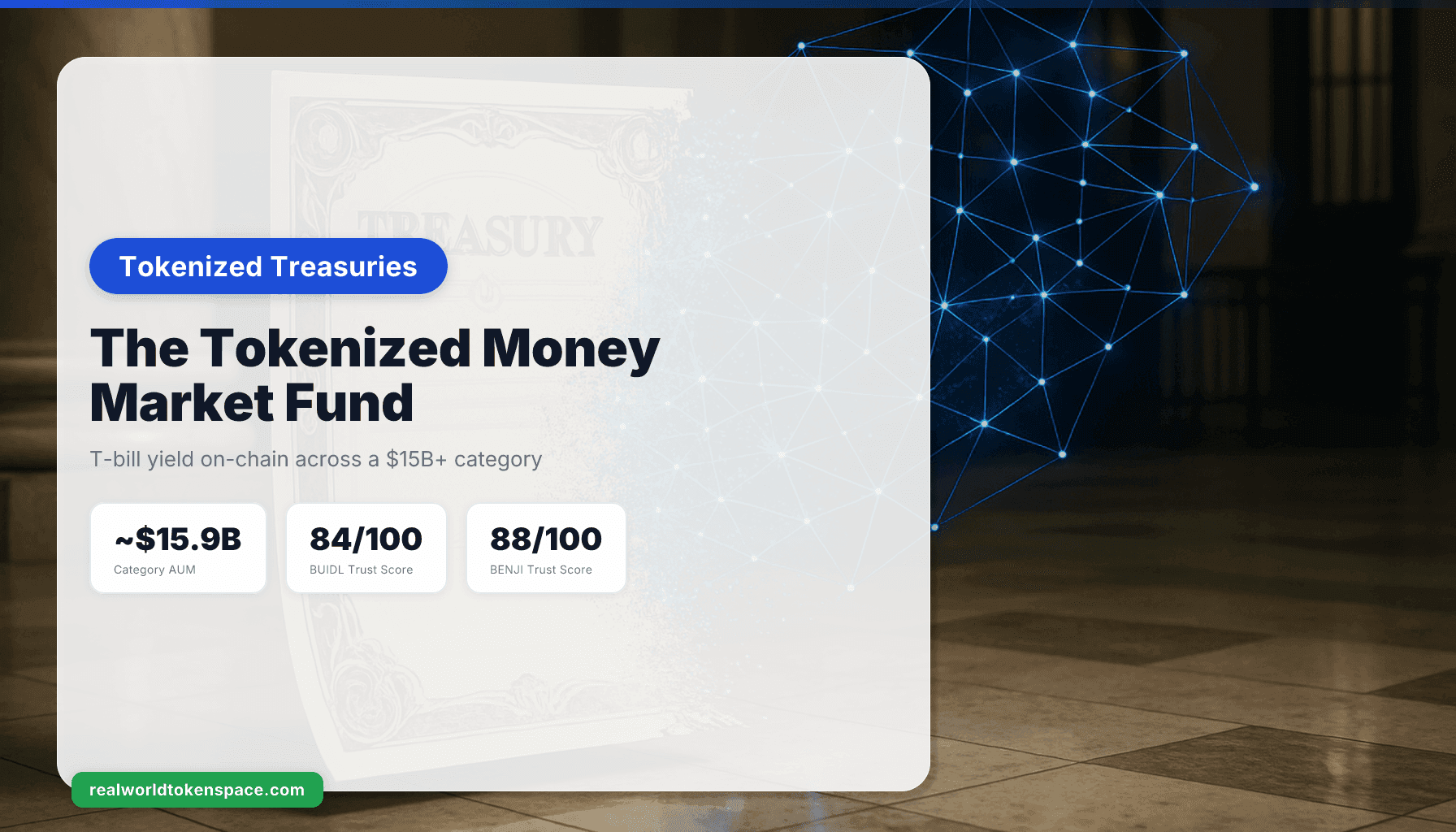
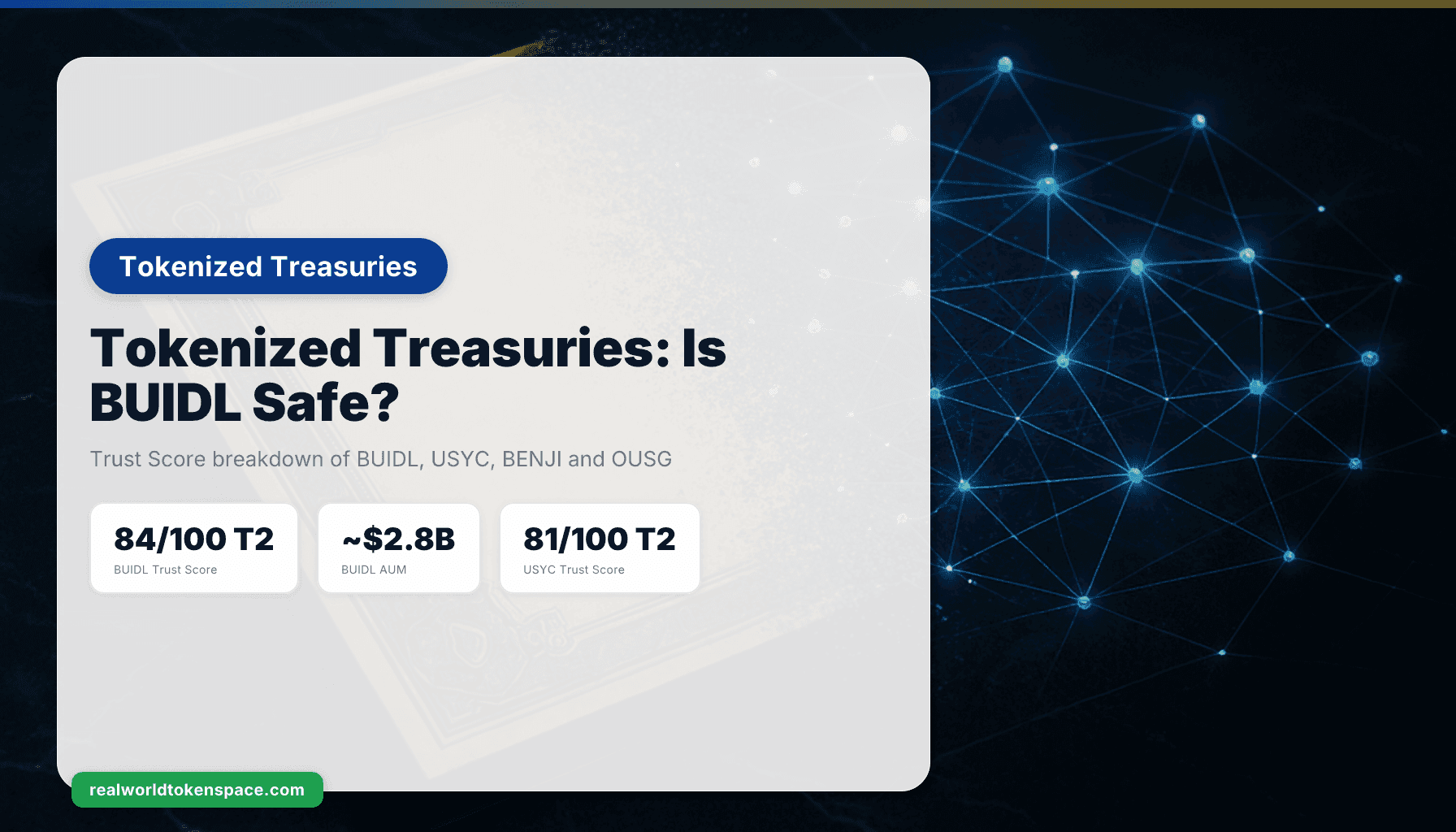
On the products themselves, RWTS rates the leaders by Trust Score rather than by size. USYC carries a Trust Score of T2 (81/100). USYC is the tokenized money market fund originally built by Hashnote and now operated under Circle, which acquired Hashnote in January 2025; the fund holds short-term US Treasuries and overnight reverse repos, and as of mid-2026 sits around $3B in assets under management per rwa.xyz, making it the largest tokenized US Treasury product on-chain by AUM.
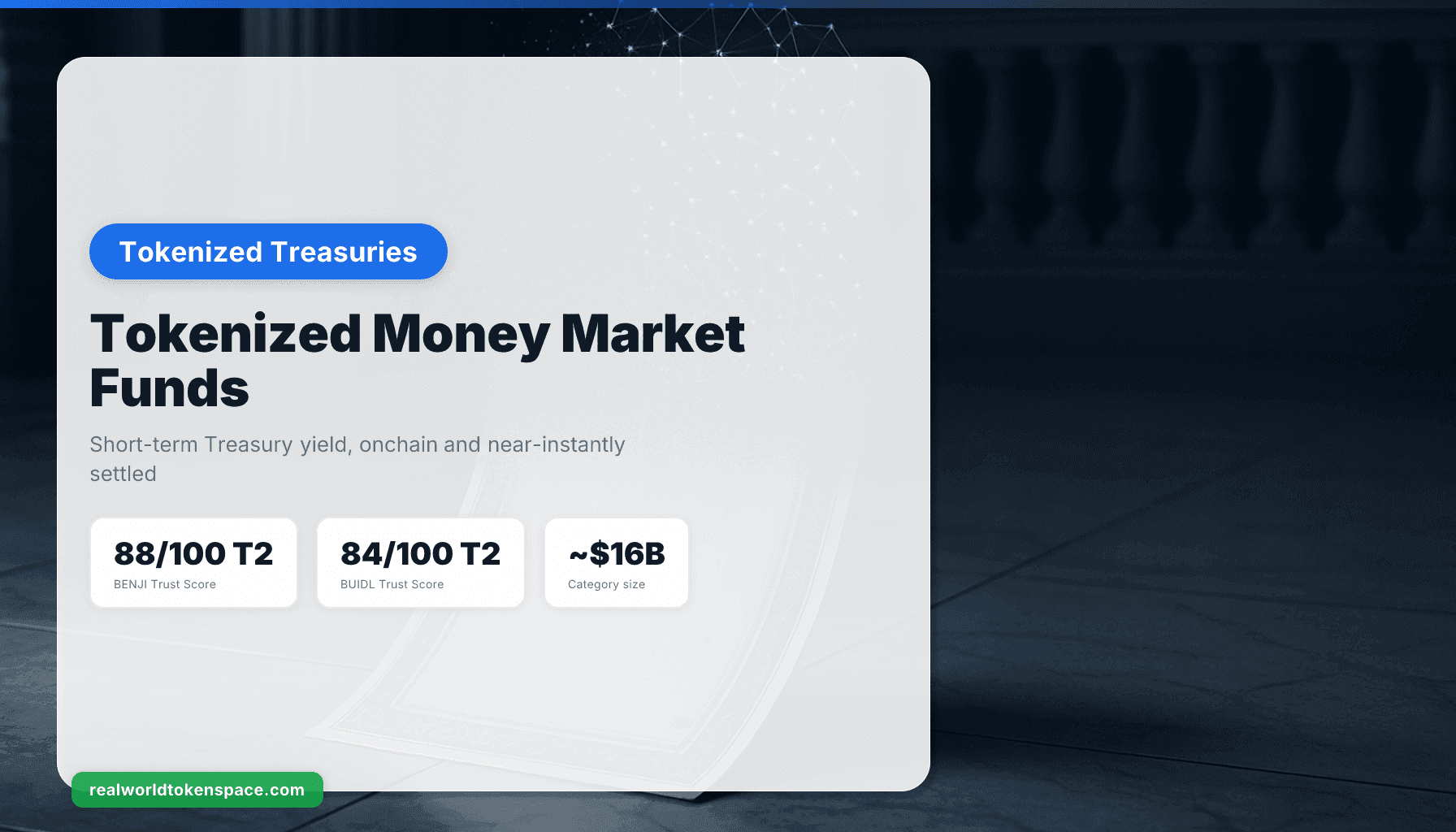
BUIDL scores higher at T2 (84/100). BUIDL is BlackRock's tokenized money market fund issued via Securitize, the second-largest tokenized treasury product by AUM as of mid-2026 per rwa.xyz, and sits inside Securitize's transfer agent framework. The structural distinction matters when rates hold: funds such as BUIDL maintain a stable $1.00 price and distribute yield by minting new tokens at regular intervals, while USYC's price appreciates daily as yield accrues, making it a more tax-efficient structure for holders who want to accumulate yield without triggering regular income recognition.
OUSG, at T2 (77/100), is Ondo's institutional fund and a useful case study in why backing matters. OUSG accumulated over $1.1 billion in TVL as of late 2025 and primarily holds short-term US Treasuries through BlackRock's USD Institutional Digital Liquidity Fund, making it a passthrough to BUIDL with tokenization features layered on top. When the Fed holds, a passthrough product simply inherits the underlying fund's yield, less its own fee layer.
The structural risk allocators should price
A hawkish hold is generally constructive for these products. But the category's risk is not rate risk, it is wrapper and access risk. The market splits into tokenized regulated fund shares such as BUIDL, where blockchain is the system of record for fund shares, and offshore wrapper debt tokens such as USYC and USDY issued by Cayman or BVI vehicles holding T-bills, with eligibility and redemption mechanics that differ materially. The wrapper expresses something specific: redeemable into stablecoin, outside the SIPC backstop. Our Trust Score methodology weights exactly this, custody, redemption rails, and disclosure, rather than headline AUM.
The leadership question is itself unsettled. As we covered in USYC Overtakes BUIDL: Tokenized Treasury Leadership Shift, the gap between the two leaders is thin, and the thin margin between the two funds means rankings could shift with normal fund activity. A Fed hold does not change who leads. Holder concentration and redemption design do.
The read
If Warsh drops the easing bias and the median dot moves to one hike, tokenized treasury yields hold their floor and the category's spread over zero-yield stablecoins stays wide into 2027. Below that (a dovish surprise) front-end yields compress and the spread narrows over the following quarters. The humility variables are Warsh's tone, the energy-price path, and whether the committee presents a unified front after April's dissents.
For a deeper comparison of the products that anchor this category, see our tokenized treasuries comparison hub. We rate. You decide.
Related on RWTS
Stay Ahead of the Yield Curve
Subscribe to The Yield Report for weekly yield intelligence.
Subscribe Now