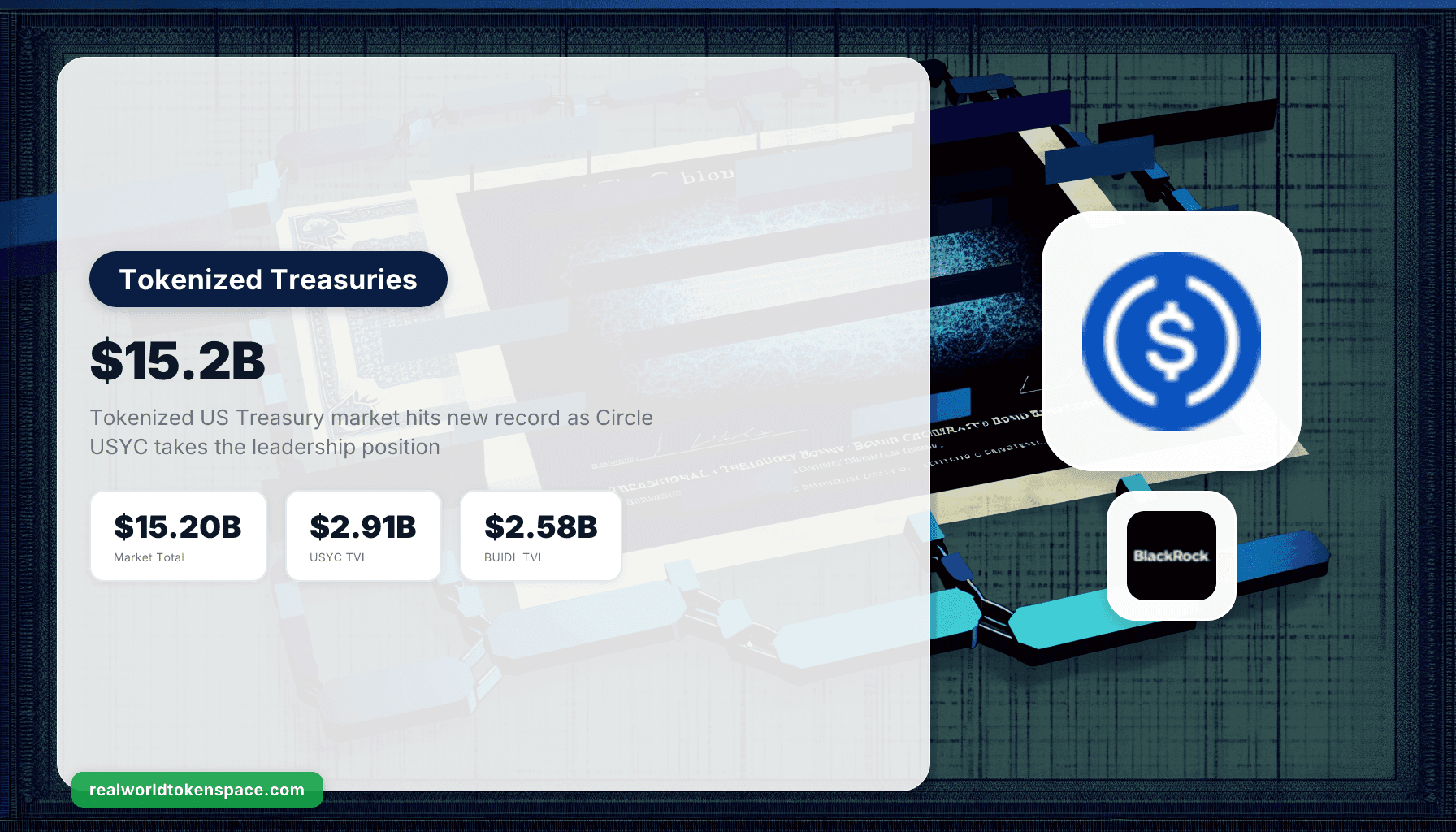
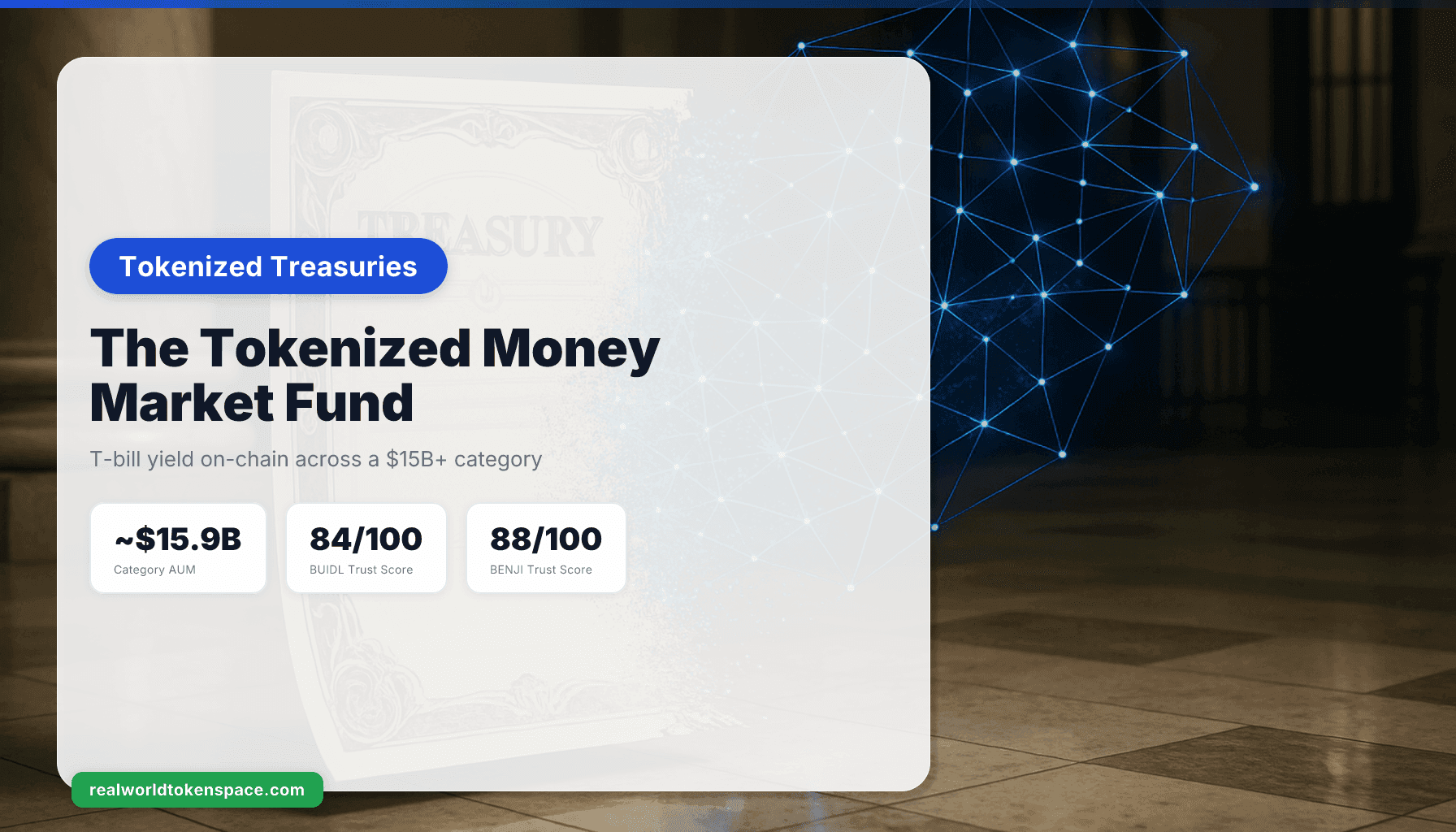
The tokenized U.S. Treasury market crossed $15.20 billion in early May 2026, a $1.06 billion increase over the prior 30 days according to rwa.xyz on-chain data. The headline number matters less than what is happening underneath it: Circle's USYC at $2.91 billion has overtaken BlackRock's BUIDL at $2.58 billion as the category leader. Six months ago that ranking was the reverse.
Ondo Finance holds two of the top five positions. USDY (the public-access tokenized note product) sits at $2.14 billion, and OUSG (the qualified-investor U.S. Treasury fund) at $682.4 million. Combined, Ondo's tokenized treasury offering totals $2.82 billion, putting it just behind Circle and BlackRock at the parent issuer level. Ondo reported $13.26 million in revenue in Q1 2026, with total TVL across all products at $3.53 billion.
The top five tokenized treasury products together account for $10.92 billion, or roughly 68% of the total market. Concentration is high, but the long tail (Franklin Templeton's BENJI, Superstate's USTB, Hashnote's USYC predecessor, and a growing list of qualified-investor structures) is filling in.
Why Circle USYC overtook BUIDL
Three things explain the leadership change. First, distribution. USYC has built a strong presence on BNB Chain alongside Ethereum, opening retail and Asian institutional flows that BUIDL has not prioritized. BUIDL operates across Ethereum, Solana, and several other networks but its growth pattern has been institutional-only, governed by qualified-investor gating. Second, integration. Circle has wired USYC directly into the USDC redemption flow, letting holders convert between cash-equivalent stablecoin and yield-bearing treasury exposure with minimal friction. BlackRock requires Securitize as the gating layer, which adds operational steps. Third, fee structure. USYC charges roughly 15 basis points lower in management fees than BUIDL on comparable allocations.
The yield gap is small. As of late April, USYC was paying approximately 4.65% net APY against BUIDL's 4.72%. The difference reflects USYC's slightly heavier short-duration positioning. Both products are backed by actual U.S. Treasury holdings with daily attestations.
Trust Score breakdown
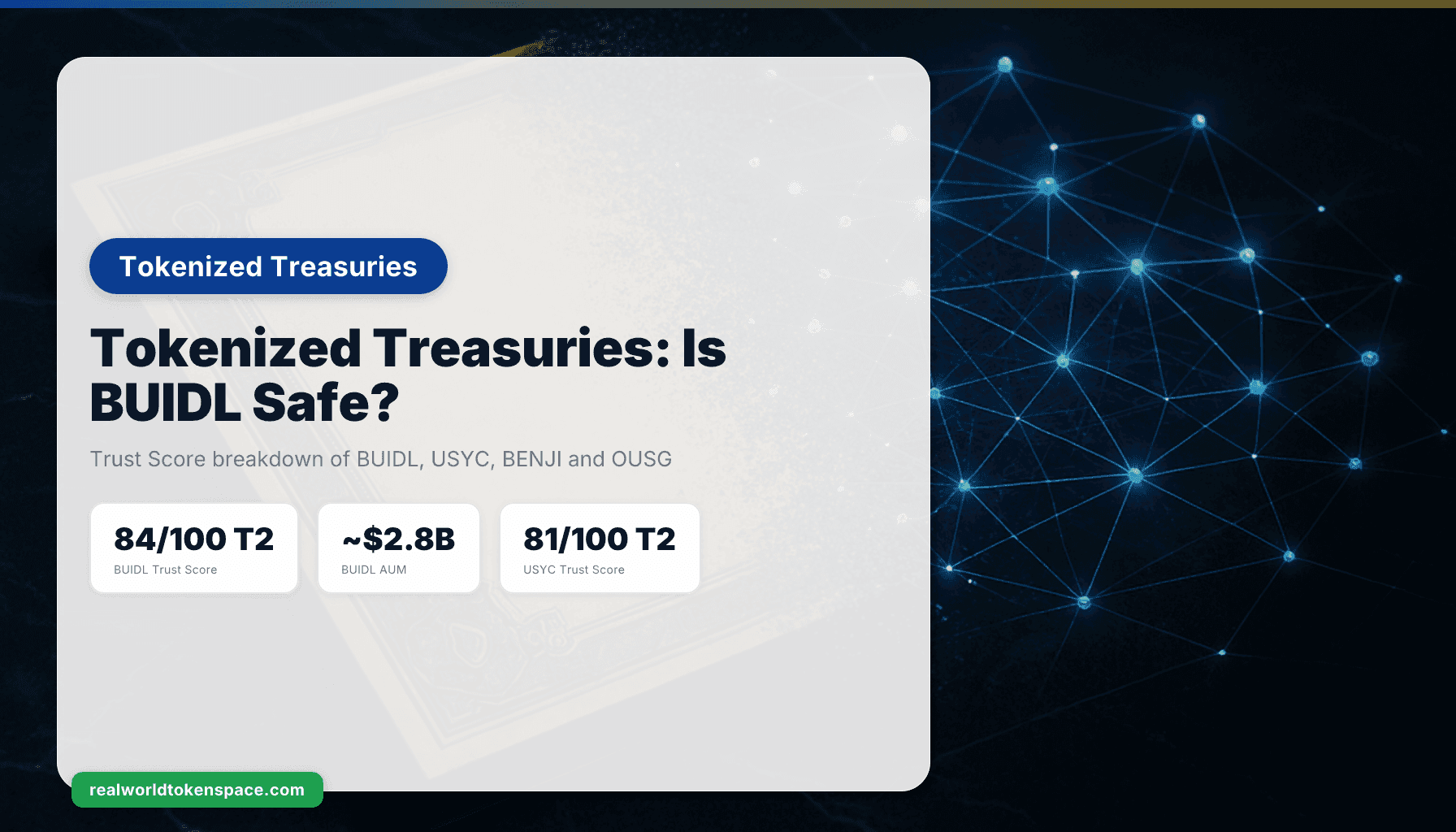
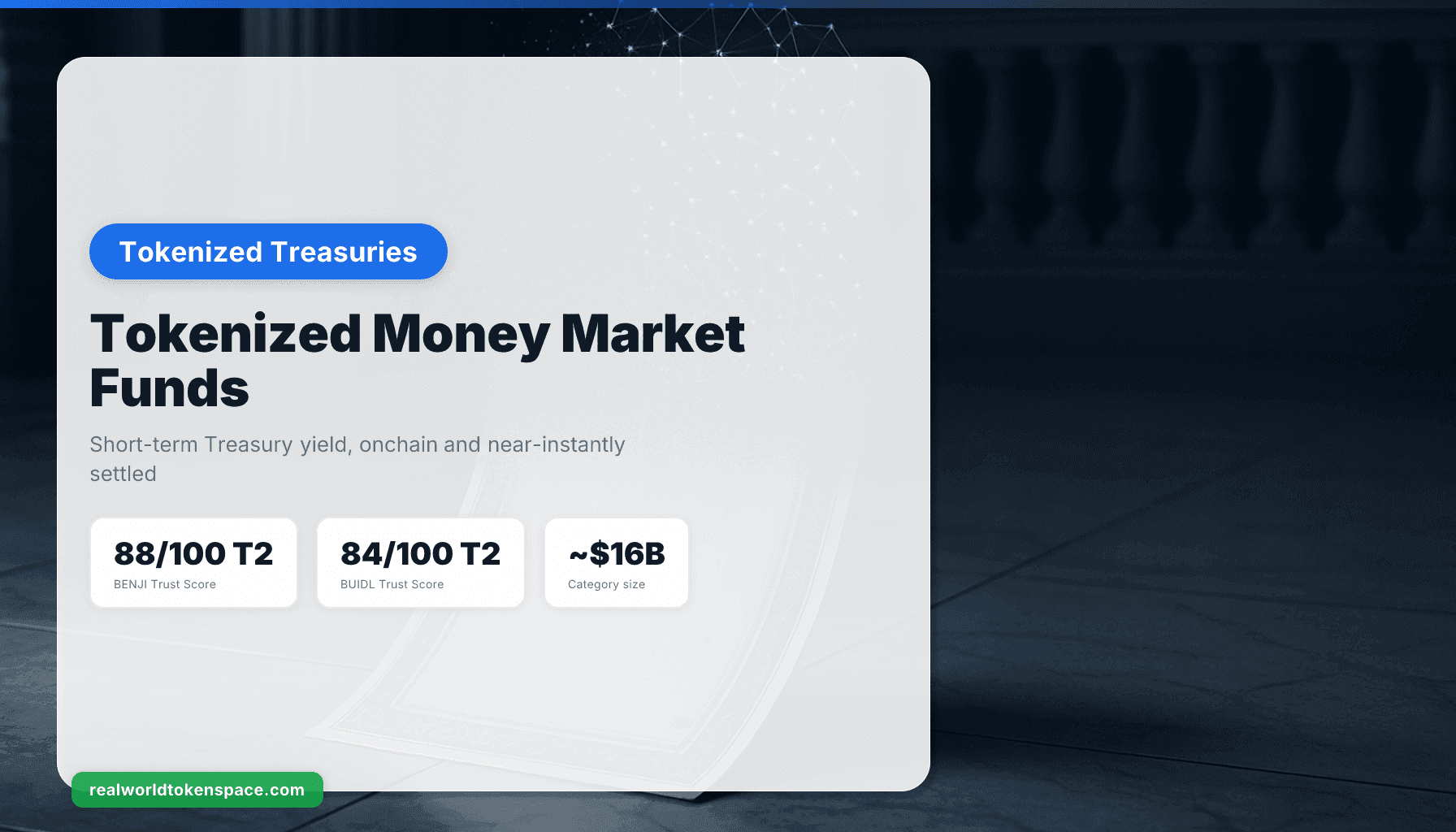
BUIDL (BlackRock USD Institutional Digital Liquidity Fund), Trust Score 88, Tier 2. Backed by U.S. Treasuries, repo, and cash held with BNY Mellon and other approved custodians. Audited monthly by a Big Four firm. The qualified-investor gating (only Securitize-onboarded accounts) is the primary access constraint. Strong regulatory clarity, lower retail liquidity.
USYC (Circle US Yield Coin), Trust Score 84, Tier 2. Backed by short-duration U.S. Treasury bills and overnight repo through Hashnote's underlying fund structure (which Circle acquired). Daily attestations. Circle's regulatory profile (MiCA-licensed in the EU, NYDFS Trust Charter pending finalization) is acceptable but the Hashnote inheritance adds operational layers RWTS still tracks closely.
USDY (Ondo US Dollar Yield), Trust Score 83, Tier 2. Backed by short-duration Treasuries and bank deposits, structured as a tokenized note rather than a fund share. Available to non-U.S. investors after a 40-day lockup period. The note structure introduces additional credit risk versus a fund share but improves geographic accessibility.
OUSG (Ondo Short-Term US Government Bond Fund), Trust Score 82, Tier 2. A tokenized share of an underlying short-duration government bond fund (BlackRock BUIDL plus PIMCO funds), restricted to qualified investors. Inherits BUIDL's risk profile plus a wrapper layer that adds complexity but improves cross-chain composability.
The Trust Score gap between BUIDL (88) and OUSG (82) is instructive: products that wrap other products inherit the risk of the underlying plus the wrapper layer's operational risk. RWTS does not penalize wrapping when transparency is maintained, but each layer adds a point of failure that pure-issuance products avoid.
What is driving the $1B monthly growth
Three structural flows are pushing the category higher. First, exchange treasury reserves. After the 2023 banking stress and ongoing concerns about USDC's banking partners, several centralized exchanges have moved a portion of their cash reserves into BUIDL or USYC for both yield and reduced bank counterparty risk. Second, DeFi protocol treasuries. Aave, Maple, and a growing list of lending markets accept tokenized treasuries as collateral, which means protocols holding USDC or USDT idle can now generate yield without leaving the on-chain stack. Third, ex-U.S. allocator demand. USDY in particular has seen accelerating inflows from family offices and asset managers in Asia and Latin America who want dollar yield exposure without setting up U.S. brokerage accounts.
The category remains capped by qualified-investor gating on the highest-trust products (BUIDL, OUSG). USYC and USDY are filling the retail gap, but at a Trust Score discount that reflects the structural tradeoffs.
The bottom line
The tokenized treasury market is now adding roughly $1 billion in TVL per month and crossed a leadership transition this quarter. Circle's USYC overtaking BlackRock's BUIDL signals that distribution and integration matter more than brand at this stage of the category. For allocators evaluating where to position: BUIDL remains the highest-trust product on regulatory clarity, USYC offers the cleanest stablecoin-to-yield integration, and Ondo's USDY/OUSG split lets you pick public-access or qualified depending on your structure.
For your portfolio: factor in qualified-investor gating, redemption windows (T+1 to T+3 across these products), and the underlying duration. None of these are equivalent to holding short-term Treasuries directly. The yield is comparable. The operational profile is different.
RWTS isn't bullish or bearish on any tokenized treasury product. We're the credit-rating agency for tokenized real assets. We rate. You decide.
Methodology: rwts.com/methodology. Not financial advice.
Related research
Stay Ahead of the Yield Curve
Subscribe to The Yield Report for weekly yield intelligence.
Subscribe Now