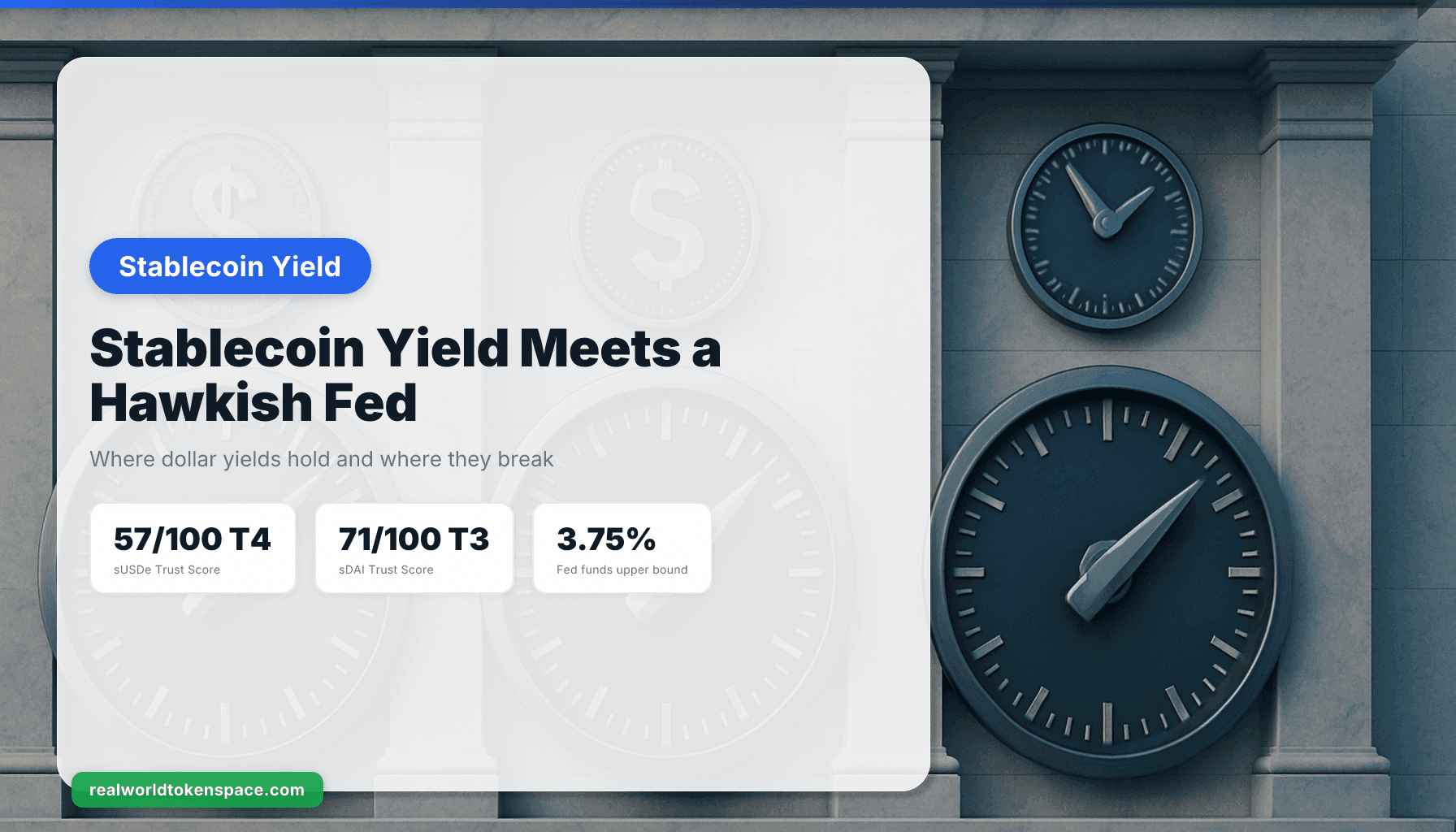
The dominant assumption of the last two years (that the Fed's next move is a cut) is no longer safe. Hotter-than-expected inflation readings, including April 2026 CPI at 3.8% year over year, combined with resilient consumer spending and a solid labor market, have prompted markets to price a higher likelihood of Fed rate hikes; the FOMC held the target range at 3.50%-3.75% at its April meeting amid 8-4 dissent, the highest since 1992, and futures now imply potential increases of 25 basis points or more. For anyone earning yield on dollars, that shift is not academic. It changes which stablecoin yields are durable and which are borrowed from market conditions that can reverse.
This guide is about mechanism, not prediction. We don't forecast the Fed. We map how a hawkish pivot transmits (differently) into each kind of stablecoin yield.
Why "stablecoin yield" is not one thing
The phrase hides three very different engines. The first is Treasury-backed yield: a token holds short-dated bills and passes the coupon through. The second is collateralized DeFi savings, where a protocol earns from over-collateralized borrowing and stability fees. The third is synthetic-dollar yield, where return comes from funding-rate and basis trades rather than bonds. A single Fed headline moves these three in different directions, which is why grouping them under one "yield" number misleads allocators.
The current backdrop matters because rate expectations have genuinely reset. Recent stronger-than-expected labor data, including May nonfarm payrolls of 172,000 versus forecasts near 80,000, lifted market-implied odds of a 2026 federal funds rate hike to roughly 54.5% on Polymarket. Persistent inflation pressures have prompted forecasters including Goldman Sachs to shift expectations toward no rate cuts in 2026 and possible removal of the easing-bias language at the June 16-17 FOMC meeting. The near-term swing factor is data, not dogma, and the next CPI print lands this week.
Treasury-backed yield: the policy-linked engine
If the Fed holds high or hikes, short-bill yields stay elevated, and Treasury-backed dollar products inherit that directly. Their return is mechanically tied to the front end of the curve, so a hawkish Fed is, all else equal, supportive of their nominal yield. The risk here is not yield collapse but the opposite scenario: when the Fed eventually cuts, these yields fall in lockstep. That is a feature of the design, not a flaw, the yield is honest because it tracks a real, observable rate.
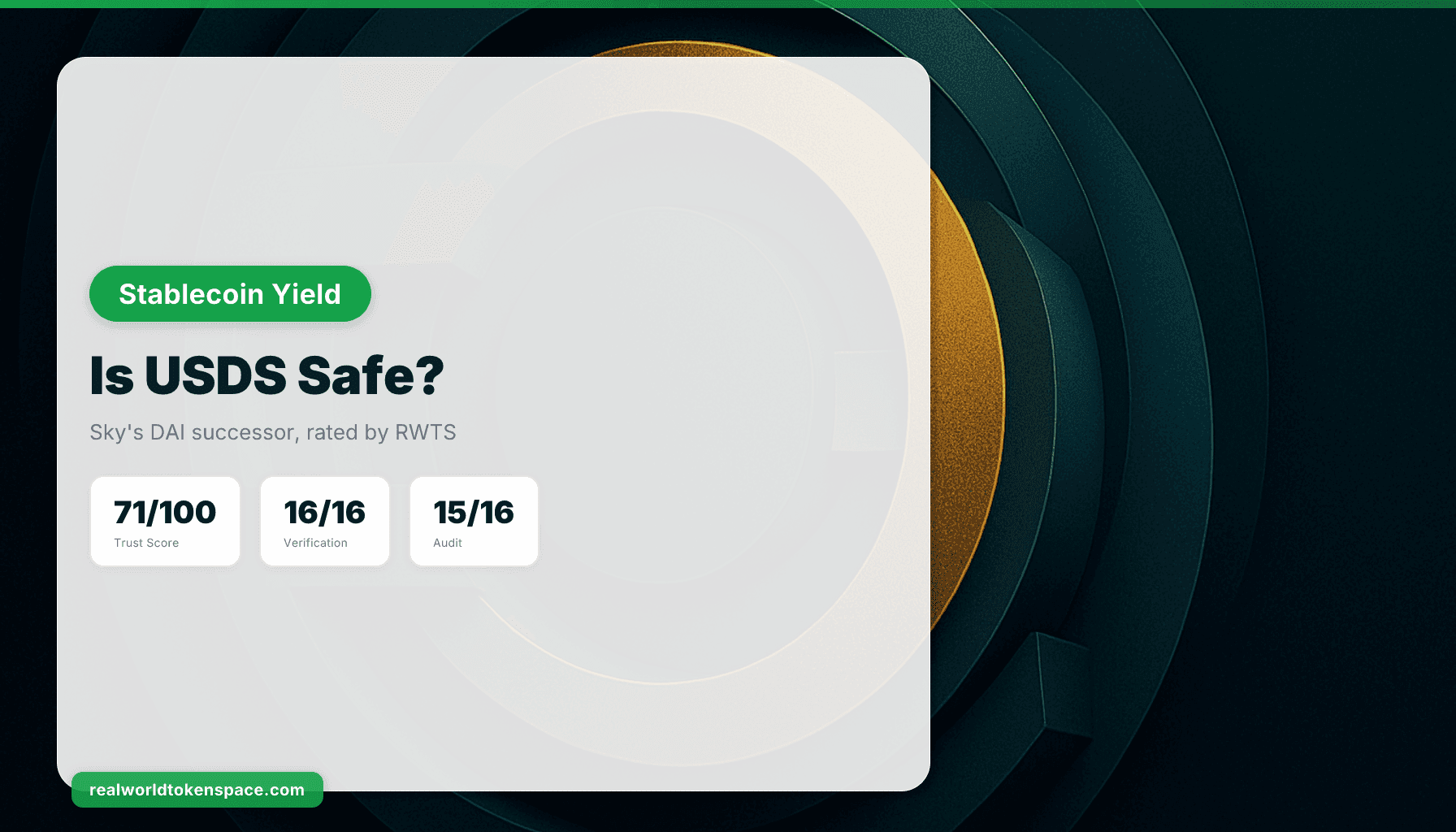
Sky's savings products sit partly in this camp. USDS and sDAI both carry an RWTS Trust Score of T3 (71/100), reflecting diversified collateral that includes Treasury-backed allocations alongside on-chain lending. Their yields move with both the Fed funds path and Sky's own rate governance, which makes them more policy-linked than purely synthetic alternatives, but not perfectly so.
Synthetic-dollar yield: the engine that can run the other way
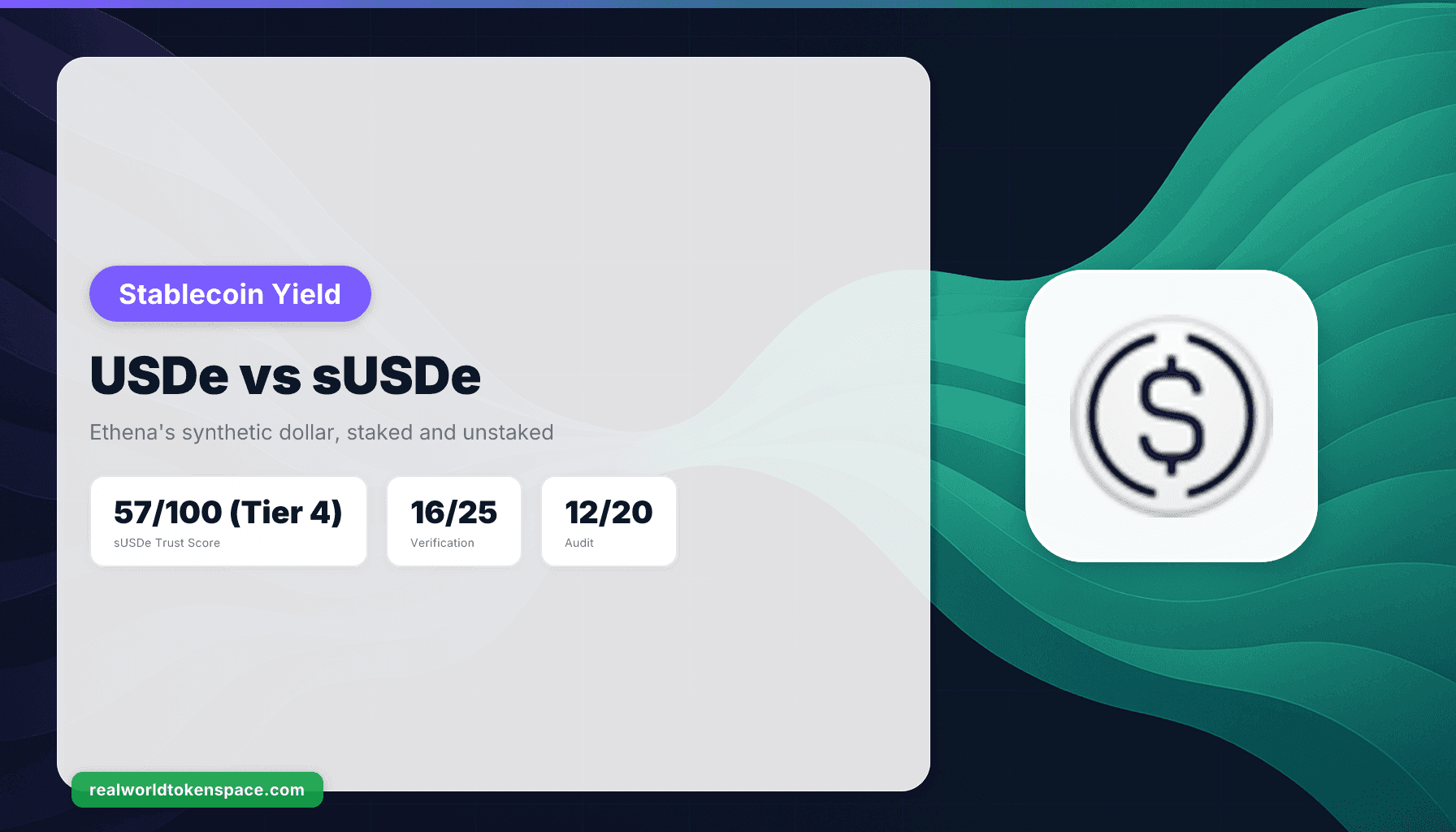
The most important point for 2026 is that synthetic yield does not follow the Fed. sUSDe holds a Trust Score of T4 (57/100), the lowest tier among the three engines here. Its yield is generated by funding-rate and basis trades in crypto markets, not by Treasury coupons. When the Fed turns hawkish and risk appetite falls, perpetual funding rates often soften, so synthetic yields can compress at the very moment Treasury yields are holding firm.
This is the single most common mismatch in stablecoin allocation: treating a synthetic-dollar yield as if it were a money-market yield. They look identical on a dashboard and behave nothing alike under stress. If funding rates stay positive and demand for leverage holds, the synthetic thesis stays intact. If risk appetite contracts, the yield forks downward regardless of what the Fed does.
How to read the rate landscape
A simple frame: ask whether a given yield is earned from rates or earned from risk. Treasury-backed and Treasury-blended products are earned from rates, so they ride the Fed's path up and down predictably. Synthetic and DeFi-lending yields are earned from risk and borrowing demand, so they hinge on the appetite for leverage, a variable that frequently moves against the Fed.
Two humility variables sit underneath all of it. The first is Fed posture itself: the June dot-plot and CPI revisions can reprice the entire front end. The second is crypto risk appetite, which drives the funding rates that synthetic yields depend on. Neither is forecastable with confidence, which is why we score structure rather than promise returns.
For a worked example of synthetic-yield compression in real time, our note Ethena sUSDe Yield Compresses as Allocators Rotate to T-Bills shows exactly this dynamic. Our stablecoin yield hub tracks each engine as rates move, and the scoring inputs behind every number above are documented in our methodology.
RWTS isn't bullish or bearish on the dollar, any stablecoin, or the Fed's next move. We're the credit-rating agency for tokenized real assets. We rate. You decide.
Related on RWTS
Stay Ahead of the Yield Curve
Subscribe to The Yield Report for weekly yield intelligence.
Subscribe Now